THE ADVENTURE COLLECTIVE® · Independent discovery and booking for outdoor travel

Cross the world’s largest salt flat, hike among cactus islands and stand at steaming geysers above 4,800 m on this 7-day loop from La Paz. Expect long drives, remote lodges, and dramatic high-altitude landscapes that reward careful preparation.
Cross the world’s largest salt flat, hike among cactus islands and stand at steaming geysers above 4,800 m on this 7-day loop from La Paz. Expect long drives, remote lodges, and dramatic high-altitude landscapes that reward careful preparation.
You step out of the minivan into a white so vast it stitches horizon to sky — the salt crust crunches underfoot and wind pushes a clean, highland cold against your face. This seven-day route threads La Paz's fast-paced altitudes to the silent expanse of Salar de Uyuni, then drops south into the ochre and crimson lagoons of Eduardo Avaroa Reserve.
Verified experiences and guided adventures in the surrounding area.
Operated by Travel China Guide · Uyuni, Potosí Department
You step out of the minivan into a white so vast it stitches horizon to sky — the salt crust crunches underfoot and wind pushes a clean, highland cold against your face. This seven-day route threads La Paz's fast-paced altitudes to the silent expanse of Salar de Uyuni, then drops south into the ochre and crimson lagoons of Eduardo Avaroa Reserve.
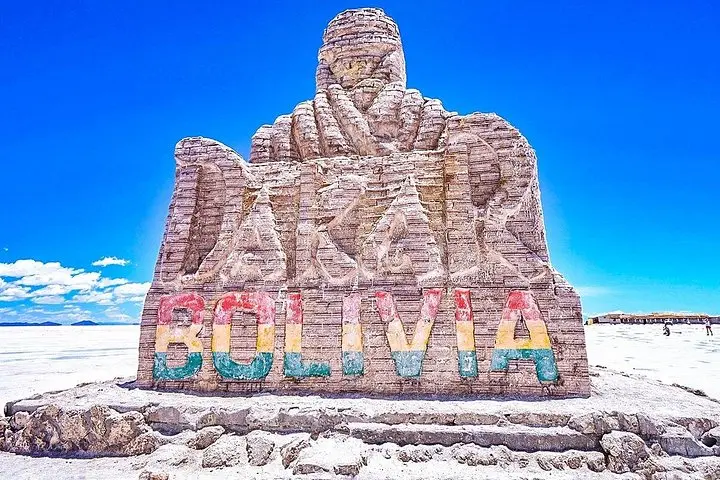
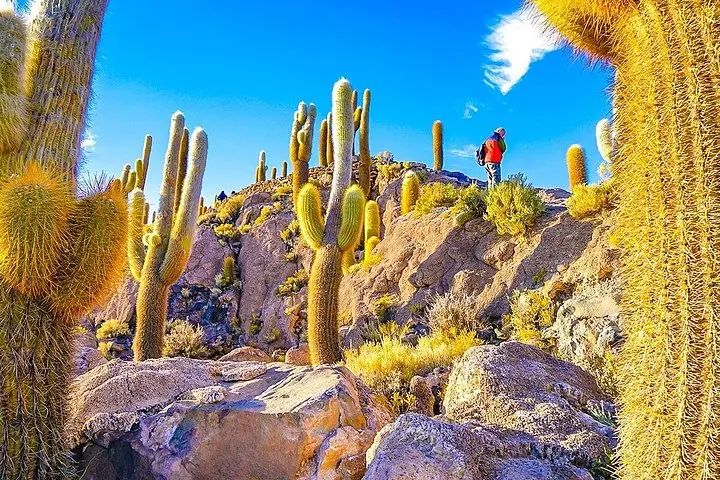
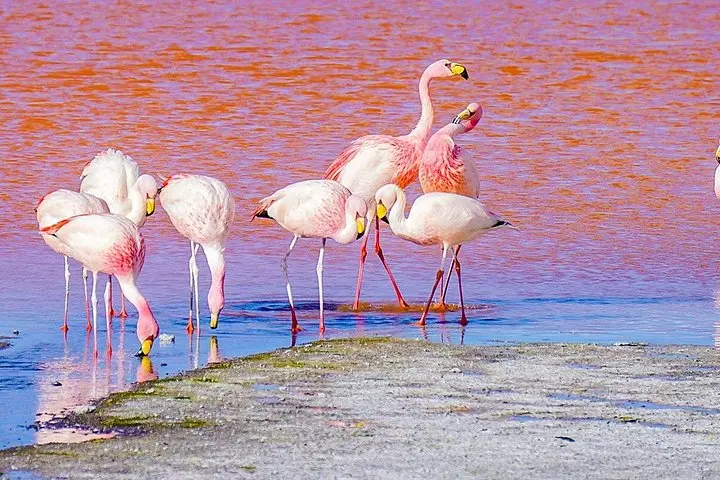
Geology here reads like a field guide: a shallow basin where evaporated lakes left a 10,000 km2 salt pan sitting at roughly 3,650–3,700 m. Isla Incahuasi rises in the middle, its columnar cacti testifying to ancient shorelines. South, volcanic plateaus and geyser fields (Sol de Mañana) climb above 4,800–5,000 m, and Laguna Colorada glows red from algae and minerals.
Culturally the trip anchors in Aymara and pre-Inca histories — Tiwanaku's stone gates and agricultural terraces speak to highland engineering centuries before Spanish contact. Along the way, small salt workshops and Colchani village offer raw, local craft and a window into livelihoods tied to the salar.
Practical side: allow at least 48 hours in La Paz to acclimatize, carry layered insulation, and plan for strong sun and rapid weather swings. Expect long drives (several 3–6 hour stretches), basic lodgings in the desert, and short guided walks rather than technical hikes. Hydrate, move slowly at altitude, and bring cash for small purchases in remote villages. With basic preparation, this itinerary balances cinematic landscapes with manageable, high-altitude travel.
The mirror effect occurs in the rainy season, roughly January to March, when thin water covers the salt leaving clear reflections — roads can be wetter and some routes restricted.
Yes — many sites exceed 3,500 m and the southern geysers exceed 4,800 m; acclimatize in La Paz, stay hydrated, avoid alcohol, and discuss medication with your doctor if you have concerns.
This tour involves short guided walks and viewpoint strolls rather than technical hikes; most terrain is flat but uneven — basic mobility is sufficient.
Hotels range from basic desert lodges to salt-hotel options; expect simpler facilities and communal dining in remote areas compared with La Paz or Uyuni.
Travel China Guide operates guided outdoor trips and adventures with an emphasis on safety, stewardship, and memorable experiences.

You step out of the minivan into a white so vast it stitches horizon to sky — the salt crust crunches underfoot and wind pushes a clean, highland cold against your face. This seven-day route threads La Paz's fast-paced altitudes to the silent expanse of Salar de Uyuni, then drops south into the ochre and crimson lagoons of Eduardo Avaroa Reserve.
You step out of the minivan into a white so vast it stitches horizon to sky — the salt crust crunches underfoot and wind pushes a clean, highland cold against your face. This seven-day route threads La Paz's fast-paced altitudes to the silent expanse of Salar de Uyuni, then drops south into the ochre and crimson lagoons of Eduardo Avaroa Reserve.
Geology here reads like a field guide: a shallow basin where evaporated lakes left a 10,000 km2 salt pan sitting at roughly 3,650–3,700 m. Isla Incahuasi rises in the middle, its columnar cacti testifying to ancient shorelines. South, volcanic plateaus and geyser fields (Sol de Mañana) climb above 4,800–5,000 m, and Laguna Colorada glows red from algae and minerals.
Culturally the trip anchors in Aymara and pre-Inca histories — Tiwanaku's stone gates and agricultural terraces speak to highland engineering centuries before Spanish contact. Along the way, small salt workshops and Colchani village offer raw, local craft and a window into livelihoods tied to the salar.
Practical side: allow at least 48 hours in La Paz to acclimatize, carry layered insulation, and plan for strong sun and rapid weather swings. Expect long drives (several 3–6 hour stretches), basic lodgings in the desert, and short guided walks rather than technical hikes. Hydrate, move slowly at altitude, and bring cash for small purchases in remote villages. With basic preparation, this itinerary balances cinematic landscapes with manageable, high-altitude travel.