THE ADVENTURE COLLECTIVE® · Independent discovery and booking for outdoor travel

A compact, VIP-paced week linking Cairo, Alexandria, Luxor and Aswan by air and Nile cruise. See the Giza pyramids, Valley of the Kings, Philae and Abu Simbel with guided entry and comfortable transfers.
A compact, VIP-paced week linking Cairo, Alexandria, Luxor and Aswan by air and Nile cruise. See the Giza pyramids, Valley of the Kings, Philae and Abu Simbel with guided entry and comfortable transfers.
You step from the airport heat into a climate-controlled van and the buzz of Cairo folds around you — horns, vendors, and the flat horizon of the Giza Plateau with three angular silhouettes watching over the city.
Verified experiences and guided adventures in the surrounding area.
Operated by Bastet Travel · Cairo, Cairo Governorate
You step from the airport heat into a climate-controlled van and the buzz of Cairo folds around you — horns, vendors, and the flat horizon of the Giza Plateau with three angular silhouettes watching over the city.
This seven-day VIP itinerary threads through Egypt’s long timeline: Pharaonic tombs at the Valley of the Kings, the Greco-Roman layers of Alexandria, the Nile’s carved temples in Aswan and Kom Ombo, and the micro-architectural drama of Abu Simbel. Geologically the route follows the Nile corridor — a narrow fertile ribbon carved through desert rock — with coastal limestone at Alexandria and wind-polished sandstone around Luxor. Culturally you'll pass Coptic mosaics, Ottoman bazaars at Khan el-Khalili, and modern Cairo’s bustle; the Egyptian Museum and rebuilt Bibliotheca Alexandrina summarize millennia of collecting and loss.
Expect early starts (Abu Simbel transfers often leave before dawn), long transfers — Cairo to Alexandria ~220 km (2.5–3 hours) and Aswan to Abu Simbel ~280 km (3–4 hours) — and flat, low-elevation walking across temple complexes. A hot-air balloon over Luxor rises at dawn and gives a rare aerial reading of the Nile plain.
Practical guidance: bring sun protection, a refillable water bottle, sturdy closed-toe shoes for uneven stone floors, and layered clothing for cool desert nights. Carry local currency for tips and market bargaining; photocopies of passports are useful. Pace yourself: temples reward slow observation more than speed, and water plus shade breaks make long days manageable.
Most nationalities require a visa; many can obtain an e-visa before travel or a visa on arrival—check current Egyptian government requirements well before departure.
Hot-air balloon rides are typically scheduled as part of Luxor morning activities; confirm inclusion with the operator and be prepared for early start times and weather-dependent cancellations.
This VIP package states that entrance fees and domestic flights are included, but always verify specific tickets and any optional excursions before travel.
The itinerary lists ‘physical easy’ and wheelchair-accessible transportation, but many archaeological sites have uneven terrain and steps; discuss accessibility needs with the operator in advance.
Bastet Travel operates guided outdoor trips and adventures with an emphasis on safety, stewardship, and memorable experiences.

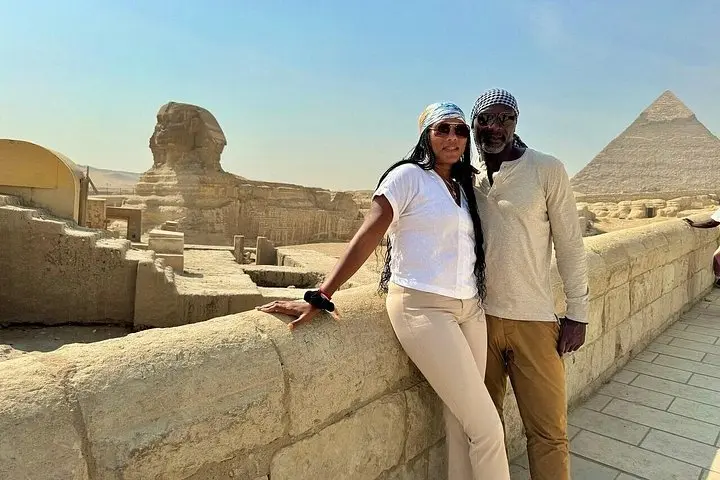
You step from the airport heat into a climate-controlled van and the buzz of Cairo folds around you — horns, vendors, and the flat horizon of the Giza Plateau with three angular silhouettes watching over the city.
You step from the airport heat into a climate-controlled van and the buzz of Cairo folds around you — horns, vendors, and the flat horizon of the Giza Plateau with three angular silhouettes watching over the city.
This seven-day VIP itinerary threads through Egypt’s long timeline: Pharaonic tombs at the Valley of the Kings, the Greco-Roman layers of Alexandria, the Nile’s carved temples in Aswan and Kom Ombo, and the micro-architectural drama of Abu Simbel. Geologically the route follows the Nile corridor — a narrow fertile ribbon carved through desert rock — with coastal limestone at Alexandria and wind-polished sandstone around Luxor. Culturally you'll pass Coptic mosaics, Ottoman bazaars at Khan el-Khalili, and modern Cairo’s bustle; the Egyptian Museum and rebuilt Bibliotheca Alexandrina summarize millennia of collecting and loss.
Expect early starts (Abu Simbel transfers often leave before dawn), long transfers — Cairo to Alexandria ~220 km (2.5–3 hours) and Aswan to Abu Simbel ~280 km (3–4 hours) — and flat, low-elevation walking across temple complexes. A hot-air balloon over Luxor rises at dawn and gives a rare aerial reading of the Nile plain.
Practical guidance: bring sun protection, a refillable water bottle, sturdy closed-toe shoes for uneven stone floors, and layered clothing for cool desert nights. Carry local currency for tips and market bargaining; photocopies of passports are useful. Pace yourself: temples reward slow observation more than speed, and water plus shade breaks make long days manageable.