THE ADVENTURE COLLECTIVE® · Independent discovery and booking for outdoor travel

Seven days across Turkey’s western coast: begin in Istanbul’s Byzantine and Ottoman core, then fly to the Aegean for Ephesus, Pamukkale and Pergamon. This itinerary blends archaeological highlights with coastal towns and practical travel logistics.
Seven days across Turkey’s western coast: begin in Istanbul’s Byzantine and Ottoman core, then fly to the Aegean for Ephesus, Pamukkale and Pergamon. This itinerary blends archaeological highlights with coastal towns and practical travel logistics.
Arrive into Istanbul and the city breathes around you—boats nudge the Bosphorus, gulls argue over fish, and the skyline alternates between domes and minarets. Over three days a guide moves the group through Constantinople’s Byzantine bones and Ottoman façades, then a short domestic flight drops travelers into the Aegean light for ruins, travertines and coastal towns.
Verified experiences and guided adventures in the surrounding area.
Operated by City of Sultans · Istanbul, Istanbul
Arrive into Istanbul and the city breathes around you—boats nudge the Bosphorus, gulls argue over fish, and the skyline alternates between domes and minarets. Over three days a guide moves the group through Constantinople’s Byzantine bones and Ottoman façades, then a short domestic flight drops travelers into the Aegean light for ruins, travertines and coastal towns.
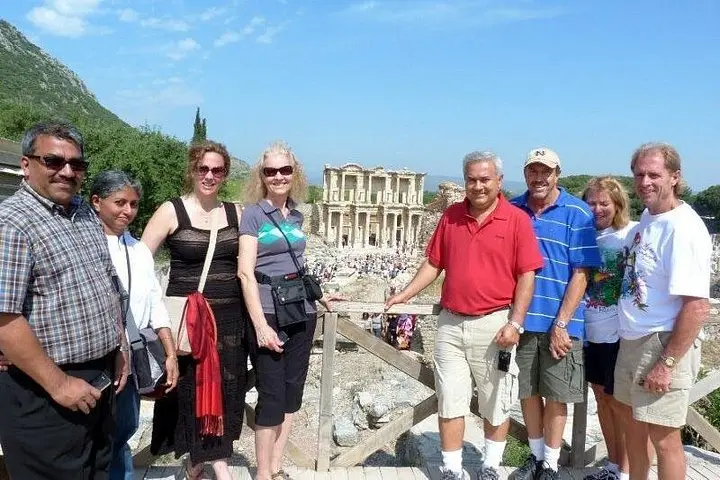
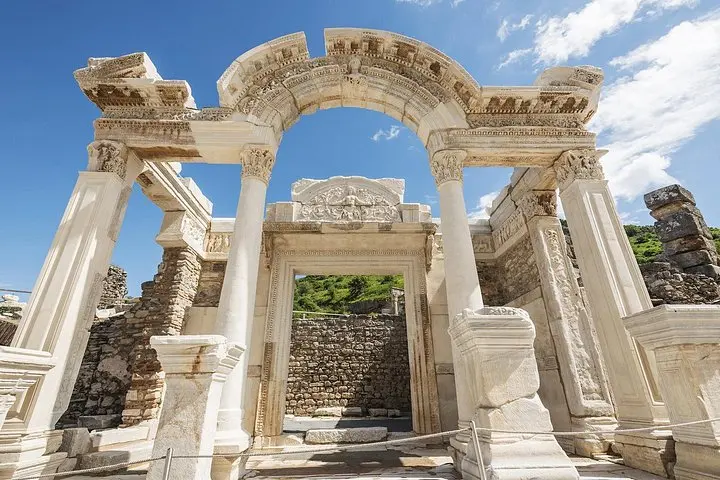
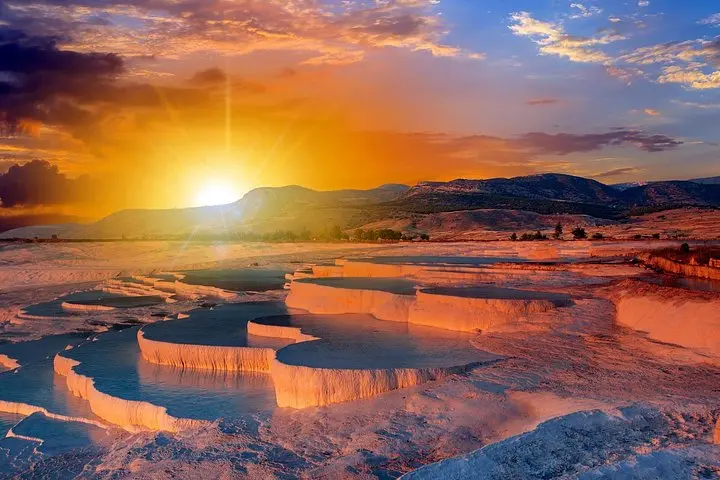
This itinerary stitches together layers of Anatolian history: Roman Ephesus’ marble streets and the Celsus Library; the early-Christian sites around Selçuk; Hierapolis’ thermal travertines at Pamukkale where mineral-rich water has left sculpted white terraces for millennia; and the steep acropolis of Pergamon, once a Hellenistic capital that rose on a ridge above the Caicus valley. Geologically, Pamukkale’s terraces are calcium-carbonate deposits slowly built by flowing hot springs—the feature that keeps cameras clicking and shoes careful.
Culturally expect lively bazaars, strong coffee rituals, and provincial seaside hospitality in Kuşadası. Local guides commonly explain Ottoman court life in Istanbul and the civic architecture of Roman Asia Minor, giving context to ruins that are otherwise just stone and scale.
Practical guidance: pack sturdy walking shoes for uneven ancient streets, sun protection for exposed sites, and layers for cool evenings. Expect several short flights/transfers and moderate daily walking on slopes and steps; bring a refillable bottle—tap water is safe in cities but carry drinking water for rural sites. Early starts avoid the midday heat at Ephesus and Pamukkale, and most sites have steps and uneven surfaces—plan accordingly.
This tour notes some admissions included (e.g., select sites) and some not; check the itinerary and ask the operator which museums and ruins are covered.
Yes — internal flight tickets between Istanbul and Izmir are listed among the inclusions for this itinerary.
Many ancient sites have uneven terrain and steps; some parts may be wheelchair accessible but assistance and route modifications could be required—notify the operator in advance.
Guides are typically provided in the tour language advertised (often English); confirm availability of other languages when booking.
City of Sultans operates guided outdoor trips and adventures with an emphasis on safety, stewardship, and memorable experiences.
Arrive into Istanbul and the city breathes around you—boats nudge the Bosphorus, gulls argue over fish, and the skyline alternates between domes and minarets. Over three days a guide moves the group through Constantinople’s Byzantine bones and Ottoman façades, then a short domestic flight drops travelers into the Aegean light for ruins, travertines and coastal towns.
Arrive into Istanbul and the city breathes around you—boats nudge the Bosphorus, gulls argue over fish, and the skyline alternates between domes and minarets. Over three days a guide moves the group through Constantinople’s Byzantine bones and Ottoman façades, then a short domestic flight drops travelers into the Aegean light for ruins, travertines and coastal towns.
This itinerary stitches together layers of Anatolian history: Roman Ephesus’ marble streets and the Celsus Library; the early-Christian sites around Selçuk; Hierapolis’ thermal travertines at Pamukkale where mineral-rich water has left sculpted white terraces for millennia; and the steep acropolis of Pergamon, once a Hellenistic capital that rose on a ridge above the Caicus valley. Geologically, Pamukkale’s terraces are calcium-carbonate deposits slowly built by flowing hot springs—the feature that keeps cameras clicking and shoes careful.
Culturally expect lively bazaars, strong coffee rituals, and provincial seaside hospitality in Kuşadası. Local guides commonly explain Ottoman court life in Istanbul and the civic architecture of Roman Asia Minor, giving context to ruins that are otherwise just stone and scale.
Practical guidance: pack sturdy walking shoes for uneven ancient streets, sun protection for exposed sites, and layers for cool evenings. Expect several short flights/transfers and moderate daily walking on slopes and steps; bring a refillable bottle—tap water is safe in cities but carry drinking water for rural sites. Early starts avoid the midday heat at Ephesus and Pamukkale, and most sites have steps and uneven surfaces—plan accordingly.