THE ADVENTURE COLLECTIVE® · Independent discovery and booking for outdoor travel
A compact week through Egypt’s most iconic sites: Giza’s pyramids, a 5-star Nile cruise, Abu Simbel’s temple complex and a sunrise hot-air balloon over Luxor. Expect cultural depth, early starts and river-side scenery.
A compact week through Egypt’s most iconic sites: Giza’s pyramids, a 5-star Nile cruise, Abu Simbel’s temple complex and a sunrise hot-air balloon over Luxor. Expect cultural depth, early starts and river-side scenery.
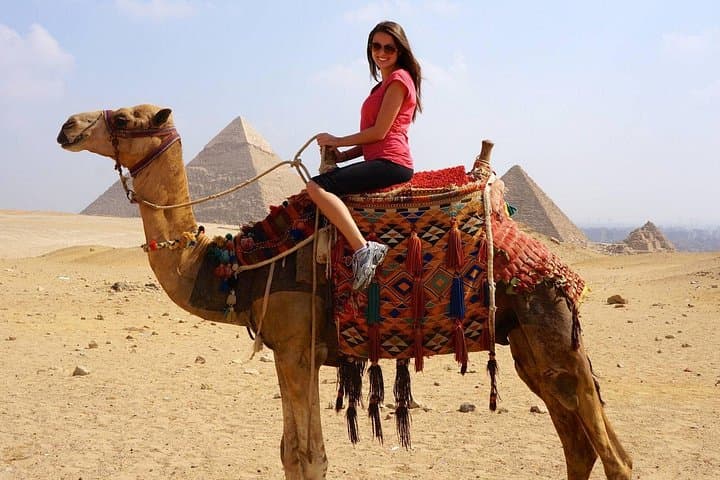
The sun has barely lifted above the limestone ridges when the first silhouette appears: the Great Pyramid cutting a clean angle against the flat desert. Travelers board in Cairo, then slide south along the Nile — a moving thread of villages, palm groves and fishing boats — arriving at Aswan, Abu Simbel and Luxor over seven nights.
Verified experiences and guided adventures in the surrounding area.
Operated by Here Egypt Tours · Cairo, Cairo Governorate
The sun has barely lifted above the limestone ridges when the first silhouette appears: the Great Pyramid cutting a clean angle against the flat desert. Travelers board in Cairo, then slide south along the Nile — a moving thread of villages, palm groves and fishing boats — arriving at Aswan, Abu Simbel and Luxor over seven nights.
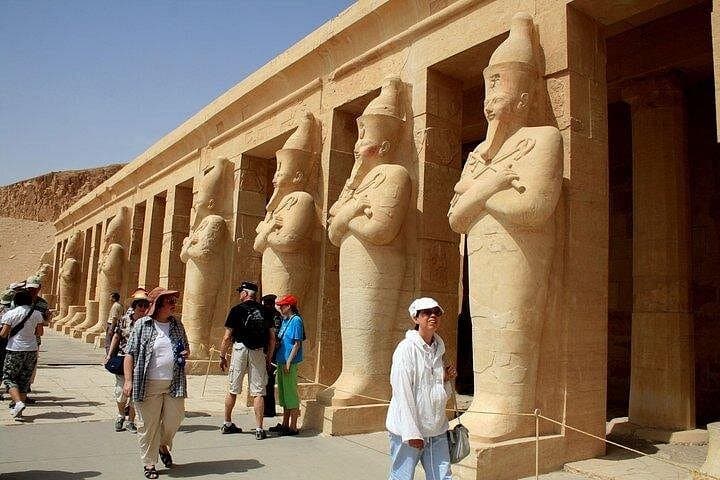
This itinerary stitches classical archaeology and living river culture. Giza’s pyramids and the Sphinx reflect Old Kingdom engineering; the rock-cut temples at Abu Simbel showcase Ramesses II’s imperial program and solar alignments; Luxor and Karnak record New Kingdom ritual architecture and the funerary landscape of the Valley of the Kings. Geologically, the Nile runs over Pharaonic alluvium — the dark silt that made agriculture and civilization possible — while the desert plateaus frame the river with wind-sculpted stone.
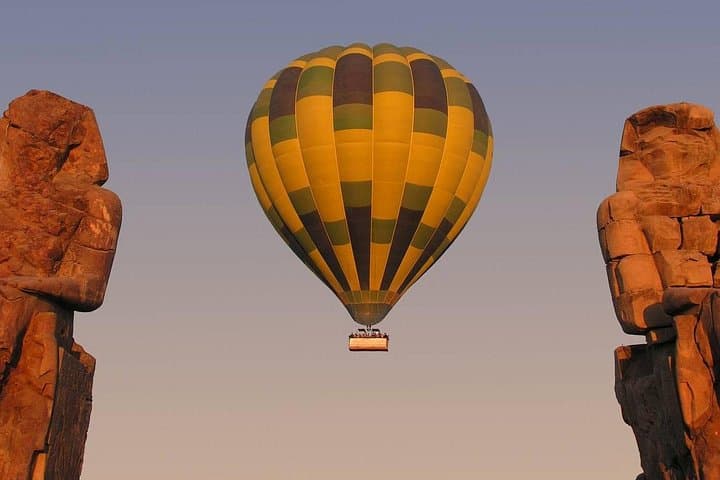
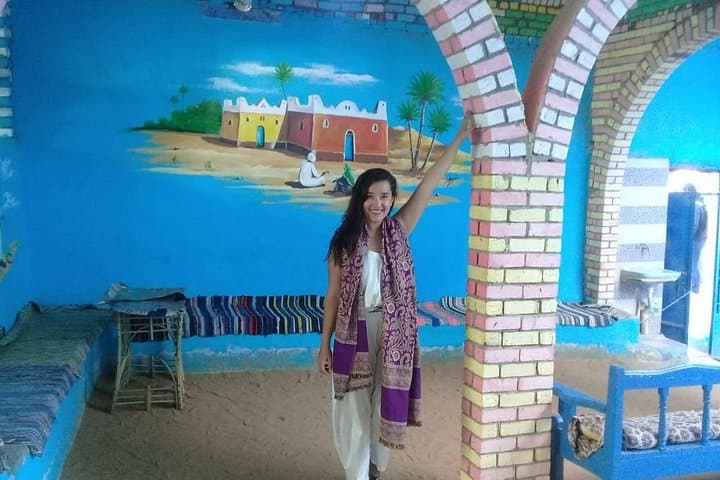
Expect guided walks across uneven stone, boat transfers to temple islands, an overnight 5-star cruise cabin and an early-morning hot air balloon over Luxor. Villages along the Nile offer a glimpse of Nubian craft and small-scale agriculture; vendors and local tea punctuate sailing days.
Practical guidance: pack breathable layers and sturdy walking shoes for temple steps and sand; carry a refillable water bottle and sun protection for high summer temperatures; book the balloon and Abu Simbel visits early in the trip to allow weather contingencies; note that cameras may be restricted in some experiences and children under six are excluded from the balloon. Transfers, train segments and most meals are included, so the trip balances relaxed river travel with concentrated archaeological exploration.
The balloon is offered as part of the itinerary but can be weather-dependent; operator rules prohibit full cameras in the basket but allow cellphone photos. Refunds apply for weather cancellations per policy.
Most transfers, many meals and key visits are included; specific admissions (where noted) and optional upgrades may be extra—confirm on booking details.
Children under six are not permitted on the hot-air balloon; family bookings should plan alternatives for younger children.
The operator provides partial refunds for weather cancellations (specified per experience) and may offer alternate scheduling when possible.
Here Egypt Tours operates guided outdoor trips and adventures with an emphasis on safety, stewardship, and memorable experiences.
The sun has barely lifted above the limestone ridges when the first silhouette appears: the Great Pyramid cutting a clean angle against the flat desert. Travelers board in Cairo, then slide south along the Nile — a moving thread of villages, palm groves and fishing boats — arriving at Aswan, Abu Simbel and Luxor over seven nights.
The sun has barely lifted above the limestone ridges when the first silhouette appears: the Great Pyramid cutting a clean angle against the flat desert. Travelers board in Cairo, then slide south along the Nile — a moving thread of villages, palm groves and fishing boats — arriving at Aswan, Abu Simbel and Luxor over seven nights.
This itinerary stitches classical archaeology and living river culture. Giza’s pyramids and the Sphinx reflect Old Kingdom engineering; the rock-cut temples at Abu Simbel showcase Ramesses II’s imperial program and solar alignments; Luxor and Karnak record New Kingdom ritual architecture and the funerary landscape of the Valley of the Kings. Geologically, the Nile runs over Pharaonic alluvium — the dark silt that made agriculture and civilization possible — while the desert plateaus frame the river with wind-sculpted stone.
Expect guided walks across uneven stone, boat transfers to temple islands, an overnight 5-star cruise cabin and an early-morning hot air balloon over Luxor. Villages along the Nile offer a glimpse of Nubian craft and small-scale agriculture; vendors and local tea punctuate sailing days.
Practical guidance: pack breathable layers and sturdy walking shoes for temple steps and sand; carry a refillable water bottle and sun protection for high summer temperatures; book the balloon and Abu Simbel visits early in the trip to allow weather contingencies; note that cameras may be restricted in some experiences and children under six are excluded from the balloon. Transfers, train segments and most meals are included, so the trip balances relaxed river travel with concentrated archaeological exploration.
