THE ADVENTURE COLLECTIVE® · Independent discovery and booking for outdoor travel

Drive the Tizi n’Tichka pass from Marrakech to the vast Erg Chigaga dunes, sleep in bivouac camps, ride camels at sunset and explore kasbahs and the Draa Valley on an immersive multi-day desert safari.
Drive the Tizi n’Tichka pass from Marrakech to the vast Erg Chigaga dunes, sleep in bivouac camps, ride camels at sunset and explore kasbahs and the Draa Valley on an immersive multi-day desert safari.
You set out before dawn from Marrakech, the 4x4 swallowing the city’s red clay as the road climbs the Tizi n’Tichka pass (about 2,260 m) and drops toward sun-baked valleys. The wind changes character here — from Atlas chill to the dry, sifting breath of the Sahara — and by late afternoon the horizon softens into rippled sand: Erg Chigaga’s dunes rising like slow waves.
Verified experiences and guided adventures in the surrounding area.
Operated by Desert Atmosphere Tours · M'Hamid El Ghizlane, Drâa-Tafilalet
You set out before dawn from Marrakech, the 4x4 swallowing the city’s red clay as the road climbs the Tizi n’Tichka pass (about 2,260 m) and drops toward sun-baked valleys. The wind changes character here — from Atlas chill to the dry, sifting breath of the Sahara — and by late afternoon the horizon softens into rippled sand: Erg Chigaga’s dunes rising like slow waves.
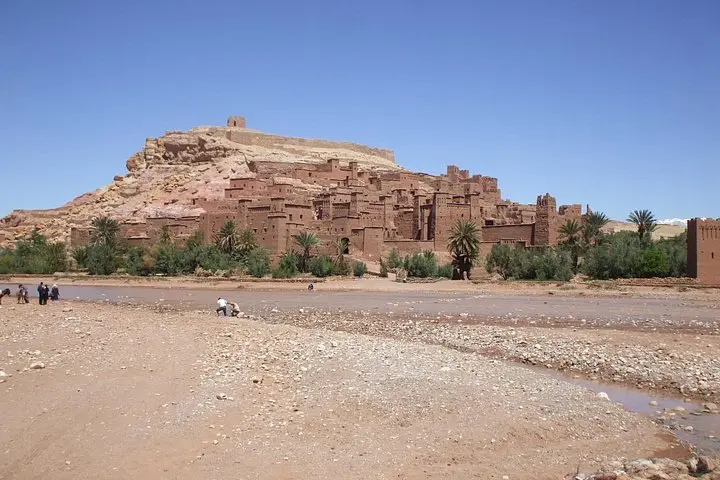
This route follows old caravan arteries. Kasbahs at Aït Ben Haddou and Taourirt mark the region’s adobe architecture and the long history of trans-Saharan trade. Geologically, you move from folded schist and limestone in the High Atlas into eroded plateaus and finally the hamada — a hard, stony desert — that gives way to the sweeping erg where sand accumulates into tall dunes.
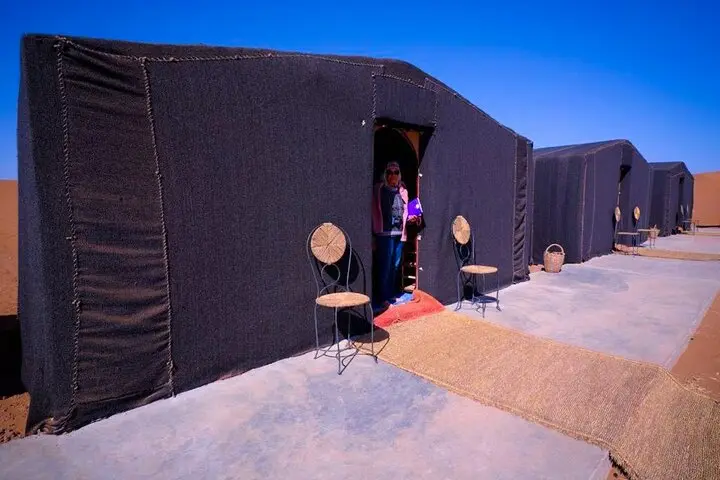
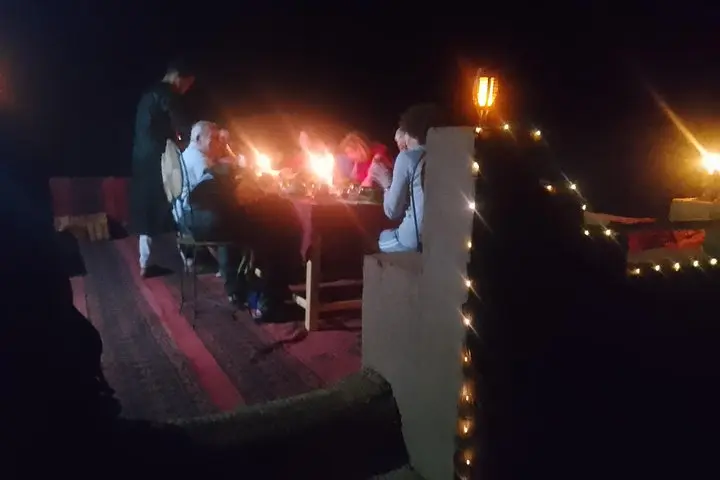
Local culture is Amazigh and Saharan: nomad tents, Tamgroute pottery, and palm-grove oases shaped by the Draa River. Expect nights under clear skies in bivouac tents, a one-hour camel trek at sunset, and simple camp meals cooked over coals.
Practicalities: the full loop is best as a multi-day ride (the drive from Marrakech to M’hamid is roughly 9–10 hours over varied roads). Temperatures swing dramatically; bring layers, sun protection and at least 3–4 liters of water per day. Footwear should handle sand and rocky tracks; carry cash for remote purchases and a headlamp for camps. If you want smoother dunes at sunrise, plan your camel ride early — and keep your camera battery warm, not buried in sand.
Expect roughly 9–10 hours of driving with stops (via Tizi n’Tichka, Ouarzazate and the Draa Valley); the itinerary breaks the route into comfortable stages.
No special skill is required; rides are typically short (about an hour) and guided by experienced handlers — but they can be bumpy, so be ready for basic saddle movement.
Sleep is usually in nomad-style tents or under the stars on sleeping mats; some camps offer mattress and blankets — check in advance for private vs. shared tents.
The tour notes it’s not recommended for travelers with serious heart or spinal issues and not suitable for pregnant travelers; children are allowed but consider long drives and desert conditions.
Desert Atmosphere Tours operates guided outdoor trips and adventures with an emphasis on safety, stewardship, and memorable experiences.
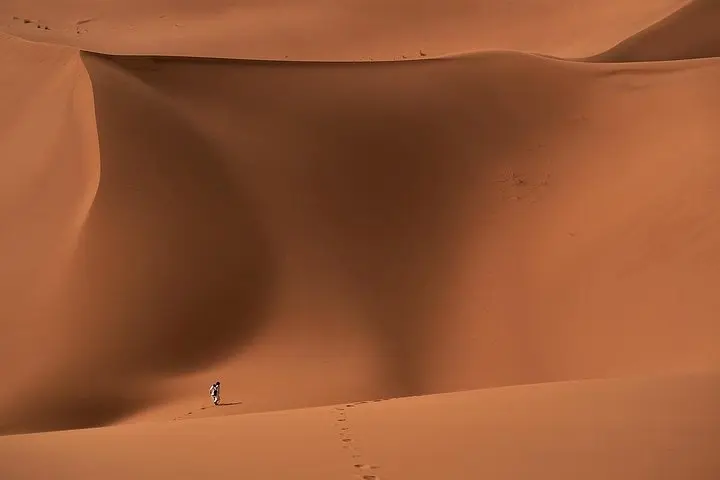
You set out before dawn from Marrakech, the 4x4 swallowing the city’s red clay as the road climbs the Tizi n’Tichka pass (about 2,260 m) and drops toward sun-baked valleys. The wind changes character here — from Atlas chill to the dry, sifting breath of the Sahara — and by late afternoon the horizon softens into rippled sand: Erg Chigaga’s dunes rising like slow waves.
You set out before dawn from Marrakech, the 4x4 swallowing the city’s red clay as the road climbs the Tizi n’Tichka pass (about 2,260 m) and drops toward sun-baked valleys. The wind changes character here — from Atlas chill to the dry, sifting breath of the Sahara — and by late afternoon the horizon softens into rippled sand: Erg Chigaga’s dunes rising like slow waves.
This route follows old caravan arteries. Kasbahs at Aït Ben Haddou and Taourirt mark the region’s adobe architecture and the long history of trans-Saharan trade. Geologically, you move from folded schist and limestone in the High Atlas into eroded plateaus and finally the hamada — a hard, stony desert — that gives way to the sweeping erg where sand accumulates into tall dunes.
Local culture is Amazigh and Saharan: nomad tents, Tamgroute pottery, and palm-grove oases shaped by the Draa River. Expect nights under clear skies in bivouac tents, a one-hour camel trek at sunset, and simple camp meals cooked over coals.
Practicalities: the full loop is best as a multi-day ride (the drive from Marrakech to M’hamid is roughly 9–10 hours over varied roads). Temperatures swing dramatically; bring layers, sun protection and at least 3–4 liters of water per day. Footwear should handle sand and rocky tracks; carry cash for remote purchases and a headlamp for camps. If you want smoother dunes at sunrise, plan your camel ride early — and keep your camera battery warm, not buried in sand.