THE ADVENTURE COLLECTIVE® · Independent discovery and booking for outdoor travel

Eight days of Egypt’s essential sites: Giza’s pyramids, a five‑star Nile cruise from Aswan to Luxor, the Valley of the Kings, and optional Abu Simbel. Practical tips for timing, clothing and what to expect on trains and temples.
Eight days of Egypt’s essential sites: Giza’s pyramids, a five‑star Nile cruise from Aswan to Luxor, the Valley of the Kings, and optional Abu Simbel. Practical tips for timing, clothing and what to expect on trains and temples.
The sun lifts off the limestone shoulders of Giza and the desert exhales a dry, metallic heat as you stand before the Great Pyramid. Streets hum behind you; the Nile slides like a slow promise to the south. Over eight days this itinerary stitches metropolitan Cairo to the slow-motion world of Upper Egypt: overnight trains, a five-star Nile cruise, and temple visits that compress millennia into a single day.
Verified experiences and guided adventures in the surrounding area.
Operated by Hola Egipto · Cairo, Cairo Governorate
The sun lifts off the limestone shoulders of Giza and the desert exhales a dry, metallic heat as you stand before the Great Pyramid. Streets hum behind you; the Nile slides like a slow promise to the south. Over eight days this itinerary stitches metropolitan Cairo to the slow-motion world of Upper Egypt: overnight trains, a five-star Nile cruise, and temple visits that compress millennia into a single day.
You’ll move through Egypt’s layered history—Pharaonic funerary architecture at Saqqara and the Valley of the Kings, Ptolemaic and Roman additions at Kom Ombo, and modern Cairo’s Mamluk citadel and Ottoman mosques. Geology is visible in the stone itself: quarried limestone and sandstone beds tell a record of ancient seas and uplift, while the Nile’s alluvial plain explains why civilization clustered here.
Culturally, expect guided interpretation from trained Egyptologists, local vendors at temple exits, and simple, courteous rhythms aboard the cruise. Practicalities matter: temple steps are uneven; Luxor’s Valley of the Kings is hot midday and limits photography in tomb interiors.
Plan light, breathable clothing that respects religious sites, a good pair of walking shoes, and a daypack with sun protection and water. Time visits early or late to avoid peak heat and crowds; consider the optional Abu Simbel extension for a morning visit from Aswan. Passport required for many tickets—keep it handy. With modest preparation, this trip balances showpiece monuments and the quiet motion of the Nile, leaving space to absorb why this river shaped an empire.
Many nationalities require a visa; check Egypt’s e‑visa site or consulate before travel and carry passport photos if requested.
Abu Simbel is offered as an optional early‑morning extension from Aswan and typically costs extra—book in advance if desired.
Yes—the itinerary includes private cabins on a five‑star cruise; confirm upper‑deck or cabin class at booking.
Operator lists wheelchair accessibility, but some historic sites have steps and uneven terrain—confirm specific needs before booking.
Hola Egipto operates guided outdoor trips and adventures with an emphasis on safety, stewardship, and memorable experiences.

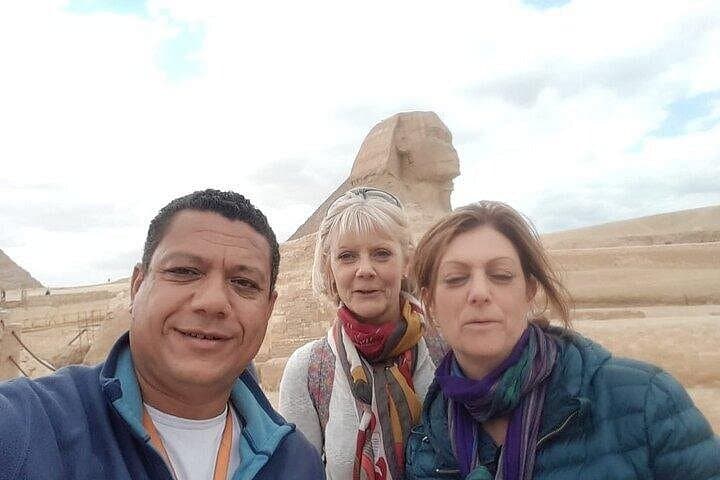


The sun lifts off the limestone shoulders of Giza and the desert exhales a dry, metallic heat as you stand before the Great Pyramid. Streets hum behind you; the Nile slides like a slow promise to the south. Over eight days this itinerary stitches metropolitan Cairo to the slow-motion world of Upper Egypt: overnight trains, a five-star Nile cruise, and temple visits that compress millennia into a single day.
The sun lifts off the limestone shoulders of Giza and the desert exhales a dry, metallic heat as you stand before the Great Pyramid. Streets hum behind you; the Nile slides like a slow promise to the south. Over eight days this itinerary stitches metropolitan Cairo to the slow-motion world of Upper Egypt: overnight trains, a five-star Nile cruise, and temple visits that compress millennia into a single day.
You’ll move through Egypt’s layered history—Pharaonic funerary architecture at Saqqara and the Valley of the Kings, Ptolemaic and Roman additions at Kom Ombo, and modern Cairo’s Mamluk citadel and Ottoman mosques. Geology is visible in the stone itself: quarried limestone and sandstone beds tell a record of ancient seas and uplift, while the Nile’s alluvial plain explains why civilization clustered here.
Culturally, expect guided interpretation from trained Egyptologists, local vendors at temple exits, and simple, courteous rhythms aboard the cruise. Practicalities matter: temple steps are uneven; Luxor’s Valley of the Kings is hot midday and limits photography in tomb interiors.
Plan light, breathable clothing that respects religious sites, a good pair of walking shoes, and a daypack with sun protection and water. Time visits early or late to avoid peak heat and crowds; consider the optional Abu Simbel extension for a morning visit from Aswan. Passport required for many tickets—keep it handy. With modest preparation, this trip balances showpiece monuments and the quiet motion of the Nile, leaving space to absorb why this river shaped an empire.