THE ADVENTURE COLLECTIVE® · Independent discovery and booking for outdoor travel

Watch Kilimanjaro silhouette elephants at Amboseli, pedal Hell’s Gate canyon floors, and witness the flamingo bands at Nakuru and Bogoria. This eight-day safari strings iconic Kenyan landscapes into a practical, deeply scenic loop for first-time and repeat safari travelers alike.
Watch Kilimanjaro silhouette elephants at Amboseli, pedal Hell’s Gate canyon floors, and witness the flamingo bands at Nakuru and Bogoria. This eight-day safari strings iconic Kenyan landscapes into a practical, deeply scenic loop for first-time and repeat safari travelers alike.
Dawn breaks across the Rift Valley and Mount Kilimanjaro cuts a patient silhouette against a pink sky. Dust lifts in the wake of a passing jeep; elephants amble toward a swamp as if pulled by the mountain’s gravity. This is the opening act of an eight-day loop that reads like an African primer: Amboseli’s wide plains and Kilimanjaro views, the flamingo-streaked shelves of Nakuru and Bogoria, the geothermal fizz of Lake Bogoria, the sharp cliffs and bike-able canyons of Hell’s Gate, and the thunder of the Masai Mara.
Verified experiences and guided adventures in the surrounding area.
Operated by African Home Adventure Safaris · Nairobi, Nairobi County
Dawn breaks across the Rift Valley and Mount Kilimanjaro cuts a patient silhouette against a pink sky. Dust lifts in the wake of a passing jeep; elephants amble toward a swamp as if pulled by the mountain’s gravity. This is the opening act of an eight-day loop that reads like an African primer: Amboseli’s wide plains and Kilimanjaro views, the flamingo-streaked shelves of Nakuru and Bogoria, the geothermal fizz of Lake Bogoria, the sharp cliffs and bike-able canyons of Hell’s Gate, and the thunder of the Masai Mara.
Geology here is visible history. The Great Rift Valley is a broad fault—kilometres-wide scar—where tectonic plates are slowly pulling East Africa apart. Volcanic basins form alkaline lakes that stage spectacular birdlife; the valley’s escarpments and old lava flows shape the roads and the game-viewing platforms you’ll use every day. Culturally the region is dominated by Maasai pastoralists whose lives have been intertwined with these landscapes for centuries; many lodges include village visits that explain beadwork, age-sets and the practical rhythms of pastoral life.
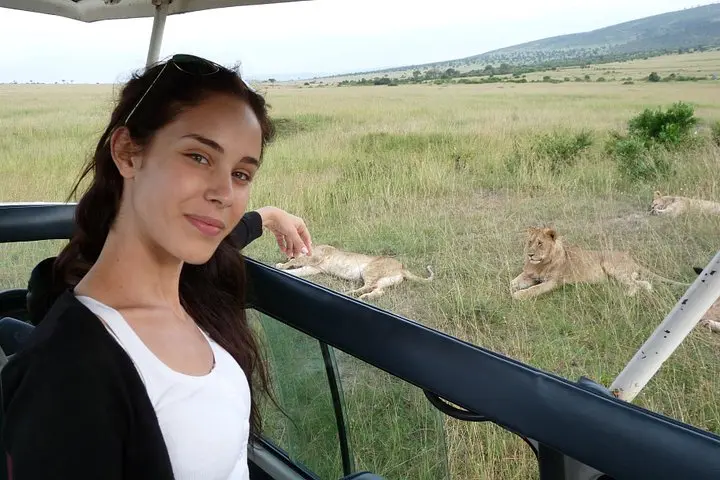
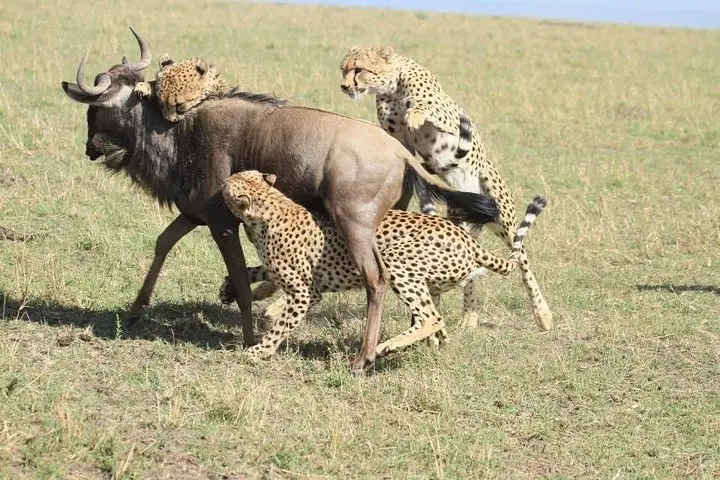
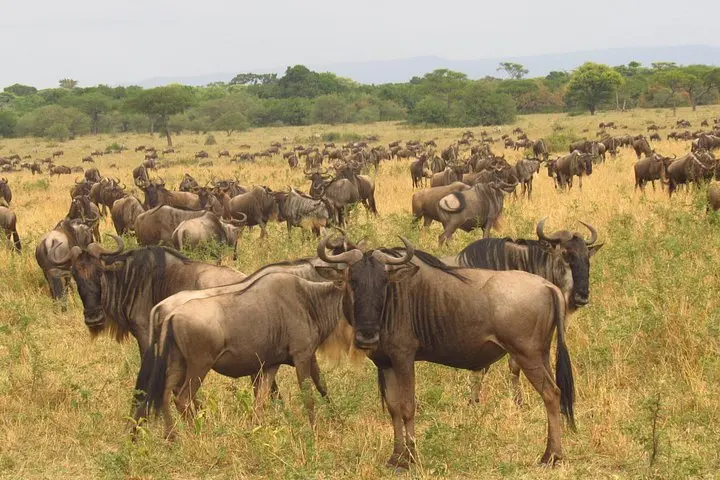
On the plains, wildlife behaves like a careful script: elephant families move in deliberate columns, lion prides coordinate a hunt, and from July to October the Mara swells with the great wildebeest migration crossing the Mara River. In contrast, Lake Nakuru and Bogoria are almost theatrical—a living rim of pink when lesser flamingos gather by the hundreds of thousands, driven by algal blooms and shallow saline shallows. Hell’s Gate, by contrast, dares you to dismount: its gorge walls and geothermal vents are an invitation to hike and cycle amid rock faces and hot springs.
Practicalities matter on a trip like this. Transport is private and the itinerary involves long drives—expect several days with 3–6 hours of driving between camps; Nairobi to Amboseli is roughly 4–5 hours (about 240 km). Accommodations alternate between lodges and tented camps; early morning and late afternoon game drives are standard. Bring binoculars (10x42 recommended), a long lens for photography (200–400mm ideal), neutral clothing tones, sun protection and a daypack for short walks. The itinerary is wheelchair-accessible in parts but terrain in parks can be uneven; not recommended for pregnant travelers.
Health and safety: carry anti-malarial advice from your doctor, keep hydrated in the dry zones, and use reef-safe sunscreen near lakes and riverbanks. Respect wildlife distances—guides enforce this, but your discipline matters. With its mix of geology, birds, big game and Maasai culture, the loop between Amboseli, the Rift Valley lakes and the Masai Mara is both classroom and theatre: a compact, eight-day education in why East Africa continues to draw travelers who want to see the continent move beneath their feet.
Routine vaccines are recommended and anti-malarial medication is advised—consult a travel clinic 6–8 weeks before departure.
Expect multiple driving days with 3–6 hour transfers between parks; Nairobi to Amboseli is about 4–5 hours (≈240 km).
This tour description indicates transportation and meals included; confirm park entry fees with the operator as they can be listed separately.
Children can join but must be accompanied by an adult; some drives and cultural visits may be restricted by age—check with the operator.
Guides are typically English-speaking and familiar with Maasai cultural interpretation; other languages may be available on request.
Tipping is customary—plan roughly $10–20 per person per day shared between driver and guide, adjusted for service and group size.
African Home Adventure Safaris operates guided outdoor trips and adventures with an emphasis on safety, stewardship, and memorable experiences.
Dawn breaks across the Rift Valley and Mount Kilimanjaro cuts a patient silhouette against a pink sky. Dust lifts in the wake of a passing jeep; elephants amble toward a swamp as if pulled by the mountain’s gravity. This is the opening act of an eight-day loop that reads like an African primer: Amboseli’s wide plains and Kilimanjaro views, the flamingo-streaked shelves of Nakuru and Bogoria, the geothermal fizz of Lake Bogoria, the sharp cliffs and bike-able canyons of Hell’s Gate, and the thunder of the Masai Mara.
Dawn breaks across the Rift Valley and Mount Kilimanjaro cuts a patient silhouette against a pink sky. Dust lifts in the wake of a passing jeep; elephants amble toward a swamp as if pulled by the mountain’s gravity. This is the opening act of an eight-day loop that reads like an African primer: Amboseli’s wide plains and Kilimanjaro views, the flamingo-streaked shelves of Nakuru and Bogoria, the geothermal fizz of Lake Bogoria, the sharp cliffs and bike-able canyons of Hell’s Gate, and the thunder of the Masai Mara.
Geology here is visible history. The Great Rift Valley is a broad fault—kilometres-wide scar—where tectonic plates are slowly pulling East Africa apart. Volcanic basins form alkaline lakes that stage spectacular birdlife; the valley’s escarpments and old lava flows shape the roads and the game-viewing platforms you’ll use every day. Culturally the region is dominated by Maasai pastoralists whose lives have been intertwined with these landscapes for centuries; many lodges include village visits that explain beadwork, age-sets and the practical rhythms of pastoral life.
On the plains, wildlife behaves like a careful script: elephant families move in deliberate columns, lion prides coordinate a hunt, and from July to October the Mara swells with the great wildebeest migration crossing the Mara River. In contrast, Lake Nakuru and Bogoria are almost theatrical—a living rim of pink when lesser flamingos gather by the hundreds of thousands, driven by algal blooms and shallow saline shallows. Hell’s Gate, by contrast, dares you to dismount: its gorge walls and geothermal vents are an invitation to hike and cycle amid rock faces and hot springs.
Practicalities matter on a trip like this. Transport is private and the itinerary involves long drives—expect several days with 3–6 hours of driving between camps; Nairobi to Amboseli is roughly 4–5 hours (about 240 km). Accommodations alternate between lodges and tented camps; early morning and late afternoon game drives are standard. Bring binoculars (10x42 recommended), a long lens for photography (200–400mm ideal), neutral clothing tones, sun protection and a daypack for short walks. The itinerary is wheelchair-accessible in parts but terrain in parks can be uneven; not recommended for pregnant travelers.
Health and safety: carry anti-malarial advice from your doctor, keep hydrated in the dry zones, and use reef-safe sunscreen near lakes and riverbanks. Respect wildlife distances—guides enforce this, but your discipline matters. With its mix of geology, birds, big game and Maasai culture, the loop between Amboseli, the Rift Valley lakes and the Masai Mara is both classroom and theatre: a compact, eight-day education in why East Africa continues to draw travelers who want to see the continent move beneath their feet.