THE ADVENTURE COLLECTIVE® · Independent discovery and booking for outdoor travel

Approach Kilimanjaro from the west on the Lemosho Route: a quieter, scenic path that moves through rainforest, the Shira Plateau and alpine desert before a midnight summit push to Uhuru Peak. This eight-day itinerary prioritizes acclimatization and maximizes summit success.
Approach Kilimanjaro from the west on the Lemosho Route: a quieter, scenic path that moves through rainforest, the Shira Plateau and alpine desert before a midnight summit push to Uhuru Peak. This eight-day itinerary prioritizes acclimatization and maximizes summit success.
You start under a canopy that still drinks the morning fog — a green throat of moss and strangler figs swallowing the first footsteps. The trail through Londorossi Gate slides quietly uphill, the air cool and damp, and the mountain peeks through breaks in the canopy like a patient giant. Across eight days the forest gives way to heath and moor, then the broad, lunar-burnished Shira Plateau, a jagged lava tower, and the thin-blooded alpine desert that leads to Barafu and, at dawn, Uhuru Peak.
Verified experiences and guided adventures in the surrounding area.
Operated by Eretoto Adventures · Moshi, Kilimanjaro Region
You start under a canopy that still drinks the morning fog — a green throat of moss and strangler figs swallowing the first footsteps. The trail through Londorossi Gate slides quietly uphill, the air cool and damp, and the mountain peeks through breaks in the canopy like a patient giant. Across eight days the forest gives way to heath and moor, then the broad, lunar-burnished Shira Plateau, a jagged lava tower, and the thin-blooded alpine desert that leads to Barafu and, at dawn, Uhuru Peak.
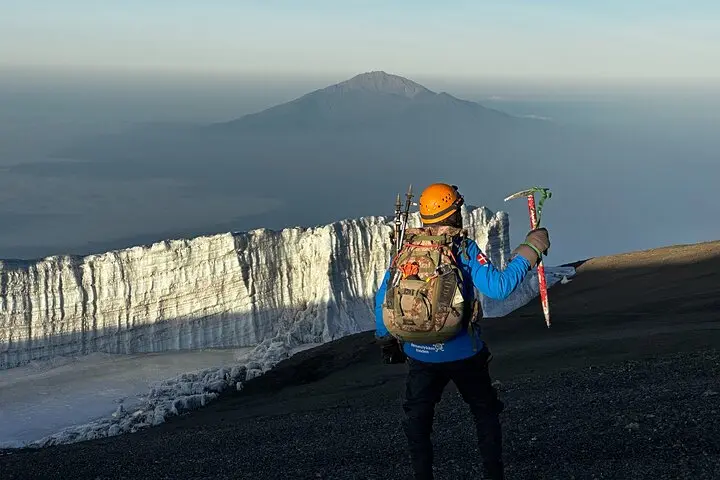
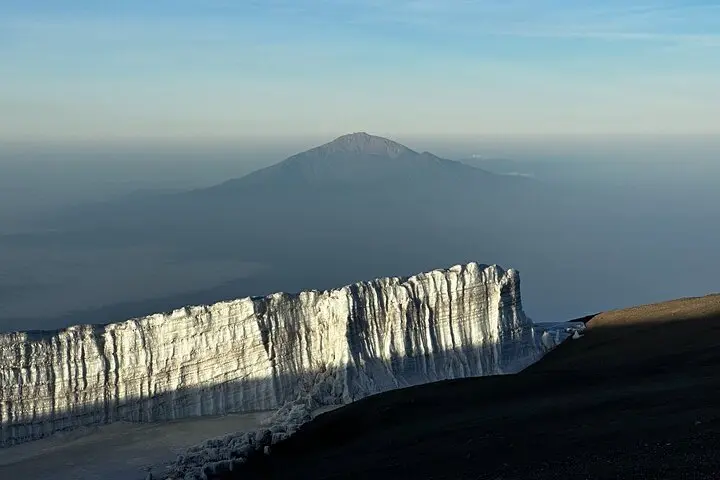
Kilimanjaro is a stratovolcano with three peaks: Kibo (the sleeping summit), Mawenzi and Shira. The Lemosho Route approaches from the west, where volcanic flows shaped the plateau you cross on days two and three. The mountain’s shrinking glaciers are visible from the rim — geology written in ice — and local Chagga and Maasai culture are present in the villages and the hospitality of the climbing crews. Porters, cooks and guides are more than logistics; they are the engine that converts a route into a summit success, and conservation fees you pay help maintain trails and support park rangers.
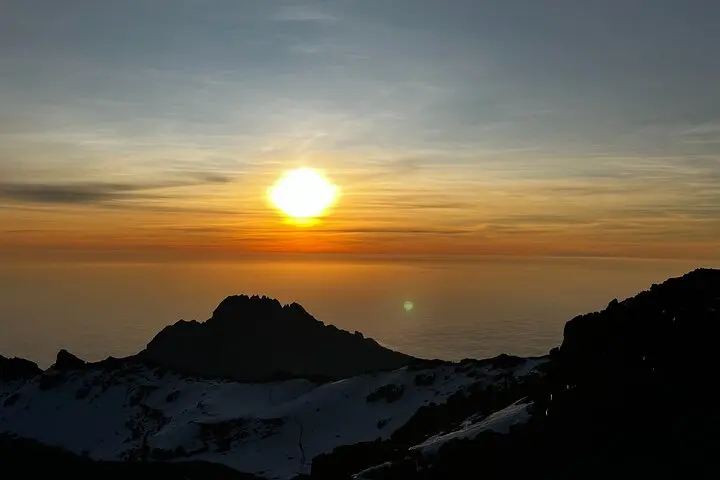
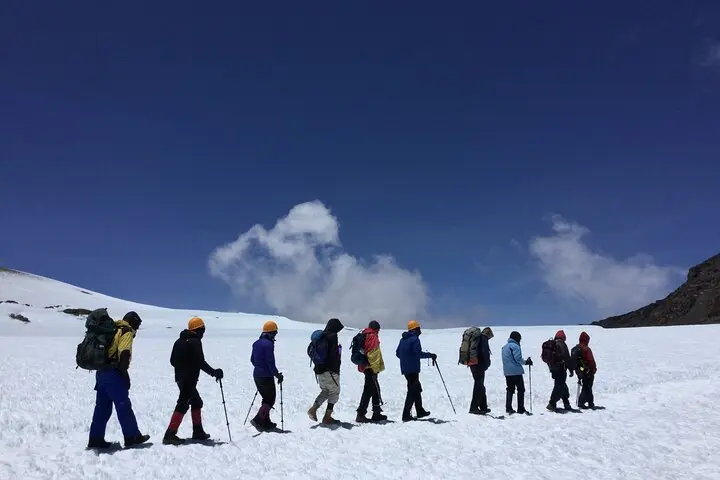
Day-to-day the profile is deliberate: long, steady gains for acclimatization and a key ‘‘climb high, sleep low’’ day at Lava Tower. Expect technical scrambling at the Barranco Wall and a thin, cold summit push that begins at midnight and ends — if the mountain allows — with sunrise over the crater rim. The grade is non-technical but physically demanding: you’ll be hiking 70 km in total and topping out at 5,895 m, where the air thins and every step asks more of your lungs.
Practical notes: pace wins. Walk slow, keep hydrated, and use the rhythm of small snacks to maintain energy. Your crew will monitor oxygen and pulse with oximeters; still, familiarize yourself with acute mountain sickness symptoms and speak up early. Footwear should be broken-in, ankle-supporting boots; layers must include a warm, compressible down jacket for summit night. Expect strong sun at altitude and frigid wind above 4,500 m — sun and cold act together.
Logistics are straightforward: most groups meet in Moshi for pre-climb briefings and airport transfers from Kilimanjaro International Airport (JRO). Accommodation on route is camping in supplied tents with dining tents provided. Tipping porters is customary and part of the local climbing economy.
The Lemosho Route is prized for its scenery and higher success rate on an 8-day itinerary. It asks for fitness, patience and respect — not only for the summit, but for the guides and the fragile ecosystems you will pass through.
The long dry seasons — January–March and June–October — offer the most stable weather and clearer summit windows; shoulder months increase rain and cloud cover.
You should have solid aerobic conditioning for multi-day trekking and be comfortable hiking 6–8 hours a day; stair/climb training and long rucksack hikes help.
No technical climbing gear is needed for the Lemosho Route; the route is non-technical but may require scrambling on sections like Barranco Wall.
An 8-day Lemosho itinerary has a high success rate (roughly 85–90%) thanks to gradual acclimatization, but summit success depends on weather and individual response to altitude.
Camps use portable toilet tents and pit latrines at established camps; hygiene standards vary, so bring hand sanitizer and toilet paper.
Yes — Kilimanjaro National Park entry fees and camping/guide fees are required and typically included in organized climbs; confirm what's covered before booking.
Eretoto Adventures operates guided outdoor trips and adventures with an emphasis on safety, stewardship, and memorable experiences.
You start under a canopy that still drinks the morning fog — a green throat of moss and strangler figs swallowing the first footsteps. The trail through Londorossi Gate slides quietly uphill, the air cool and damp, and the mountain peeks through breaks in the canopy like a patient giant. Across eight days the forest gives way to heath and moor, then the broad, lunar-burnished Shira Plateau, a jagged lava tower, and the thin-blooded alpine desert that leads to Barafu and, at dawn, Uhuru Peak.
You start under a canopy that still drinks the morning fog — a green throat of moss and strangler figs swallowing the first footsteps. The trail through Londorossi Gate slides quietly uphill, the air cool and damp, and the mountain peeks through breaks in the canopy like a patient giant. Across eight days the forest gives way to heath and moor, then the broad, lunar-burnished Shira Plateau, a jagged lava tower, and the thin-blooded alpine desert that leads to Barafu and, at dawn, Uhuru Peak.
Kilimanjaro is a stratovolcano with three peaks: Kibo (the sleeping summit), Mawenzi and Shira. The Lemosho Route approaches from the west, where volcanic flows shaped the plateau you cross on days two and three. The mountain’s shrinking glaciers are visible from the rim — geology written in ice — and local Chagga and Maasai culture are present in the villages and the hospitality of the climbing crews. Porters, cooks and guides are more than logistics; they are the engine that converts a route into a summit success, and conservation fees you pay help maintain trails and support park rangers.
Day-to-day the profile is deliberate: long, steady gains for acclimatization and a key ‘‘climb high, sleep low’’ day at Lava Tower. Expect technical scrambling at the Barranco Wall and a thin, cold summit push that begins at midnight and ends — if the mountain allows — with sunrise over the crater rim. The grade is non-technical but physically demanding: you’ll be hiking 70 km in total and topping out at 5,895 m, where the air thins and every step asks more of your lungs.
Practical notes: pace wins. Walk slow, keep hydrated, and use the rhythm of small snacks to maintain energy. Your crew will monitor oxygen and pulse with oximeters; still, familiarize yourself with acute mountain sickness symptoms and speak up early. Footwear should be broken-in, ankle-supporting boots; layers must include a warm, compressible down jacket for summit night. Expect strong sun at altitude and frigid wind above 4,500 m — sun and cold act together.
Logistics are straightforward: most groups meet in Moshi for pre-climb briefings and airport transfers from Kilimanjaro International Airport (JRO). Accommodation on route is camping in supplied tents with dining tents provided. Tipping porters is customary and part of the local climbing economy.
The Lemosho Route is prized for its scenery and higher success rate on an 8-day itinerary. It asks for fitness, patience and respect — not only for the summit, but for the guides and the fragile ecosystems you will pass through.