THE ADVENTURE COLLECTIVE® · Independent discovery and booking for outdoor travel

A quieter, gradual approach to Kilimanjaro, the 8‑day Lemosho Route threads forest, the Shira Plateau, and volcanic flanks before a long summit night. This route adds a full acclimatization day and lower crowds for better summit odds.
A quieter, gradual approach to Kilimanjaro, the 8‑day Lemosho Route threads forest, the Shira Plateau, and volcanic flanks before a long summit night. This route adds a full acclimatization day and lower crowds for better summit odds.
Night on the western flank of Kilimanjaro smells like wet moss and wood smoke. You step out of the Land Cruiser at Londorossi Gate and the mountain fills the sky—an enormous, patient presence rising through forest, heath and alpine desert to its crown of ice. For eight days the Lemosho Route lets you approach that crown on a quieter, more gradual path: long ridge walks across the Shira Plateau, a climb through volcanic rock, and a pre-dawn summit push that tests everything you’ve built up over the week.
Verified experiences and guided adventures in the surrounding area.
Operated by Furaha Adventures · Moshi, Kilimanjaro Region
Night on the western flank of Kilimanjaro smells like wet moss and wood smoke. You step out of the Land Cruiser at Londorossi Gate and the mountain fills the sky—an enormous, patient presence rising through forest, heath and alpine desert to its crown of ice. For eight days the Lemosho Route lets you approach that crown on a quieter, more gradual path: long ridge walks across the Shira Plateau, a climb through volcanic rock, and a pre-dawn summit push that tests everything you’ve built up over the week.
The route’s charm comes from contrasts. Days one and two thread through montane forest where black-and-white colobus monkeys move like punctuation between twisted trees. By Shira Plateau the trail opens to scrub and volcanic outcrops; the views finally let Kibo peak appear in full—the glaciated summit that has been shrinking for decades. The eastern descent via Mweka passes through cultivated foothills where the Chagga people have farmed for generations, their terraced plots and coffee farms shaping the human story around the mountain.
Geologically Kilimanjaro is a trio of volcanic cones; the Lemosho approach crosses the Shira shield before funneling onto Kibo’s flanks. Expect shifting terrain—from root-tangled forest trails to scree, boulder fields, and a final stretch of lunar-like rock above Barafu. The itinerary gives you staged acclimatization (Forest Camp ~2,895m, Shira ~3,500m, Barafu ~4,600m, Uhuru Peak 5,896m), and an extra day on the plateau improves your summit odds.
Practical edge: hike times vary—most days 3–6 hours; summit day is the outlier at 12–17 hours. Water is supplied and boiled; guides will show use of Gamow bags and supplemental oxygen. Porters take the heavy load so you can move lighter, but expect cold, wind and hard walking above 4,000m. Leave extra batteries for your headlamp; cold kills charge fast.
Plan your gear and fitness around altitude rather than technical climbing. Strong aerobic conditioning, some multi-day trekking experience, and the ability to sleep fitfully at altitude make the biggest difference. Weather can flip from sun to sleet in a morning; layering and a waterproof shell are essentials. Respect the rhythm of the mountain—slow, steady pace, short breaks, and strict hydration.
On descent the trail loosens its grip and the mountain hands you back to forest and village life. You arrive in Moshi with tired legs and a clear photograph of what human determination looks like against high, slow-moving ice.
If you want the full experience—timed acclimatization, experienced guides, and the quieter western approach—the 8-day Lemosho is one of the most satisfying ways to stand on Uhuru Peak.
No—Lemosho is a non-technical trekking route; crampons and ice axes are not required for the normal summer climb, but conditions can vary so guides carry safety gear.
Summit day typically takes 12–17 hours round trip: an overnight ascent of 6–9 hours to Stella Point/Uhuru and several more down to Mweka or Barafu for rest.
Yes—the 8‑day itinerary adds an extra acclimatization day on the Shira Plateau to improve summit odds and reduce altitude sickness risk.
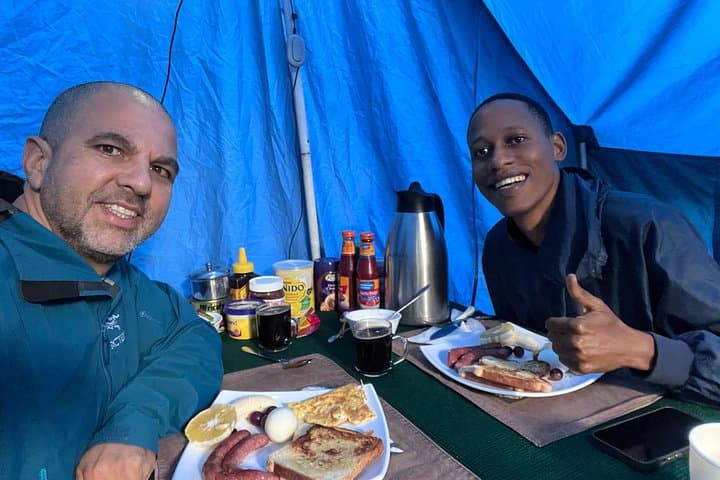
Camping in four-season, waterproof tents provided by the outfitter; porters carry communal tents and staff set up camp and meals.
June–October offers drier weather and clearer summit views; January–March is another good window. Rain is possible year-round.
You should be in good cardio shape, used to long days of walking with a daypack; prior multi-day trekking experience is strongly recommended.
Furaha Adventures operates guided outdoor trips and adventures with an emphasis on safety, stewardship, and memorable experiences.



Night on the western flank of Kilimanjaro smells like wet moss and wood smoke. You step out of the Land Cruiser at Londorossi Gate and the mountain fills the sky—an enormous, patient presence rising through forest, heath and alpine desert to its crown of ice. For eight days the Lemosho Route lets you approach that crown on a quieter, more gradual path: long ridge walks across the Shira Plateau, a climb through volcanic rock, and a pre-dawn summit push that tests everything you’ve built up over the week.
Night on the western flank of Kilimanjaro smells like wet moss and wood smoke. You step out of the Land Cruiser at Londorossi Gate and the mountain fills the sky—an enormous, patient presence rising through forest, heath and alpine desert to its crown of ice. For eight days the Lemosho Route lets you approach that crown on a quieter, more gradual path: long ridge walks across the Shira Plateau, a climb through volcanic rock, and a pre-dawn summit push that tests everything you’ve built up over the week.
The route’s charm comes from contrasts. Days one and two thread through montane forest where black-and-white colobus monkeys move like punctuation between twisted trees. By Shira Plateau the trail opens to scrub and volcanic outcrops; the views finally let Kibo peak appear in full—the glaciated summit that has been shrinking for decades. The eastern descent via Mweka passes through cultivated foothills where the Chagga people have farmed for generations, their terraced plots and coffee farms shaping the human story around the mountain.
Geologically Kilimanjaro is a trio of volcanic cones; the Lemosho approach crosses the Shira shield before funneling onto Kibo’s flanks. Expect shifting terrain—from root-tangled forest trails to scree, boulder fields, and a final stretch of lunar-like rock above Barafu. The itinerary gives you staged acclimatization (Forest Camp ~2,895m, Shira ~3,500m, Barafu ~4,600m, Uhuru Peak 5,896m), and an extra day on the plateau improves your summit odds.
Practical edge: hike times vary—most days 3–6 hours; summit day is the outlier at 12–17 hours. Water is supplied and boiled; guides will show use of Gamow bags and supplemental oxygen. Porters take the heavy load so you can move lighter, but expect cold, wind and hard walking above 4,000m. Leave extra batteries for your headlamp; cold kills charge fast.
Plan your gear and fitness around altitude rather than technical climbing. Strong aerobic conditioning, some multi-day trekking experience, and the ability to sleep fitfully at altitude make the biggest difference. Weather can flip from sun to sleet in a morning; layering and a waterproof shell are essentials. Respect the rhythm of the mountain—slow, steady pace, short breaks, and strict hydration.
On descent the trail loosens its grip and the mountain hands you back to forest and village life. You arrive in Moshi with tired legs and a clear photograph of what human determination looks like against high, slow-moving ice.
If you want the full experience—timed acclimatization, experienced guides, and the quieter western approach—the 8-day Lemosho is one of the most satisfying ways to stand on Uhuru Peak.