THE ADVENTURE COLLECTIVE® · Independent discovery and booking for outdoor travel

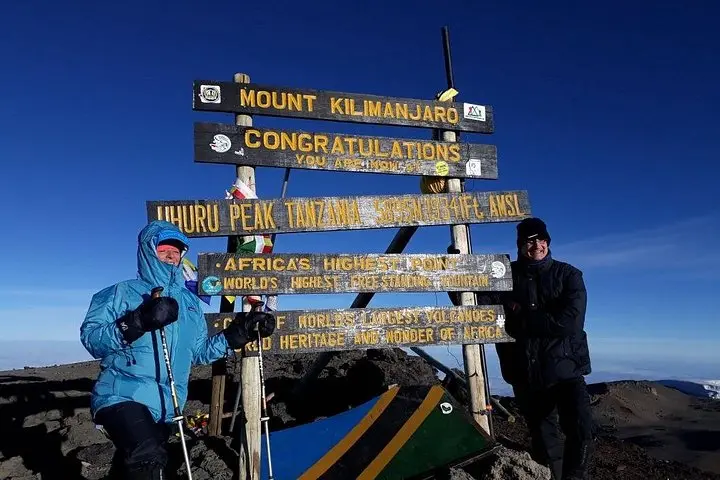
An 8-day private ascent of Kilimanjaro via the scenic Lemosho route that trades speed for acclimatization. Expect mossy forest, sweeping Shira Plateau views and a demanding pre-dawn summit push to Uhuru Peak.
An 8-day private ascent of Kilimanjaro via the scenic Lemosho route that trades speed for acclimatization. Expect mossy forest, sweeping Shira Plateau views and a demanding pre-dawn summit push to Uhuru Peak.
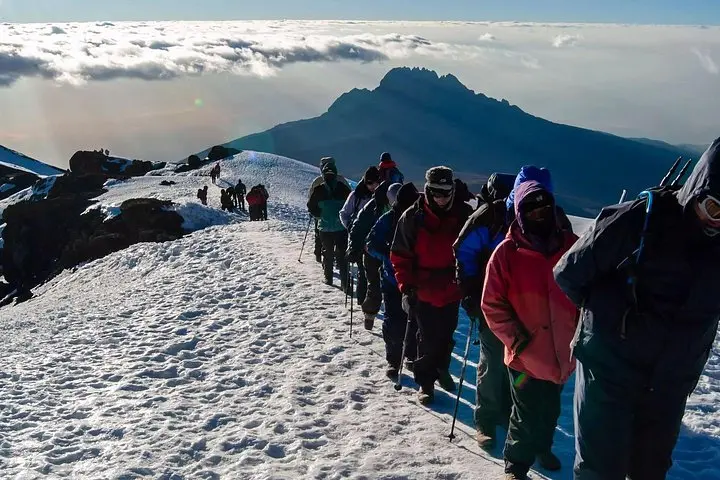
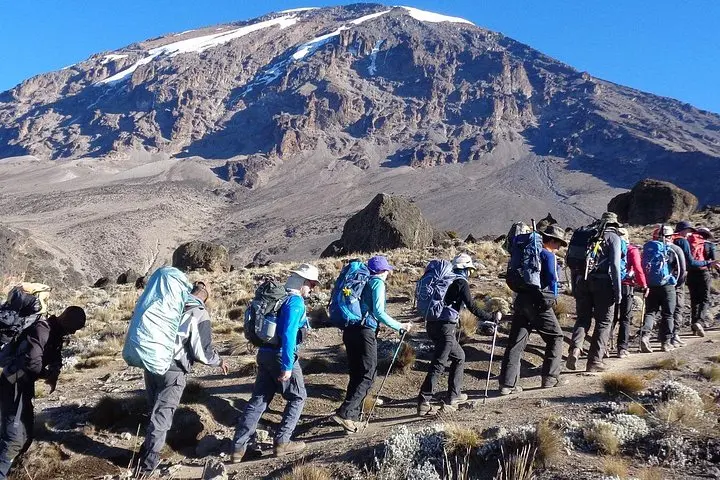
A cold wind bites as headlamps pick out boots on scree—Barafu Camp sits like a small, determined campfire on the mountain’s flank, and somewhere above the crater rim the summit waits. On the Lemosho route you move from moss-draped montane forest into wide grassy moorland, across lava fields and up loose scree to the glacial rim, each zone changing the air and the pace of your breath.
Verified experiences and guided adventures in the surrounding area.
Operated by LAMAGAYA SAFARIS · Moshi, Kilimanjaro Region
A cold wind bites as headlamps pick out boots on scree—Barafu Camp sits like a small, determined campfire on the mountain’s flank, and somewhere above the crater rim the summit waits. On the Lemosho route you move from moss-draped montane forest into wide grassy moorland, across lava fields and up loose scree to the glacial rim, each zone changing the air and the pace of your breath.
Kilimanjaro is a three-cone stratovolcano—Shira, Mawenzi and Kibo—and the Lemosho approach crosses the western flanks that once carried explorers and local traders. Geology is obvious: ancient lava ridges, pumice-strewn plateaus and the shrinking ice fields crowding Kibo’s crown. Culturally, the mountain is central to Chagga life on the southern plains; villages around Moshi supply guides and porters whose knowledge is critical to safe passage.
Practical guidance: this private 8-day itinerary buys acclimatization time, with a short day before summit night. Expect total elevation gain of roughly 3,500 m (from ~2,385 m to 5,895 m) across varied terrain—forest trails, heather moor, scree and steep rock steps. Summit pushes start near midnight and take 6–8 hours up to Stella Point, then on to Uhuru Peak. Hydrate early and often, layer for rapid temperature swings, use a fitted pair of high-ankle boots and a reliable headlamp, and move at a steady, conversational pace to aid acclimatization. Operators commonly include camping, most meals, park formalities and safety equipment such as portable toilets and oxygen cylinders; confirm specifics with your outfitter. Leave no trace and respect conservation rules—the mountain’s glaciers are retreating, and local stewardship depends on careful trekking.
No technical mountaineering skills are required—this is a trekking route. However, strong fitness, high-altitude awareness and previous multi-day hiking experience are important.
The drier windows (January–February and June–October) offer more stable weather and clearer summit views; avoid the long rains if possible for trail conditions.
Packages vary; many operators include park entrance fees and hut/camp fees, but always confirm what’s covered—permits are required and issued by Kilimanjaro National Park.
Guides monitor symptoms and will descend a climber showing moderate or severe signs; many groups carry oxygen and have protocols for evacuation—discuss contingency plans before you go.
LAMAGAYA SAFARIS operates guided outdoor trips and adventures with an emphasis on safety, stewardship, and memorable experiences.
A cold wind bites as headlamps pick out boots on scree—Barafu Camp sits like a small, determined campfire on the mountain’s flank, and somewhere above the crater rim the summit waits. On the Lemosho route you move from moss-draped montane forest into wide grassy moorland, across lava fields and up loose scree to the glacial rim, each zone changing the air and the pace of your breath.
A cold wind bites as headlamps pick out boots on scree—Barafu Camp sits like a small, determined campfire on the mountain’s flank, and somewhere above the crater rim the summit waits. On the Lemosho route you move from moss-draped montane forest into wide grassy moorland, across lava fields and up loose scree to the glacial rim, each zone changing the air and the pace of your breath.
Kilimanjaro is a three-cone stratovolcano—Shira, Mawenzi and Kibo—and the Lemosho approach crosses the western flanks that once carried explorers and local traders. Geology is obvious: ancient lava ridges, pumice-strewn plateaus and the shrinking ice fields crowding Kibo’s crown. Culturally, the mountain is central to Chagga life on the southern plains; villages around Moshi supply guides and porters whose knowledge is critical to safe passage.
Practical guidance: this private 8-day itinerary buys acclimatization time, with a short day before summit night. Expect total elevation gain of roughly 3,500 m (from ~2,385 m to 5,895 m) across varied terrain—forest trails, heather moor, scree and steep rock steps. Summit pushes start near midnight and take 6–8 hours up to Stella Point, then on to Uhuru Peak. Hydrate early and often, layer for rapid temperature swings, use a fitted pair of high-ankle boots and a reliable headlamp, and move at a steady, conversational pace to aid acclimatization. Operators commonly include camping, most meals, park formalities and safety equipment such as portable toilets and oxygen cylinders; confirm specifics with your outfitter. Leave no trace and respect conservation rules—the mountain’s glaciers are retreating, and local stewardship depends on careful trekking.