THE ADVENTURE COLLECTIVE® · Independent discovery and booking for outdoor travel

Take a measured eight-day ascent along the Lemosho Route to Uhuru Peak, moving from rainforest through moorland to the crater rim. This itinerary emphasizes acclimatization, camping, and professional support for a safer summit attempt.
Take a measured eight-day ascent along the Lemosho Route to Uhuru Peak, moving from rainforest through moorland to the crater rim. This itinerary emphasizes acclimatization, camping, and professional support for a safer summit attempt.
The trail opens with a damp world of moss and tall trees, the rainforest breathing close as hikers set off from Londorossi Gate. Early kilometers are soft underfoot, birds call through the canopy and guides measure pace to the mountain’s rhythm; the ascent is deliberate, built to earn the summit rather than rush it.
Verified experiences and guided adventures in the surrounding area.
Operated by Msumanje Kili Explore · Moshi, Kilimanjaro Region
The trail opens with a damp world of moss and tall trees, the rainforest breathing close as hikers set off from Londorossi Gate. Early kilometers are soft underfoot, birds call through the canopy and guides measure pace to the mountain’s rhythm; the ascent is deliberate, built to earn the summit rather than rush it.
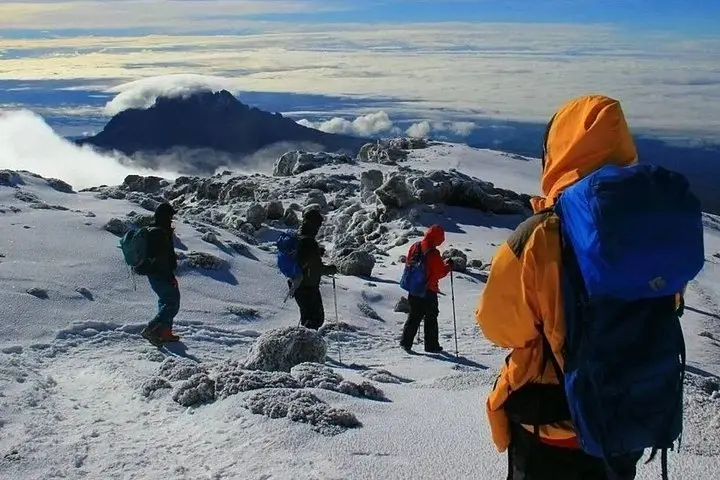
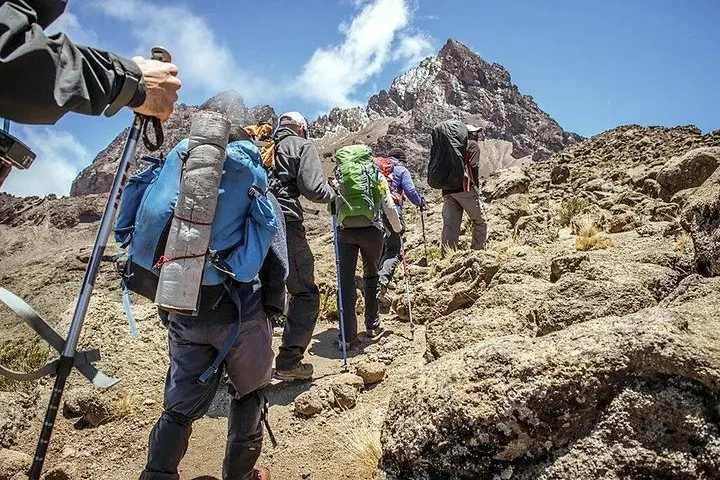
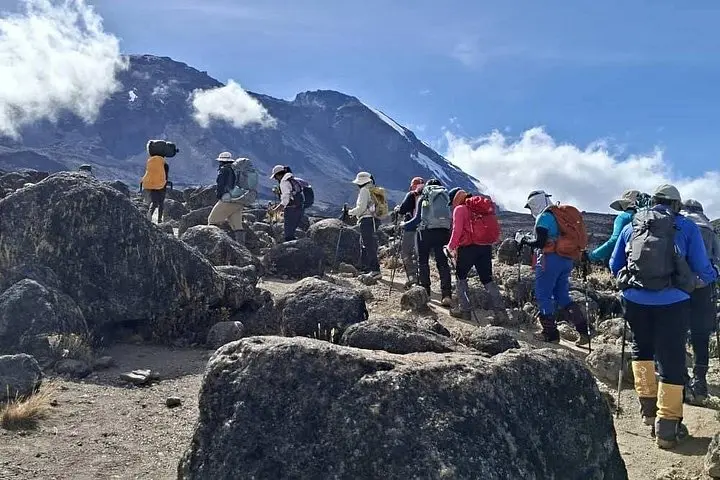
Over eight days the route moves from dense rainforest onto the broad Shira Plateau, across heather and moorland, past the stark black ridge of Lava Tower and into the arid alpine desert that frames Kibo Peak. Geologically, Kilimanjaro is a dormant stratovolcano—layers of lava and ash stacked around three volcanic cones—so the terrain shifts quickly: root-choked tracks, tussock grass, rocky scree and a final snow-scoured rim near Uhuru Peak at 5,895 m.
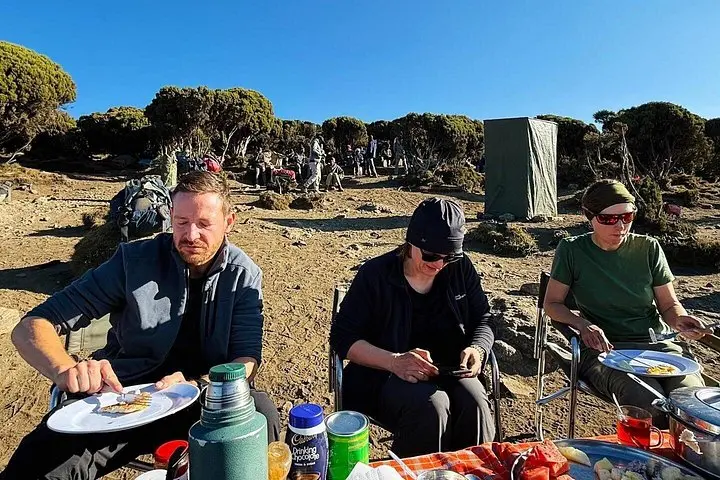
Culturally, approaches begin in Chagga farmland around Moshi; porters and cooks—integral to summit efforts—bring local knowledge and hospitality to camp life. Expect nights in tents, shared meals, and ritualized summit-time routines that prioritize acclimatization: ‘‘climb high, sleep low’’ on days like the Lava Tower detour.
Practical guidance: train for sustained uphill hiking and long days (expect a 12–15 hour summit push), bring layered cold-weather gear for pre-dawn starts, and carry a small medical kit and hydration system. Nighttime on Barafu is bone-cold; a reliable headlamp, warm sleeping bag and trekking poles make the descent safer. Permit and park fees, professional guides and camping logistics are standard—book with operators who follow Kilimanjaro Authority standards to protect routes and support local staff.
Expect a 12–15 hour round trip from Barafu; it’s physically and mentally demanding due to cold, sleep disruption and thin air—move slowly and follow your guide’s pace.
No technical mountaineering skills are required on the Lemosho Route, but hikers should be comfortable on steep, rocky terrain and able to self-manage in a remote environment.
June–October and late December–February are the most popular windows for stable weather and clearer summit days, though climbs happen year-round with variable conditions.
Park fees, mandatory guides and porters are typically arranged through the operator and included in reputable packages; confirm details before booking.
Msumanje Kili Explore operates guided outdoor trips and adventures with an emphasis on safety, stewardship, and memorable experiences.
The trail opens with a damp world of moss and tall trees, the rainforest breathing close as hikers set off from Londorossi Gate. Early kilometers are soft underfoot, birds call through the canopy and guides measure pace to the mountain’s rhythm; the ascent is deliberate, built to earn the summit rather than rush it.
The trail opens with a damp world of moss and tall trees, the rainforest breathing close as hikers set off from Londorossi Gate. Early kilometers are soft underfoot, birds call through the canopy and guides measure pace to the mountain’s rhythm; the ascent is deliberate, built to earn the summit rather than rush it.
Over eight days the route moves from dense rainforest onto the broad Shira Plateau, across heather and moorland, past the stark black ridge of Lava Tower and into the arid alpine desert that frames Kibo Peak. Geologically, Kilimanjaro is a dormant stratovolcano—layers of lava and ash stacked around three volcanic cones—so the terrain shifts quickly: root-choked tracks, tussock grass, rocky scree and a final snow-scoured rim near Uhuru Peak at 5,895 m.
Culturally, approaches begin in Chagga farmland around Moshi; porters and cooks—integral to summit efforts—bring local knowledge and hospitality to camp life. Expect nights in tents, shared meals, and ritualized summit-time routines that prioritize acclimatization: ‘‘climb high, sleep low’’ on days like the Lava Tower detour.
Practical guidance: train for sustained uphill hiking and long days (expect a 12–15 hour summit push), bring layered cold-weather gear for pre-dawn starts, and carry a small medical kit and hydration system. Nighttime on Barafu is bone-cold; a reliable headlamp, warm sleeping bag and trekking poles make the descent safer. Permit and park fees, professional guides and camping logistics are standard—book with operators who follow Kilimanjaro Authority standards to protect routes and support local staff.