THE ADVENTURE COLLECTIVE® · Independent discovery and booking for outdoor travel

Begin beneath mossy rainforest canopies and finish standing on Africa’s rooftop: the Lemosho Route is a slower, scenic 8-day approach to Uhuru Peak. This itinerary blends acclimatization, varied terrain and local mountain crew expertise to maximize summit success.
Begin beneath mossy rainforest canopies and finish standing on Africa’s rooftop: the Lemosho Route is a slower, scenic 8-day approach to Uhuru Peak. This itinerary blends acclimatization, varied terrain and local mountain crew expertise to maximize summit success.
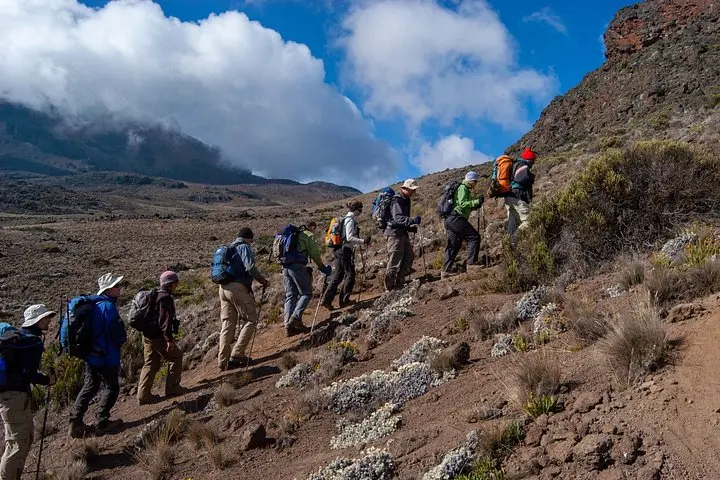
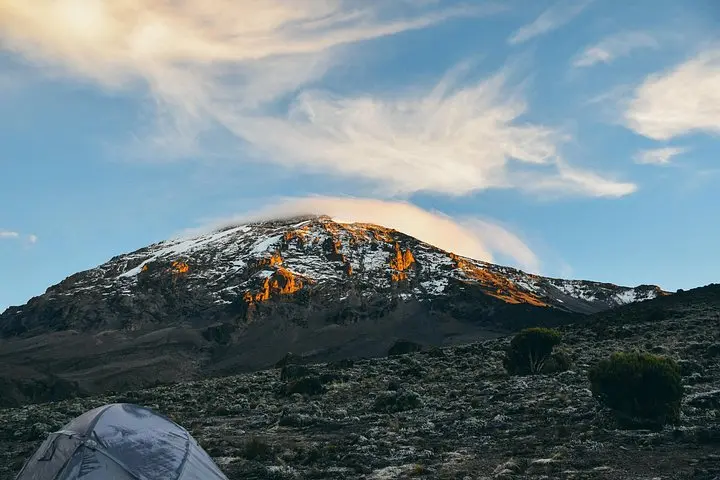
At first light the rainforest exhales mist and you step beneath a cathedral of moss-draped branches, the trail soft underfoot and the silhouette of Kibo pinching the horizon like a promise. The Lemosho Route begins on Kilimanjaro’s western flank, threading from dense montane forest into lobelia-spiked moorland, across the Shira Plateau and up through an afro-alpine desert that dares you upward. On clear nights the summit’s glaciers gleam; on cloudy ones the wind seems to push you forward.
Verified experiences and guided adventures in the surrounding area.
Operated by Aardvark Expeditions Limited · Arusha, Arusha Region
At first light the rainforest exhales mist and you step beneath a cathedral of moss-draped branches, the trail soft underfoot and the silhouette of Kibo pinching the horizon like a promise. The Lemosho Route begins on Kilimanjaro’s western flank, threading from dense montane forest into lobelia-spiked moorland, across the Shira Plateau and up through an afro-alpine desert that dares you upward. On clear nights the summit’s glaciers gleam; on cloudy ones the wind seems to push you forward.
Kilimanjaro is an ancient volcanic massif—three cones formed by flows of basalt and phonolite—and Lemosho brings you onto solidified lava fields and high plateau shaped by past eruptions. Culturally, the mountain has long been part of Chagga and Maasai life; porters, guides and cooks keep climbing traditions alive while modern Park regulations and permits shape the route. You’ll walk past giant lobelia and senecio that look engineered for altitude, and you’ll see how the Kibo glaciers have thinned across decades, a stark reminder of climate shifts.
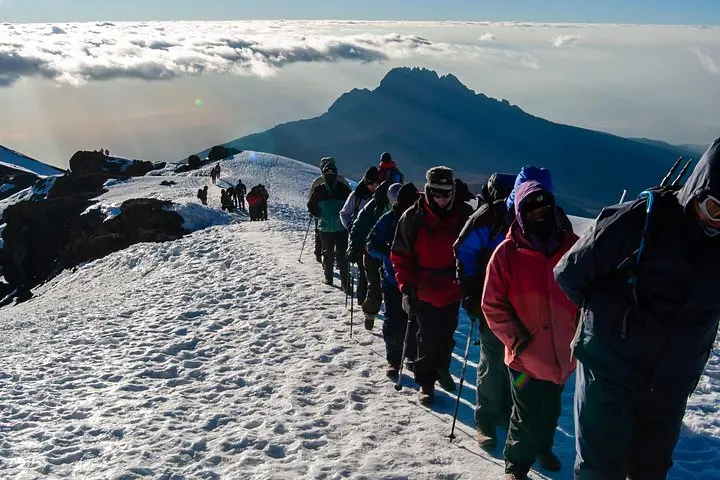
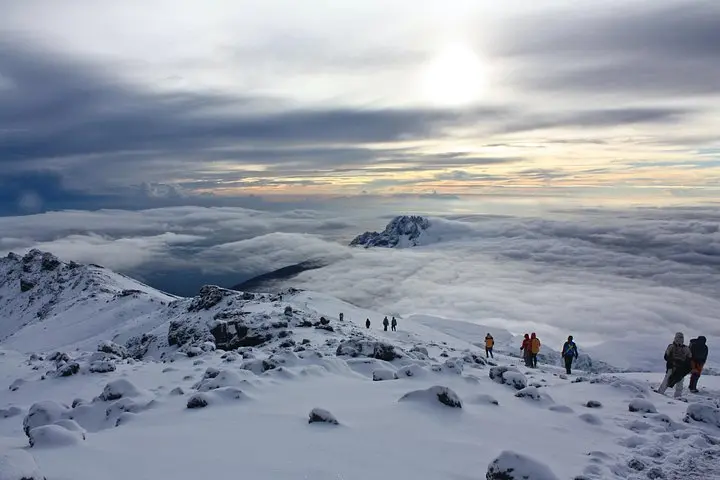
The itinerary is pragmatic: gradual elevation gain and an extra acclimatization day raise summit odds. Expect daily hikes from 6–12 km and elevation changes ranging from a few hundred meters on approach days to 1,200+ m on summit day (Barafu 4,640 m to Uhuru 5,895 m). Terrain moves from packed mud and roots to scree and volcanic sand; the summit push is a long, nocturnal slog over loose rock toward Stella Point and the crater rim.
Practical matters: guides handle camps, meals and oxygen; tents and sleeping pads are provided. Hydration and slow pacing are your best defenses against altitude. Footwear with good ankle support and trekking poles for the steeper scree sections will make the climb more efficient. Bring layered insulation for wide temperature swings—daytime in the rainforest can be warm, while summit temperatures drop well below freezing. Plan your flights through Kilimanjaro International (JRO) and budget a day in Arusha before and after the climb for recovery and logistics.
This Lemosho itinerary mixes wilderness exposure with a sensible acclimatization plan, giving you enough time on the mountain to read how your body reacts to altitude while savoring close-up views of Meru, the Rift Valley, and the raw geology of Africa’s highest peak. If reaching Uhuru is the goal, respect the mountain’s pace and the team that will carry you there.
Dry seasons—January–March and June–October—are generally best for clearer skies and firmer trails, though weather on Kilimanjaro is unpredictable year-round.
No technical mountaineering skills are required; the route is a non-technical trek, but fitness and high-altitude tolerance are crucial.
Altitude sickness is possible; this 8-day itinerary includes acclimatization and the operator provides oximeters, oxygen tanks and Wilderness First Responder guides.
Yes—group dining tents, Mountain Hardware VE-25 tents, sleeping pads and full board meals are included on the mountain.
Yes—Kilimanjaro National Park fees and permits are handled as part of the package and included in the tour cost.
Tipping is customary; budget roughly $200–$300 per trekker to split among guides, cooks and porters depending on service and group size.
Aardvark Expeditions Limited operates guided outdoor trips and adventures with an emphasis on safety, stewardship, and memorable experiences.
At first light the rainforest exhales mist and you step beneath a cathedral of moss-draped branches, the trail soft underfoot and the silhouette of Kibo pinching the horizon like a promise. The Lemosho Route begins on Kilimanjaro’s western flank, threading from dense montane forest into lobelia-spiked moorland, across the Shira Plateau and up through an afro-alpine desert that dares you upward. On clear nights the summit’s glaciers gleam; on cloudy ones the wind seems to push you forward.
At first light the rainforest exhales mist and you step beneath a cathedral of moss-draped branches, the trail soft underfoot and the silhouette of Kibo pinching the horizon like a promise. The Lemosho Route begins on Kilimanjaro’s western flank, threading from dense montane forest into lobelia-spiked moorland, across the Shira Plateau and up through an afro-alpine desert that dares you upward. On clear nights the summit’s glaciers gleam; on cloudy ones the wind seems to push you forward.
Kilimanjaro is an ancient volcanic massif—three cones formed by flows of basalt and phonolite—and Lemosho brings you onto solidified lava fields and high plateau shaped by past eruptions. Culturally, the mountain has long been part of Chagga and Maasai life; porters, guides and cooks keep climbing traditions alive while modern Park regulations and permits shape the route. You’ll walk past giant lobelia and senecio that look engineered for altitude, and you’ll see how the Kibo glaciers have thinned across decades, a stark reminder of climate shifts.
The itinerary is pragmatic: gradual elevation gain and an extra acclimatization day raise summit odds. Expect daily hikes from 6–12 km and elevation changes ranging from a few hundred meters on approach days to 1,200+ m on summit day (Barafu 4,640 m to Uhuru 5,895 m). Terrain moves from packed mud and roots to scree and volcanic sand; the summit push is a long, nocturnal slog over loose rock toward Stella Point and the crater rim.
Practical matters: guides handle camps, meals and oxygen; tents and sleeping pads are provided. Hydration and slow pacing are your best defenses against altitude. Footwear with good ankle support and trekking poles for the steeper scree sections will make the climb more efficient. Bring layered insulation for wide temperature swings—daytime in the rainforest can be warm, while summit temperatures drop well below freezing. Plan your flights through Kilimanjaro International (JRO) and budget a day in Arusha before and after the climb for recovery and logistics.
This Lemosho itinerary mixes wilderness exposure with a sensible acclimatization plan, giving you enough time on the mountain to read how your body reacts to altitude while savoring close-up views of Meru, the Rift Valley, and the raw geology of Africa’s highest peak. If reaching Uhuru is the goal, respect the mountain’s pace and the team that will carry you there.