THE ADVENTURE COLLECTIVE® · Independent discovery and booking for outdoor travel

The Lemosho Route delivers one of the highest summit rates on Kilimanjaro by prioritizing acclimatization and varied terrain. Over eight days you move from montane forest to alpine desert, guided by local crews and rewarded with sunrise from Uhuru Peak.
The Lemosho Route delivers one of the highest summit rates on Kilimanjaro by prioritizing acclimatization and varied terrain. Over eight days you move from montane forest to alpine desert, guided by local crews and rewarded with sunrise from Uhuru Peak.
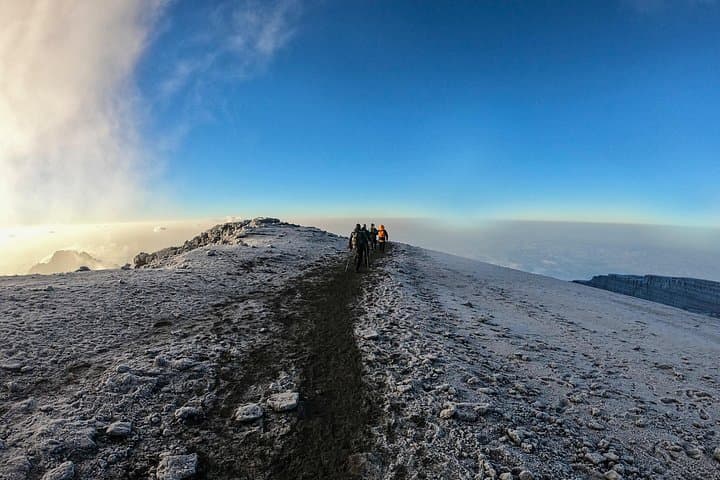
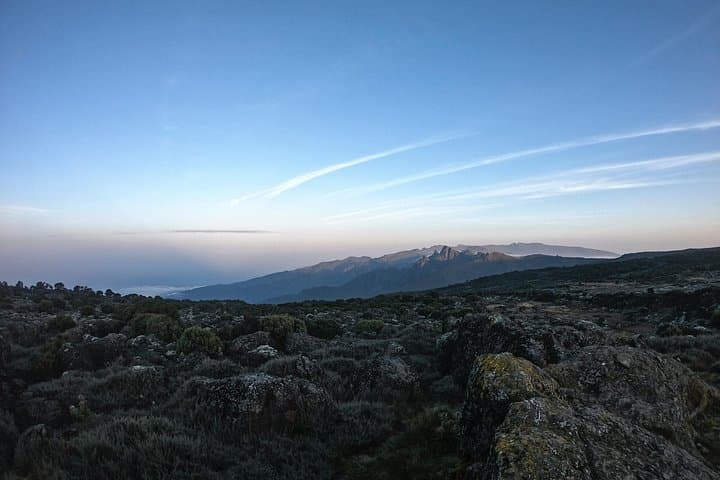
Dawn finds the Lemosho Glades wrapped in a cool, wet silence. Porter fires are low, tents drip with night condensation and the forest breathes — a slow, green lung that will give way to heather moorland, then to an uncompromising lunar plain. Over eight days the Lemosho Route pulls climbers through that shifting personality: shaded montane forest where colobus monkeys call, vast Shira Plateau where wind lays long shadows, and finally the scree and hardpack that lead to Stella Point and Uhuru Peak.
Verified experiences and guided adventures in the surrounding area.
Operated by Kilimanjaro Wonders Expedition Safari · Moshi, Kilimanjaro
Dawn finds the Lemosho Glades wrapped in a cool, wet silence. Porter fires are low, tents drip with night condensation and the forest breathes — a slow, green lung that will give way to heather moorland, then to an uncompromising lunar plain. Over eight days the Lemosho Route pulls climbers through that shifting personality: shaded montane forest where colobus monkeys call, vast Shira Plateau where wind lays long shadows, and finally the scree and hardpack that lead to Stella Point and Uhuru Peak.
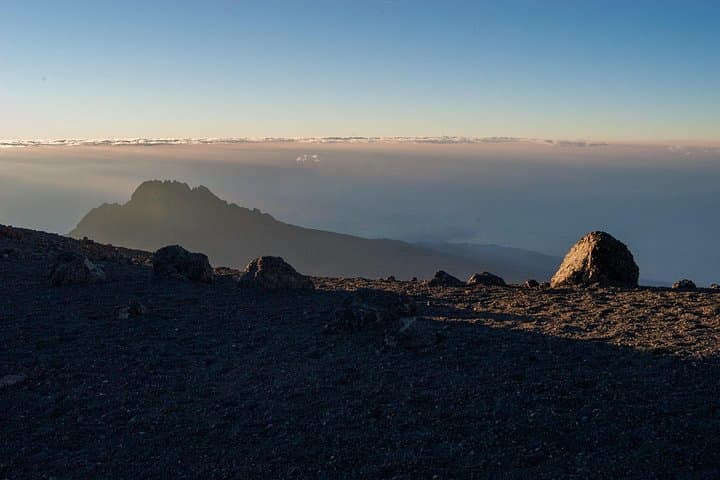
Geology here is blunt and old: Kilimanjaro is a dormant stratovolcano made of three cones — Kibo, Mawenzi and Shira. The Lemosho Route approaches from the west, crossing the ancient Shira caldera and skirting lava flows before meeting the southern circuits. Culturally, the mountain stands above Moshi and the Chagga communities who have lived on its slopes for generations. Guides and porters are often local; their knowledge of trails, weather patterns and vital acclimatization customs is part of what makes success on Kili possible.
The route’s reputation rests on patient ascent. By adding days to ascent profiles the Lemosho Route improves acclimatization — you climb high, sleep low and let pulse and oxygen settle. Wildlife can be a surprise: elephants and buffalo sometimes graze the lower glades and troops of monkeys thread the forest canopy. Above 4,000 meters the ecosystem becomes sparse and the mountain takes on a quieter, more austere voice.
Practical guidance is straightforward: the technical demands are low but the altitude is not. Hike 4–6 hours most days; expect 6–8 hours on critical approach days, and a midnight start for the summit push. Trekking is on mixed terrain — muddy forest trails, grassy moorland, rocky ridges, then loose scree and frozen crust near the crater. Weather changes fast: layers are essential and nights get cold. The operator provides tents, sleeping mattresses, meals and a full crew — but personal gear (warm sleeping bag, boots, gaiters) is non-negotiable.
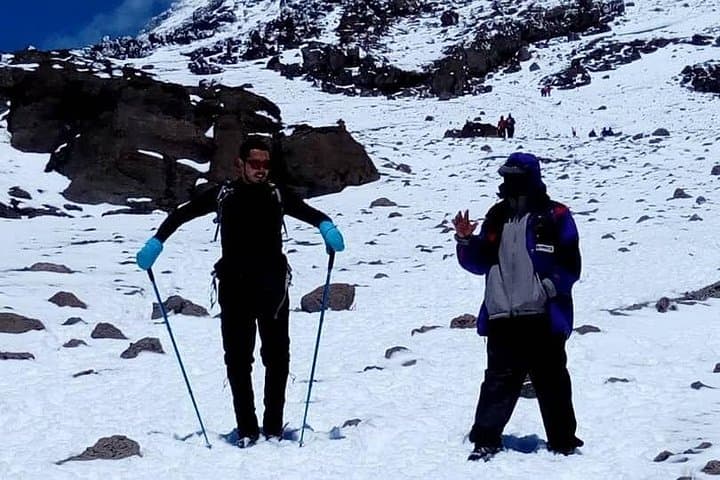
Success comes down to pacing, hydration and listening to your guide. Use poles on the scree, keep meals light but calorically dense, and test your gear before departure. For photographers, the Lemosho sunrise from Stella Point can be the most cinematic light you’ll see in Africa; for naturalists the Shira Plateau’s open skies and strange giant heather are a field notebook of high-altitude adaptation.
In short: the Lemosho Route is an expedition in slow increments — where the mountain’s changing moods teach patience. It rewards those who respect altitude, travel light in spirit but well-equipped in kit, and let local expertise steer the rhythm. Reach Uhuru Peak, and the continent opens below you — an honest, breath-stealing achievement that marks the end of careful planning and the start of a lifelong story.
No technical mountaineering skills are required for the standard Lemosho route, but prior multi-day trekking experience and good acclimatization discipline are essential.
The 8-day Lemosho itinerary has one of the higher success rates because it allows more time to acclimatize, but success still depends on fitness, pacing and conditions.
Meals on the mountain, crew (guides, porters, cook) tents, sleeping mattresses and park fees are typically included in the package described.
The driest and most popular months are June to October; January and February are also good, while March to May sees long rains that can make trails muddier.
Temperatures at Uhuru Peak can drop well below freezing, often -10°C to -20°C with wind chill, so proper insulating layers are mandatory.
Operators carry first-aid gear and pulse oximeters; Kilimanjaro National Park has rescue protocols but evacuation at high altitude can be challenging and slow.
Kilimanjaro Wonders Expedition Safari operates guided outdoor trips and adventures with an emphasis on safety, stewardship, and memorable experiences.
Dawn finds the Lemosho Glades wrapped in a cool, wet silence. Porter fires are low, tents drip with night condensation and the forest breathes — a slow, green lung that will give way to heather moorland, then to an uncompromising lunar plain. Over eight days the Lemosho Route pulls climbers through that shifting personality: shaded montane forest where colobus monkeys call, vast Shira Plateau where wind lays long shadows, and finally the scree and hardpack that lead to Stella Point and Uhuru Peak.
Dawn finds the Lemosho Glades wrapped in a cool, wet silence. Porter fires are low, tents drip with night condensation and the forest breathes — a slow, green lung that will give way to heather moorland, then to an uncompromising lunar plain. Over eight days the Lemosho Route pulls climbers through that shifting personality: shaded montane forest where colobus monkeys call, vast Shira Plateau where wind lays long shadows, and finally the scree and hardpack that lead to Stella Point and Uhuru Peak.
Geology here is blunt and old: Kilimanjaro is a dormant stratovolcano made of three cones — Kibo, Mawenzi and Shira. The Lemosho Route approaches from the west, crossing the ancient Shira caldera and skirting lava flows before meeting the southern circuits. Culturally, the mountain stands above Moshi and the Chagga communities who have lived on its slopes for generations. Guides and porters are often local; their knowledge of trails, weather patterns and vital acclimatization customs is part of what makes success on Kili possible.
The route’s reputation rests on patient ascent. By adding days to ascent profiles the Lemosho Route improves acclimatization — you climb high, sleep low and let pulse and oxygen settle. Wildlife can be a surprise: elephants and buffalo sometimes graze the lower glades and troops of monkeys thread the forest canopy. Above 4,000 meters the ecosystem becomes sparse and the mountain takes on a quieter, more austere voice.
Practical guidance is straightforward: the technical demands are low but the altitude is not. Hike 4–6 hours most days; expect 6–8 hours on critical approach days, and a midnight start for the summit push. Trekking is on mixed terrain — muddy forest trails, grassy moorland, rocky ridges, then loose scree and frozen crust near the crater. Weather changes fast: layers are essential and nights get cold. The operator provides tents, sleeping mattresses, meals and a full crew — but personal gear (warm sleeping bag, boots, gaiters) is non-negotiable.
Success comes down to pacing, hydration and listening to your guide. Use poles on the scree, keep meals light but calorically dense, and test your gear before departure. For photographers, the Lemosho sunrise from Stella Point can be the most cinematic light you’ll see in Africa; for naturalists the Shira Plateau’s open skies and strange giant heather are a field notebook of high-altitude adaptation.
In short: the Lemosho Route is an expedition in slow increments — where the mountain’s changing moods teach patience. It rewards those who respect altitude, travel light in spirit but well-equipped in kit, and let local expertise steer the rhythm. Reach Uhuru Peak, and the continent opens below you — an honest, breath-stealing achievement that marks the end of careful planning and the start of a lifelong story.