THE ADVENTURE COLLECTIVE® · Independent discovery and booking for outdoor travel

An 8-day Lemosho ascent gives you time to acclimatize while traversing rainforest, the Shira Plateau, and the Barranco Wall before a midnight summit bid to Uhuru Peak. Expect varied terrain, long summit-night hours, and spectacular high-alpine views.
An 8-day Lemosho ascent gives you time to acclimatize while traversing rainforest, the Shira Plateau, and the Barranco Wall before a midnight summit bid to Uhuru Peak. Expect varied terrain, long summit-night hours, and spectacular high-alpine views.
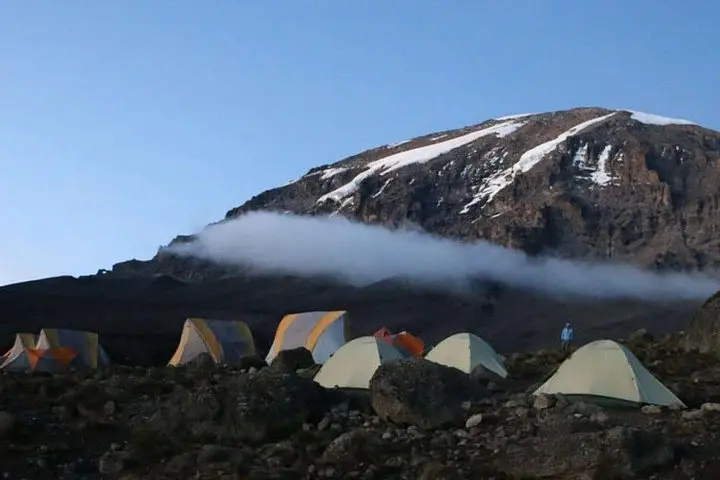
You leave Moshi before dawn and drive west toward the forest gate; the mountain rises like a pale, snow-capped city above the rainforest. The Lemosho route opens slowly—the first day’s trail threads through mossed trunks and dripping ferns, then spills onto the wide, windswept Shira Plateau where Kibo’s cone dominates the skyline.
Verified experiences and guided adventures in the surrounding area.
Operated by PINNACLE ADVENTURES & SAFARIS LTD. · Moshi, Kilimanjaro Region
You leave Moshi before dawn and drive west toward the forest gate; the mountain rises like a pale, snow-capped city above the rainforest. The Lemosho route opens slowly—the first day’s trail threads through mossed trunks and dripping ferns, then spills onto the wide, windswept Shira Plateau where Kibo’s cone dominates the skyline.
Geology and history are visible in every step: Kibo is a dormant stratovolcano whose glaciers and summit crater record millions of years of uplift and ice. The Lemosho approach follows ancient erosion terraces and lava flows; the Barranco Wall and Lava Tower are volcanic features that double as natural acclimatization milestones. The mountain also holds cultural weight for the Chagga people who live on its lower slopes and for Tanzania as a national symbol.
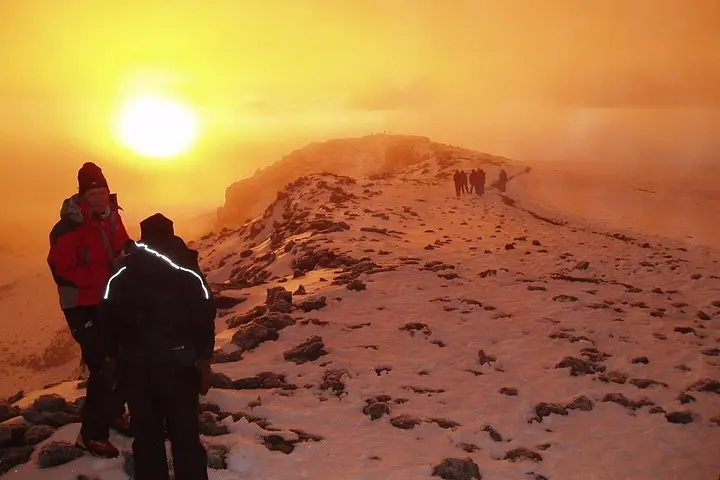
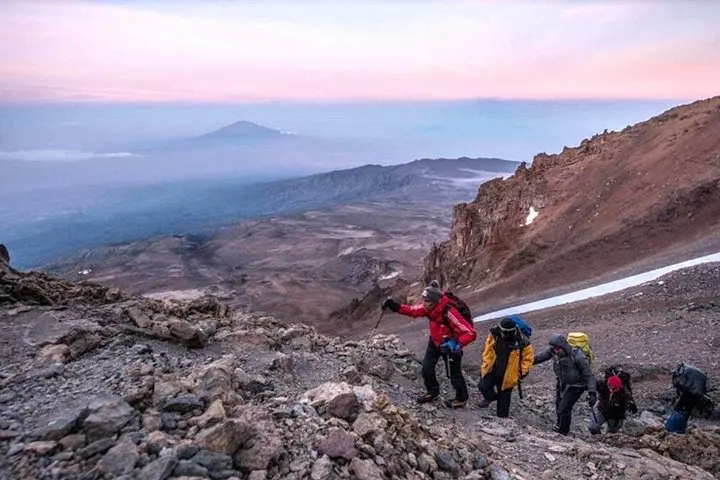
Expect 5–7 hours of trekking on most days with altitude gains of 400–1,000m between camps; summit night is the long leg—12–14 hours, climbing from Barafu (4,600m) to Uhuru Peak (5,895m) and then down to Mweka. Terrain shifts from rainforest roots to rocky alpine desert and scree near the rim.
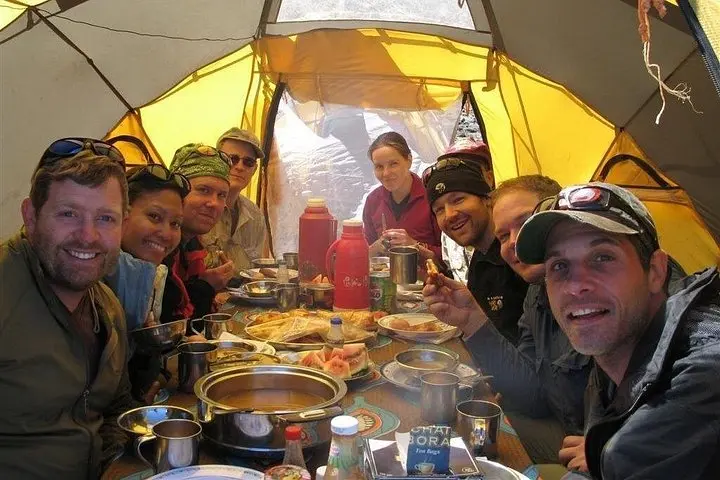
Practical guidance: hydrate early and often, use walking poles to save your knees on descent, and layer for dramatic temperature swings—nighttime on summit push can be well below freezing. The 8-day itinerary is chosen for acclimatization; that extra day at Lava Tower and Karanga increases summit probability. Guides provide camping gear, hot meals, and emergency oxygen, but personal fitness, proper footwear, and a cold-rated sleeping bag are non-negotiable. Plan for porter tipping, park permits, and an arrival day in Moshi to rest and sort gear before you head up.
The 8-day schedule improves acclimatization and has one of the higher success rates—fitness, pacing, and response to altitude are still decisive factors.
No technical climbing is required; the route is a non-technical trek, but experience on high-altitude multi-day hikes helps.
Most days are 4–7 hours with daily elevation changes between 400–1,000m; summit day is 12–14 hours with ~1,200m ascent to the crater rim and summit.
Yes—this itinerary includes camping equipment, meals, qualified guides, porters, and emergency oxygen for emergencies only.
PINNACLE ADVENTURES & SAFARIS LTD. operates guided outdoor trips and adventures with an emphasis on safety, stewardship, and memorable experiences.
You leave Moshi before dawn and drive west toward the forest gate; the mountain rises like a pale, snow-capped city above the rainforest. The Lemosho route opens slowly—the first day’s trail threads through mossed trunks and dripping ferns, then spills onto the wide, windswept Shira Plateau where Kibo’s cone dominates the skyline.
You leave Moshi before dawn and drive west toward the forest gate; the mountain rises like a pale, snow-capped city above the rainforest. The Lemosho route opens slowly—the first day’s trail threads through mossed trunks and dripping ferns, then spills onto the wide, windswept Shira Plateau where Kibo’s cone dominates the skyline.
Geology and history are visible in every step: Kibo is a dormant stratovolcano whose glaciers and summit crater record millions of years of uplift and ice. The Lemosho approach follows ancient erosion terraces and lava flows; the Barranco Wall and Lava Tower are volcanic features that double as natural acclimatization milestones. The mountain also holds cultural weight for the Chagga people who live on its lower slopes and for Tanzania as a national symbol.
Expect 5–7 hours of trekking on most days with altitude gains of 400–1,000m between camps; summit night is the long leg—12–14 hours, climbing from Barafu (4,600m) to Uhuru Peak (5,895m) and then down to Mweka. Terrain shifts from rainforest roots to rocky alpine desert and scree near the rim.
Practical guidance: hydrate early and often, use walking poles to save your knees on descent, and layer for dramatic temperature swings—nighttime on summit push can be well below freezing. The 8-day itinerary is chosen for acclimatization; that extra day at Lava Tower and Karanga increases summit probability. Guides provide camping gear, hot meals, and emergency oxygen, but personal fitness, proper footwear, and a cold-rated sleeping bag are non-negotiable. Plan for porter tipping, park permits, and an arrival day in Moshi to rest and sort gear before you head up.