THE ADVENTURE COLLECTIVE® · Independent discovery and booking for outdoor travel

Cross the Drâa valley and walk ancient caravan routes on an eight-day trek from Marrakech to Chegaga. Four days of guided hiking with dromedaries, desert camps, and a night near the iconic Aït Ben Haddou.
Cross the Drâa valley and walk ancient caravan routes on an eight-day trek from Marrakech to Chegaga. Four days of guided hiking with dromedaries, desert camps, and a night near the iconic Aït Ben Haddou.
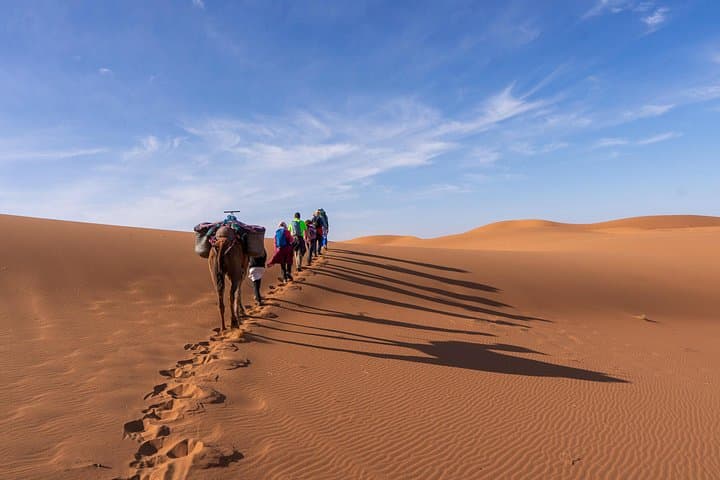
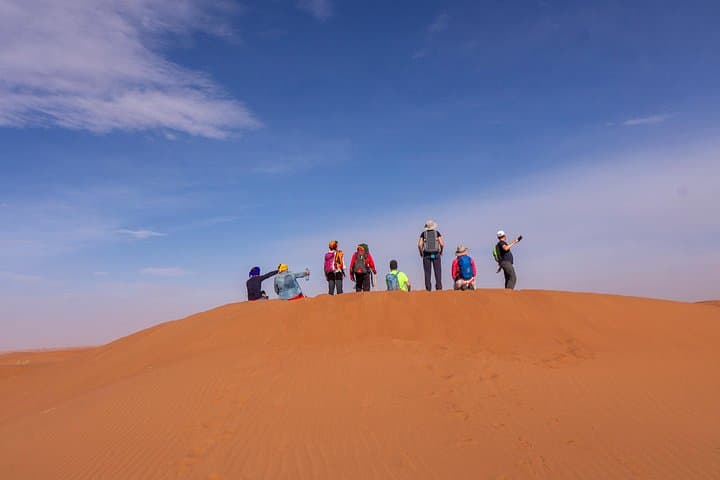
A wind-scraped dawn lifts off the desert as you step out of camp with a dromedary’s steady rhythm beneath you and sand that seems to move with intent. The trek threads High Atlas foothills, the palm-lined Drâa valley and the great Chegaga dunes, alternating long, empty plains with pockets of sheltered oases where date palms bend in the breeze.
Verified experiences and guided adventures in the surrounding area.
Operated by Wandern Marokko Fahim · Marrakech, Marrakech-Safi
A wind-scraped dawn lifts off the desert as you step out of camp with a dromedary’s steady rhythm beneath you and sand that seems to move with intent. The trek threads High Atlas foothills, the palm-lined Drâa valley and the great Chegaga dunes, alternating long, empty plains with pockets of sheltered oases where date palms bend in the breeze.
This route follows centuries-old caravan corridors that linked sub-Saharan trade routes to southern Morocco; you’ll pass ruined souks and a caravanserai near Marabout Sidi Naji that hint at that past. Geologically, the landscape shifts fast: red volcanic and metamorphic ridges of the Anti-Atlas give way to alluvial fans and wind-carved erg fields—dunes that the desert sculpts daily.
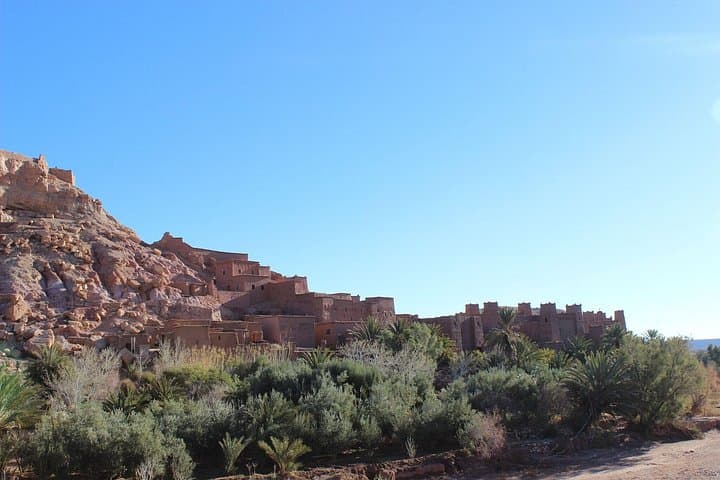
Culturally the trek moves through Berber-influenced villages and the cinematic kasbah of Aït Ben Haddou, whose earthen towers are built from local clay and a history of defense and trade. Guides and the small escort team bring local knowledge—how to read a dune line, where underground water surfaces in a palm grove, and when to stop for mint tea.
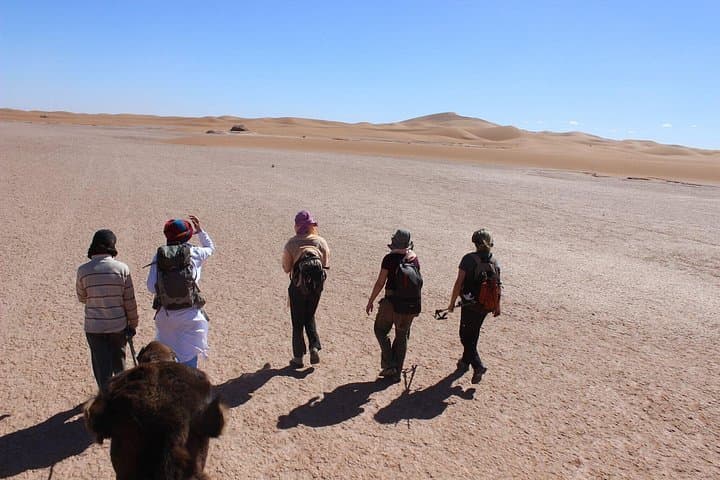
Practically, expect four full days of hiking (1–6.5 hours per day) on soft sand and hard-packed plains, camps with tents and communal meals prepared by the trekking cook, and transfers by minibus and jeep on two transition days. Pack sun protection, layer for cold desert nights, and plan for early starts when sand is firmest. The trek rewards patience: quiet horizons, big skies, and the slow, steady company of dromedaries.
Hiking days vary: 1–6.5 hours on mixed terrain. The organizers classify the trek as easy—no technical climbing—but walking on dunes is more tiring than on packed trails.
Yes—an escort team loads communal and personal gear onto dromedaries; you carry a daypack with essentials for each hike.
Overnight is in simple desert camps with tents and mats; a trekking cook provides three meals a day, often local stews, bread and tea; hotel nights are included at Ouarzazate/Aït Ben Haddou.
The operator advises against pregnancy and significant spinal or cardiovascular issues; suitability for children depends on stamina and ability to handle long hot days—check with the provider.
Wandern Marokko Fahim operates guided outdoor trips and adventures with an emphasis on safety, stewardship, and memorable experiences.
A wind-scraped dawn lifts off the desert as you step out of camp with a dromedary’s steady rhythm beneath you and sand that seems to move with intent. The trek threads High Atlas foothills, the palm-lined Drâa valley and the great Chegaga dunes, alternating long, empty plains with pockets of sheltered oases where date palms bend in the breeze.
A wind-scraped dawn lifts off the desert as you step out of camp with a dromedary’s steady rhythm beneath you and sand that seems to move with intent. The trek threads High Atlas foothills, the palm-lined Drâa valley and the great Chegaga dunes, alternating long, empty plains with pockets of sheltered oases where date palms bend in the breeze.
This route follows centuries-old caravan corridors that linked sub-Saharan trade routes to southern Morocco; you’ll pass ruined souks and a caravanserai near Marabout Sidi Naji that hint at that past. Geologically, the landscape shifts fast: red volcanic and metamorphic ridges of the Anti-Atlas give way to alluvial fans and wind-carved erg fields—dunes that the desert sculpts daily.
Culturally the trek moves through Berber-influenced villages and the cinematic kasbah of Aït Ben Haddou, whose earthen towers are built from local clay and a history of defense and trade. Guides and the small escort team bring local knowledge—how to read a dune line, where underground water surfaces in a palm grove, and when to stop for mint tea.
Practically, expect four full days of hiking (1–6.5 hours per day) on soft sand and hard-packed plains, camps with tents and communal meals prepared by the trekking cook, and transfers by minibus and jeep on two transition days. Pack sun protection, layer for cold desert nights, and plan for early starts when sand is firmest. The trek rewards patience: quiet horizons, big skies, and the slow, steady company of dromedaries.