THE ADVENTURE COLLECTIVE® · Independent discovery and booking for outdoor travel

This private 8-day tour links Jordan’s iconic landscapes—Petra, Wadi Rum, the Dead Sea—with the sacred sites of Jerusalem and Bethlehem. Expect curated transport, local guides, and a mix of leisure and exploration across desert, archaeological, and holy places.
This private 8-day tour links Jordan’s iconic landscapes—Petra, Wadi Rum, the Dead Sea—with the sacred sites of Jerusalem and Bethlehem. Expect curated transport, local guides, and a mix of leisure and exploration across desert, archaeological, and holy places.
Dust from the runway still clings to your shoes as the minivan threads Amman's traffic and the city's flat-roofed blocks slide past. The driver talks quietly in English; the road unspools toward hills that will soon feel ancient rather than distant. Over eight days this private tour stitches together Jordan’s desert canyons, the buoyant Dead Sea, the rose-red facades of Petra, and the holy streets of Jerusalem and Bethlehem—an itinerary that moves from geological extremes to layered religious histories.
Verified experiences and guided adventures in the surrounding area.
Operated by VIP Jordan Limo · Amman, Amman Governorate
Dust from the runway still clings to your shoes as the minivan threads Amman's traffic and the city's flat-roofed blocks slide past. The driver talks quietly in English; the road unspools toward hills that will soon feel ancient rather than distant. Over eight days this private tour stitches together Jordan’s desert canyons, the buoyant Dead Sea, the rose-red facades of Petra, and the holy streets of Jerusalem and Bethlehem—an itinerary that moves from geological extremes to layered religious histories.
The route reads like a compact history of the Levant. Jerash’s colonnaded streets recall the Greco-Roman appetite for marble and civic space. Ajloun’s 12th-century fortress commands forested ridgelines once controlled by local tribes. Mount Nebo looms as a scriptural viewpoint—the high ground that, on clear days, allows sightlines across the Dead Sea toward the limestone terraces of the Judaean hills.
Geology works as both backdrop and actor. The Dead Sea sits roughly 430 meters below sea level, a salt basin that refuses to let you sink. Petra is carved from sandstone whose banded reds and pinks respond to sun angle like a slow, natural theater; Wadi Rum’s wind-sculpted granite and sandstone towers throw long shadows at sunset and create one of the most photographer-friendly deserts in the world. The Jordan River threads these landscapes and, at sites like Al-Maghtas, anchors millennia of pilgrimage and ritual.
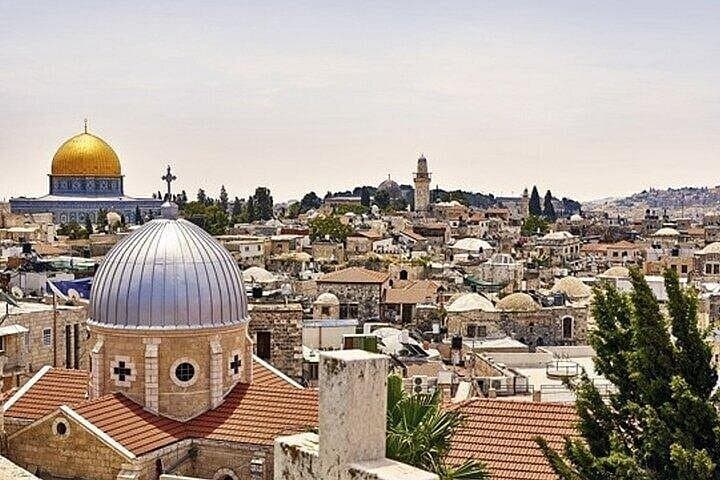
Culturally, the trip balances Bedouin hospitality—especially in Wadi Rum and Petra’s fringes—with the ritual cadence of Jerusalem’s Old City: the Via Dolorosa, the Dome of the Rock, and the crowded, holy lanes of Bethlehem. Local guides and an English-speaking driver are included, smoothing logistics and cultural access while leaving room for quiet moments: a mineral-rich mud mask at the Dead Sea, a tea with Bedouin hosts beneath a star-swept sky.
Practical guidance is direct: crossings into Jerusalem require passports and sometimes additional border paperwork—confirm visa rules in advance and plan for extra time at King Hussein/Allenby Bridge. Expect varied footwear needs: city walking on cobbles and stairs, sandy tracks in Wadi Rum, and a lot of steps and uneven surfaces in Petra. Daily drives can range from 30 minutes to roughly 4–5 hours between major points; pack a daypack, sun protection, and a refillable water bottle (mineral water is provided in the vehicle).
This tour suits travelers who want curated access to iconic sites without group constraints: it’s private, accessible for most fitness levels, and layered with optional experiences like hot-air balloon rides or camel treks. Whether you come for archaeology, spirituality, or landscape photography, the journey moves steadily from the world’s lowest shorelines to deserts that feel as old as language itself—each stop asking for time, curiosity, and, occasionally, a slow pace to match the horizon.
Yes, this is a private tour with an English-speaking driver and private vehicle for the duration.
Accommodations and meals are included per the chosen hotel option; check the booking page for included site admissions.
Yes—both are available at additional cost and can be added during booking or locally if time allows.
You can float safely—avoid swallowing water, keep cuts covered, and rinse off with fresh water after floating.
Visa and entry requirements vary by nationality; confirm with your consulate and allow time for border procedures at King Hussein/Allenby Bridge.
The tour is wheelchair-accessible for transportation, but key sites like Petra and parts of Jerusalem have uneven terrain and steps—notify operators in advance for specific arrangements.
VIP Jordan Limo operates guided outdoor trips and adventures with an emphasis on safety, stewardship, and memorable experiences.


Dust from the runway still clings to your shoes as the minivan threads Amman's traffic and the city's flat-roofed blocks slide past. The driver talks quietly in English; the road unspools toward hills that will soon feel ancient rather than distant. Over eight days this private tour stitches together Jordan’s desert canyons, the buoyant Dead Sea, the rose-red facades of Petra, and the holy streets of Jerusalem and Bethlehem—an itinerary that moves from geological extremes to layered religious histories.
Dust from the runway still clings to your shoes as the minivan threads Amman's traffic and the city's flat-roofed blocks slide past. The driver talks quietly in English; the road unspools toward hills that will soon feel ancient rather than distant. Over eight days this private tour stitches together Jordan’s desert canyons, the buoyant Dead Sea, the rose-red facades of Petra, and the holy streets of Jerusalem and Bethlehem—an itinerary that moves from geological extremes to layered religious histories.
The route reads like a compact history of the Levant. Jerash’s colonnaded streets recall the Greco-Roman appetite for marble and civic space. Ajloun’s 12th-century fortress commands forested ridgelines once controlled by local tribes. Mount Nebo looms as a scriptural viewpoint—the high ground that, on clear days, allows sightlines across the Dead Sea toward the limestone terraces of the Judaean hills.
Geology works as both backdrop and actor. The Dead Sea sits roughly 430 meters below sea level, a salt basin that refuses to let you sink. Petra is carved from sandstone whose banded reds and pinks respond to sun angle like a slow, natural theater; Wadi Rum’s wind-sculpted granite and sandstone towers throw long shadows at sunset and create one of the most photographer-friendly deserts in the world. The Jordan River threads these landscapes and, at sites like Al-Maghtas, anchors millennia of pilgrimage and ritual.
Culturally, the trip balances Bedouin hospitality—especially in Wadi Rum and Petra’s fringes—with the ritual cadence of Jerusalem’s Old City: the Via Dolorosa, the Dome of the Rock, and the crowded, holy lanes of Bethlehem. Local guides and an English-speaking driver are included, smoothing logistics and cultural access while leaving room for quiet moments: a mineral-rich mud mask at the Dead Sea, a tea with Bedouin hosts beneath a star-swept sky.
Practical guidance is direct: crossings into Jerusalem require passports and sometimes additional border paperwork—confirm visa rules in advance and plan for extra time at King Hussein/Allenby Bridge. Expect varied footwear needs: city walking on cobbles and stairs, sandy tracks in Wadi Rum, and a lot of steps and uneven surfaces in Petra. Daily drives can range from 30 minutes to roughly 4–5 hours between major points; pack a daypack, sun protection, and a refillable water bottle (mineral water is provided in the vehicle).
This tour suits travelers who want curated access to iconic sites without group constraints: it’s private, accessible for most fitness levels, and layered with optional experiences like hot-air balloon rides or camel treks. Whether you come for archaeology, spirituality, or landscape photography, the journey moves steadily from the world’s lowest shorelines to deserts that feel as old as language itself—each stop asking for time, curiosity, and, occasionally, a slow pace to match the horizon.