THE ADVENTURE COLLECTIVE® · Independent discovery and booking for outdoor travel

Walk eight days beneath the high Caucasus, visiting Chalaadi, Adishi and Shkhara glaciers and spending a night in Ushguli UNESCO hamlets. This self-guided route pairs rugged glacial scenery with family-run guesthouses, GPS navigation and local culinary hospitality.
Walk eight days beneath the high Caucasus, visiting Chalaadi, Adishi and Shkhara glaciers and spending a night in Ushguli UNESCO hamlets. This self-guided route pairs rugged glacial scenery with family-run guesthouses, GPS navigation and local culinary hospitality.
You step out of a low-slung guesthouse into a cold, thin morning; the peaks of Ushba and Tetnuldi stare back like old guards while the valley exhales mist.
Verified experiences and guided adventures in the surrounding area.
Operated by Camp Caucasus · Ushguli, Samegrelo-Zemo Svaneti
You step out of a low-slung guesthouse into a cold, thin morning; the peaks of Ushba and Tetnuldi stare back like old guards while the valley exhales mist.
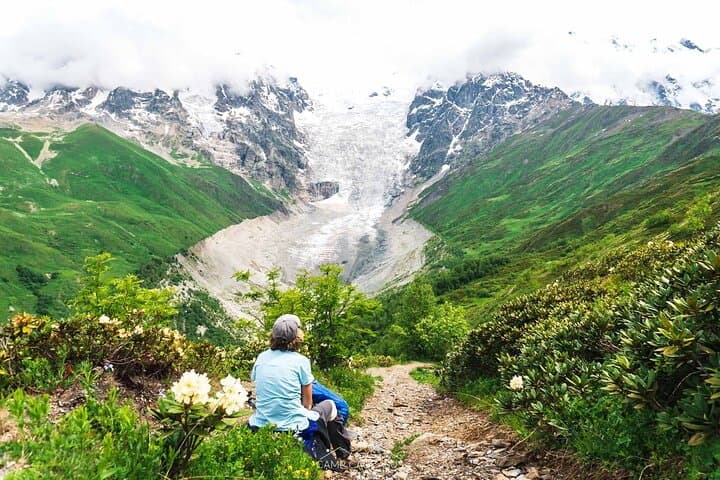
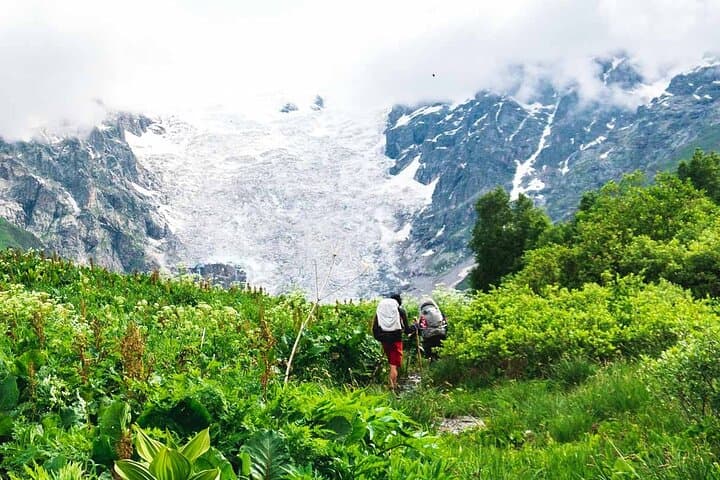
Over eight days the trail threads through forests, gravel cols and alpine meadows to the feet of Chalaadi, Ushba, Adishi and Shkhara glaciers. Rivers dare you to cross shallow fords; glacial tongues loom and push the skyline into jagged teeth. Along the way you pass the stacked stone towers and fortified houses of Svan communities, a cultural landscape shaped by centuries of clan defense and highland agriculture.
Geologically the Greater Caucasus is young and uplifted, its glaciers carving steep cirques and long moraines visible in every valley. In Ushguli—listed as a UNESCO World Heritage site—medieval towers stand as lived-in archives of Svan traditions. Expect local hospitality: multi-course dinners of regional cheeses, stews and cornbread served in family-run guesthouses.
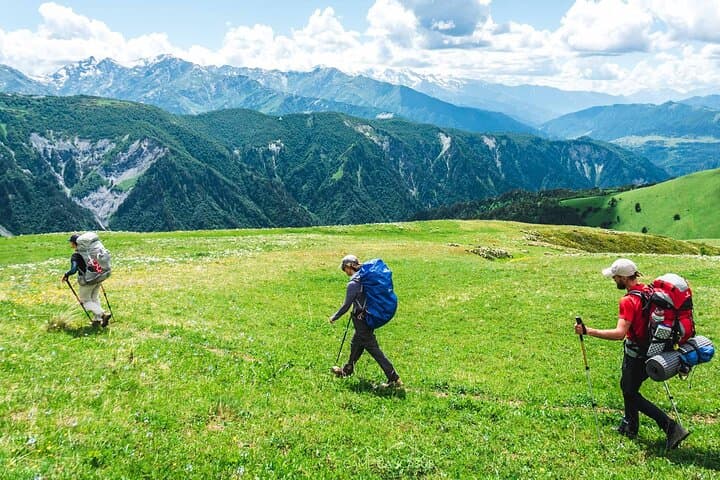
Practically, the tour is self-guided with GPS maps and an English audio guide; daily walks range from easy forest approaches to sustained 15–24 km day hikes, and one village night is at about 2,040 m (Adishi). Trail surfaces vary—rocky alpine trails, grassy ribbons and occasional muddy tracks—so waterproof layers, sturdy boots and a dry bag matter. Weather changes fast: start hikes early, carry water, and budget time for transfers between villages. If you want lighter pack days, luggage transfers are available on request. This itinerary balances raw mountain scenery with cultural stops—best attempted with solid hiking legs and a readiness for highland weather.
No — the tour is self-guided with GPS maps and an English audio guide; transfers between villages and 24/7 support are included.
Travelers should have at least a moderate level of fitness and be able to hike up to 24 km on some days with elevation changes and uneven terrain.
Yes — luggage transfers are available upon request for an additional cost; otherwise plan to carry a daypack only while transfers handle overnight bags if arranged.
Late spring through early fall provides the most stable hiking weather; early summer brings wildflowers and late summer offers clearer mountain views.
Camp Caucasus operates guided outdoor trips and adventures with an emphasis on safety, stewardship, and memorable experiences.
You step out of a low-slung guesthouse into a cold, thin morning; the peaks of Ushba and Tetnuldi stare back like old guards while the valley exhales mist.
You step out of a low-slung guesthouse into a cold, thin morning; the peaks of Ushba and Tetnuldi stare back like old guards while the valley exhales mist.
Over eight days the trail threads through forests, gravel cols and alpine meadows to the feet of Chalaadi, Ushba, Adishi and Shkhara glaciers. Rivers dare you to cross shallow fords; glacial tongues loom and push the skyline into jagged teeth. Along the way you pass the stacked stone towers and fortified houses of Svan communities, a cultural landscape shaped by centuries of clan defense and highland agriculture.
Geologically the Greater Caucasus is young and uplifted, its glaciers carving steep cirques and long moraines visible in every valley. In Ushguli—listed as a UNESCO World Heritage site—medieval towers stand as lived-in archives of Svan traditions. Expect local hospitality: multi-course dinners of regional cheeses, stews and cornbread served in family-run guesthouses.
Practically, the tour is self-guided with GPS maps and an English audio guide; daily walks range from easy forest approaches to sustained 15–24 km day hikes, and one village night is at about 2,040 m (Adishi). Trail surfaces vary—rocky alpine trails, grassy ribbons and occasional muddy tracks—so waterproof layers, sturdy boots and a dry bag matter. Weather changes fast: start hikes early, carry water, and budget time for transfers between villages. If you want lighter pack days, luggage transfers are available on request. This itinerary balances raw mountain scenery with cultural stops—best attempted with solid hiking legs and a readiness for highland weather.