THE ADVENTURE COLLECTIVE® · Independent discovery and booking for outdoor travel

Cross the High Atlas, explore Ait Benhaddou, and spend nights under the stars at Erg Lihoudi on this multi-day journey from Marrakech to the Sahara. Practical route notes and what to pack for sand, sun and cold desert nights.
Cross the High Atlas, explore Ait Benhaddou, and spend nights under the stars at Erg Lihoudi on this multi-day journey from Marrakech to the Sahara. Practical route notes and what to pack for sand, sun and cold desert nights.
Dust from the caravan tracks lifts as the minivan cuts away from Marrakech and climbs the High Atlas; by the time the road reaches Tizi n'Tichka the air has thinned and the landscape changes from ochre terraces to wind-scoured rock.
Verified experiences and guided adventures in the surrounding area.
Operated by Morocco Destination · Marrakech, Marrakesh-Safi
Dust from the caravan tracks lifts as the minivan cuts away from Marrakech and climbs the High Atlas; by the time the road reaches Tizi n'Tichka the air has thinned and the landscape changes from ochre terraces to wind-scoured rock.
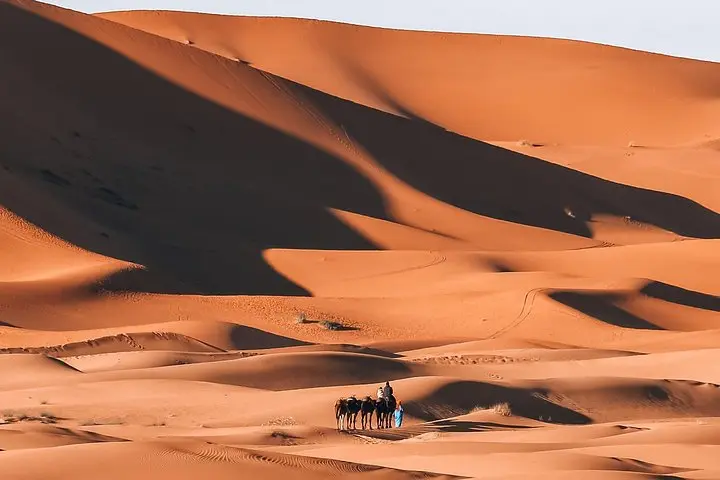
This trip stitches together Morocco's layered history—Ait Benhaddou's mud-brick kasbahs, the Telouet ruins of former pasha power, and the living culture of the Dra'a palm valley—before depositing travelers at Erg Lihoudi's rolling dunes near M'Hamid. Geologically, the route moves from folded Precambrian and Mesozoic ranges of the Atlas to Quaternary sands shaped by wind and episodic flash floods; expect paved mountain passes (Tizi n'Tichka tops near 2,260 m) and soft, shifting sand where dune faces can rise 30–150 m.
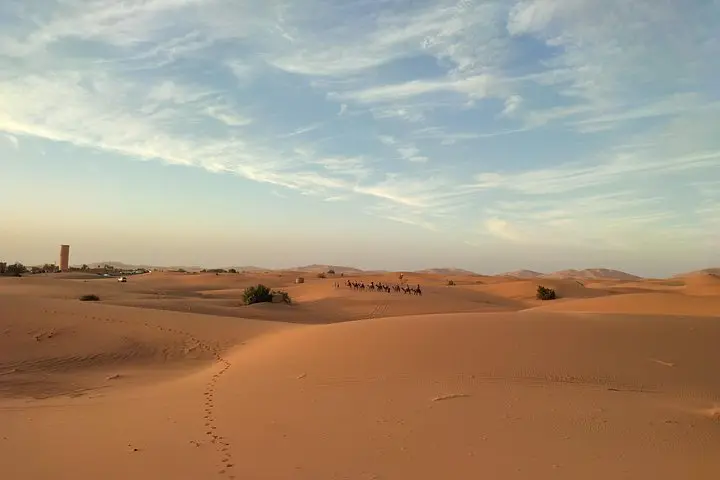
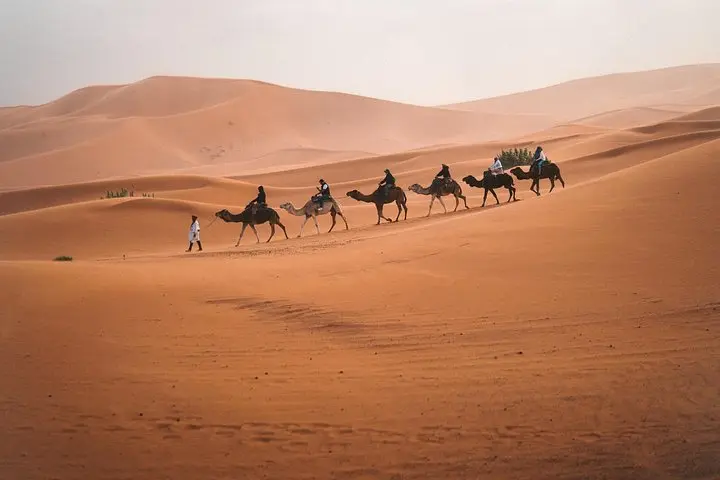
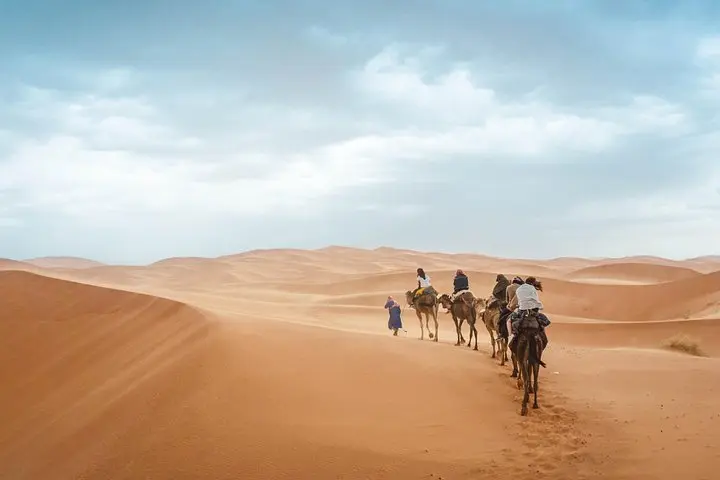
Cultural highlights include the centuries-old Koranic library at Tamegroute, evening music around a bivouac fire, and a short camel ride (about one hour) that crosses dune crests as the sun drops. Nights alternate between riads in small towns and shared desert bivouacs—sleeping rolls and communal meals are standard.
Practical guidance: pack layered clothing for large diurnal swings, bring a 2–3 L hydration system and sun protection, and use footwear that handles both sand and rocky tracks. The itinerary suits travelers comfortable sitting for several hours in vehicles and walking short dune routes; guides handle local logistics and campsite setup. Aim for spring or autumn for gentler temperatures; winter brings cold desert nights, and summer can be extremely hot. Respect water scarcity and local etiquette, and be prepared for basic, authentic desert camping rather than luxury glamping.
Most itineraries begin and end in Marrakech with airport transfers to and from riads; confirm pickup point when booking.
Camel rides are typically about one hour with short guided walks in the dunes; walking is moderate and mostly on sand—no technical climbing required.
Nights alternate between small riads in towns and shared bivouac tents in the desert; bedding is provided but expect basic camp facilities.
The highest road pass is Tizi n'Tichka (~2,260 m); most travelers do fine, but those sensitive to altitude should ascend gradually and stay hydrated.
Morocco Destination operates guided outdoor trips and adventures with an emphasis on safety, stewardship, and memorable experiences.
Dust from the caravan tracks lifts as the minivan cuts away from Marrakech and climbs the High Atlas; by the time the road reaches Tizi n'Tichka the air has thinned and the landscape changes from ochre terraces to wind-scoured rock.
Dust from the caravan tracks lifts as the minivan cuts away from Marrakech and climbs the High Atlas; by the time the road reaches Tizi n'Tichka the air has thinned and the landscape changes from ochre terraces to wind-scoured rock.
This trip stitches together Morocco's layered history—Ait Benhaddou's mud-brick kasbahs, the Telouet ruins of former pasha power, and the living culture of the Dra'a palm valley—before depositing travelers at Erg Lihoudi's rolling dunes near M'Hamid. Geologically, the route moves from folded Precambrian and Mesozoic ranges of the Atlas to Quaternary sands shaped by wind and episodic flash floods; expect paved mountain passes (Tizi n'Tichka tops near 2,260 m) and soft, shifting sand where dune faces can rise 30–150 m.
Cultural highlights include the centuries-old Koranic library at Tamegroute, evening music around a bivouac fire, and a short camel ride (about one hour) that crosses dune crests as the sun drops. Nights alternate between riads in small towns and shared desert bivouacs—sleeping rolls and communal meals are standard.
Practical guidance: pack layered clothing for large diurnal swings, bring a 2–3 L hydration system and sun protection, and use footwear that handles both sand and rocky tracks. The itinerary suits travelers comfortable sitting for several hours in vehicles and walking short dune routes; guides handle local logistics and campsite setup. Aim for spring or autumn for gentler temperatures; winter brings cold desert nights, and summer can be extremely hot. Respect water scarcity and local etiquette, and be prepared for basic, authentic desert camping rather than luxury glamping.