THE ADVENTURE COLLECTIVE® · Independent discovery and booking for outdoor travel

Ride from Karakorum’s ancient ruins through lava-strewn trails, larch forests and high lakes to meet the world’s last wild horses. This nine-day route blends multi-hour horse treks with cultural stays in ger camps and thermal springs.
Ride from Karakorum’s ancient ruins through lava-strewn trails, larch forests and high lakes to meet the world’s last wild horses. This nine-day route blends multi-hour horse treks with cultural stays in ger camps and thermal springs.
A cold morning opens over the Orkhon Valley and the horses already stamp the frost into the steppe. You mount in a ring of nomadic gers and ride eastward: wind pushes across lava-strewn trails, larch forest breathes cool air, and small lakes flash like coins amid grasses. This is multi-day travel where landscape sets the pace.
Verified experiences and guided adventures in the surrounding area.
Operated by Mongolian Vision Tours · Kharkhorin, Övörkhangai Province
A cold morning opens over the Orkhon Valley and the horses already stamp the frost into the steppe. You mount in a ring of nomadic gers and ride eastward: wind pushes across lava-strewn trails, larch forest breathes cool air, and small lakes flash like coins amid grasses. This is multi-day travel where landscape sets the pace.
The route threads through sites heavy with history and geology. Kharkhorin (Karakorum) was the 13th-century imperial center; Erdene Zuu monastery, built on its ruins in 1586, survived Soviet purges and now holds centuries of Mongolian Buddhist artifacts. The Orkhon River cut its valley through volcanic basalt and loess, creating waterfalls, terraces and the lava-bedded horse tracks you’ll traverse. Culture is ever-present: gers, yak-milk tea, anklebone games, and the small, hospitable camps that host riders.
Expect steady riding days — several 4–5 hour mounted sections (the Eight Lakes ride is rough, with lava stones) and long transfers: Ulaanbaatar to Kharkhorin ≈365 km; Kharkhorin to Orkhon ≈200 km; Tuvkhun Monastery sits at about 2,312 m elevation. You’ll see thermal features at Tsenkher (spring source temps near 86°C) and encounter reintroduced Przewalski’s horses at Khustai National Park.
Practical edge: bring layered, windproof clothing, a comfortable saddle-friendly seat, and a small dry bag for day items. Hydrate often on rides, protect skin from sun and wind, and be prepared for basic ger-camp comforts and occasional tent nights. With basic riding experience and a readiness for long travel days, this route delivers raw terrain, living history and close encounters with Mongolia’s wild heart.
Basic riding experience is strongly recommended — you’ll be in the saddle several hours per day over uneven, sometimes rocky ground.
Accommodation alternates between tourist ger camps, stays with nomadic families (gers), and some tent nights; expect simple but warm facilities and communal meals.
Some sites, like Tuvkhun at ~2,312 m, are higher than Ulaanbaatar; most travelers adapt fine but monitor for shortness of breath and hydrate.
Yes — guides report accommodating vegetarian and vegan diets; notify booking in advance for allergies and strict requirements.
Mongolian Vision Tours operates guided outdoor trips and adventures with an emphasis on safety, stewardship, and memorable experiences.
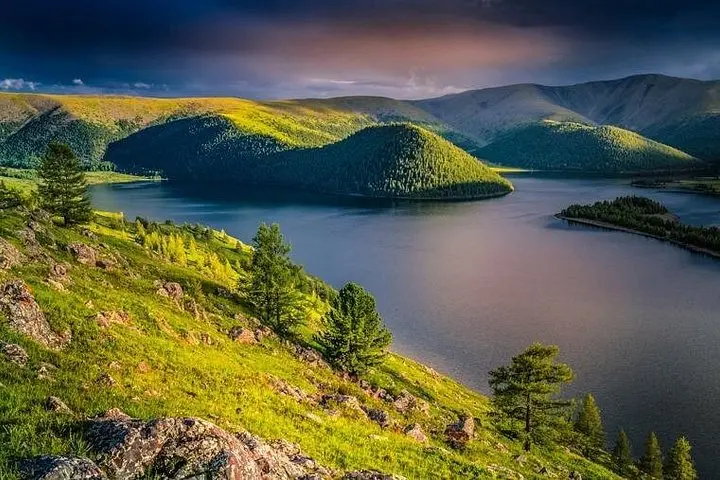
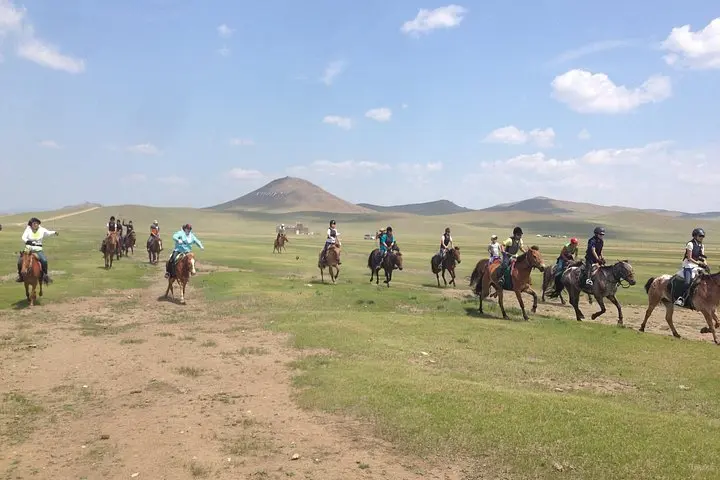
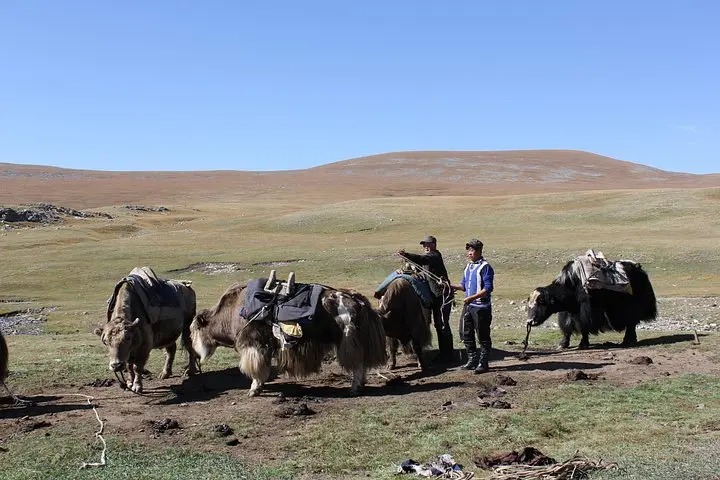
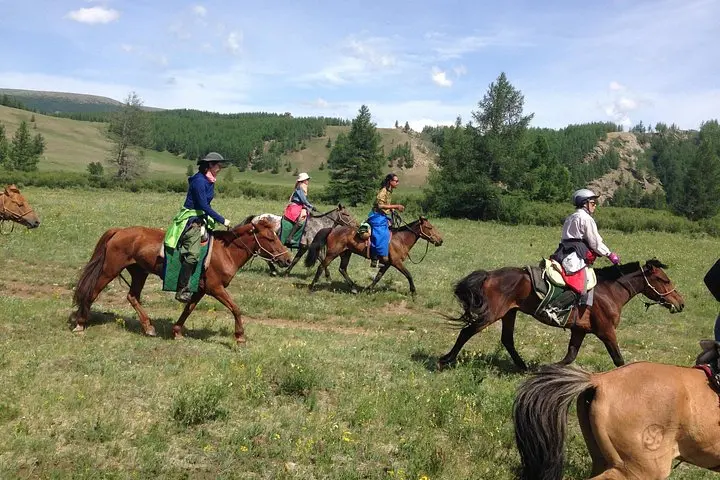
A cold morning opens over the Orkhon Valley and the horses already stamp the frost into the steppe. You mount in a ring of nomadic gers and ride eastward: wind pushes across lava-strewn trails, larch forest breathes cool air, and small lakes flash like coins amid grasses. This is multi-day travel where landscape sets the pace.
A cold morning opens over the Orkhon Valley and the horses already stamp the frost into the steppe. You mount in a ring of nomadic gers and ride eastward: wind pushes across lava-strewn trails, larch forest breathes cool air, and small lakes flash like coins amid grasses. This is multi-day travel where landscape sets the pace.
The route threads through sites heavy with history and geology. Kharkhorin (Karakorum) was the 13th-century imperial center; Erdene Zuu monastery, built on its ruins in 1586, survived Soviet purges and now holds centuries of Mongolian Buddhist artifacts. The Orkhon River cut its valley through volcanic basalt and loess, creating waterfalls, terraces and the lava-bedded horse tracks you’ll traverse. Culture is ever-present: gers, yak-milk tea, anklebone games, and the small, hospitable camps that host riders.
Expect steady riding days — several 4–5 hour mounted sections (the Eight Lakes ride is rough, with lava stones) and long transfers: Ulaanbaatar to Kharkhorin ≈365 km; Kharkhorin to Orkhon ≈200 km; Tuvkhun Monastery sits at about 2,312 m elevation. You’ll see thermal features at Tsenkher (spring source temps near 86°C) and encounter reintroduced Przewalski’s horses at Khustai National Park.
Practical edge: bring layered, windproof clothing, a comfortable saddle-friendly seat, and a small dry bag for day items. Hydrate often on rides, protect skin from sun and wind, and be prepared for basic ger-camp comforts and occasional tent nights. With basic riding experience and a readiness for long travel days, this route delivers raw terrain, living history and close encounters with Mongolia’s wild heart.