THE ADVENTURE COLLECTIVE® · Independent discovery and booking for outdoor travel

A nine-day private loop from Amman to Jerusalem that pairs Petra’s carved canyons and Wadi Rum’s red deserts with restorative days at the Dead Sea. Expect packed cultural sites, dramatic geology, and practical pacing for long drives and early starts.
A nine-day private loop from Amman to Jerusalem that pairs Petra’s carved canyons and Wadi Rum’s red deserts with restorative days at the Dead Sea. Expect packed cultural sites, dramatic geology, and practical pacing for long drives and early starts.
You step off the plane into the warm, mineral-scented air of Amman and the rest of the week stacks itself like chapters: Roman columns, red-sanded moonscapes, and a sea that refuses to let you sink. This private, nine-day loop threads Jordan’s highlights with a crossing into Jerusalem—an itinerary that moves fast enough to cover ground but slow enough to let each place speak.
Verified experiences and guided adventures in the surrounding area.
Operated by Tour Experts · Amman, Amman Governorate
You step off the plane into the warm, mineral-scented air of Amman and the rest of the week stacks itself like chapters: Roman columns, red-sanded moonscapes, and a sea that refuses to let you sink. This private, nine-day loop threads Jordan’s highlights with a crossing into Jerusalem—an itinerary that moves fast enough to cover ground but slow enough to let each place speak.
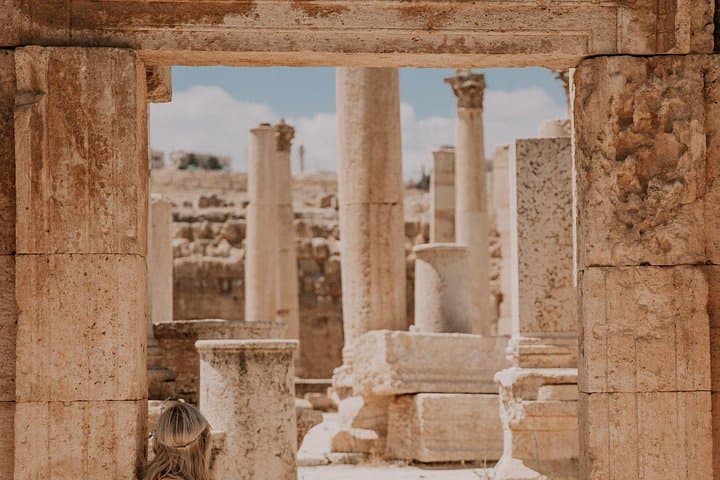
Start with Amman’s layered history: Roman theatres and limestone houses perched on hills that feel older than the map. North, Ajloun’s Ayyubid castle crouches above pine forests—stone and scrub conspiring to repel crusaders centuries ago—while nearby Jerash unfolds as one of the Middle East’s most intact Roman cities, a colonnaded spine nearly 600 meters long where chariot tracks still mark the plazas.
By day three the landscape shifts: Madaba’s Byzantine mosaics and Mount Nebo’s wind-hollowed overlook give way to the Dead Sea, sitting more than 430 meters below sea level, a flat, glittering expanse that refuses to let you sink and invites the slow, buoyant pause of floatation and mud therapy.
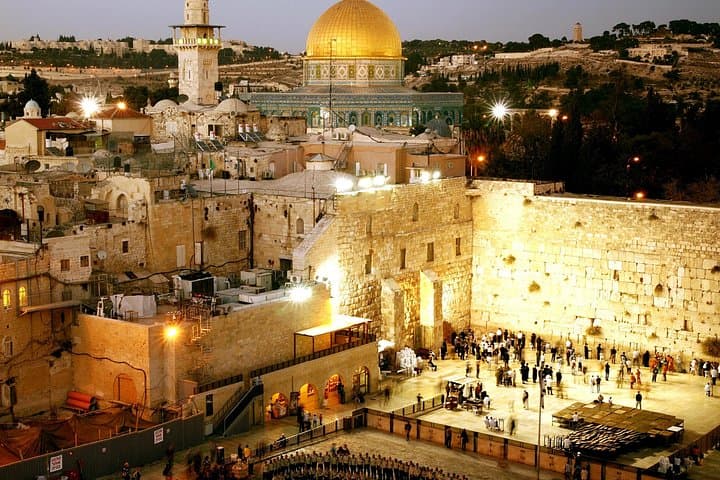
Crossing into Jerusalem, the itinerary tightens into an intense cultural weave—Mount of Olives panoramas, the concentric lanes of the Old City, the Dome of the Rock’s gold catching the sun, and the Church of the Holy Sepulchre’s layered devotion. History here is tactile: every stone carries a story, every gate a contested chapter.
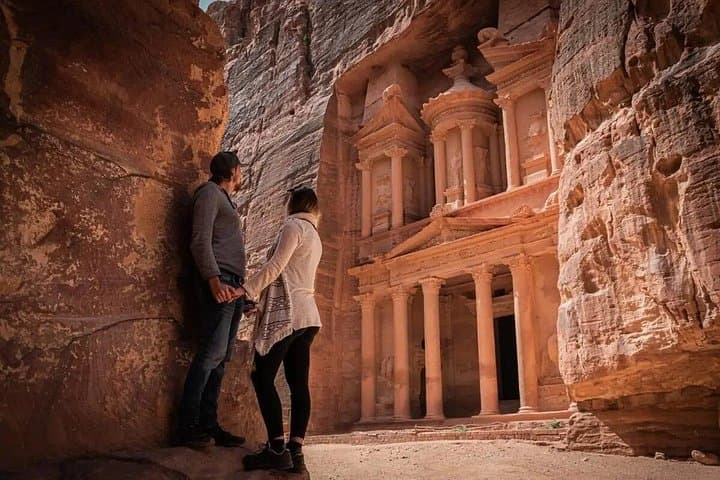
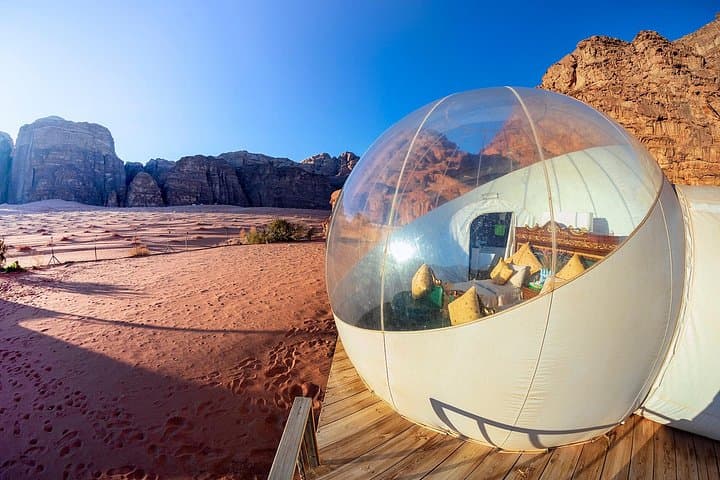
Then Petra—arrive early to walk the 1.2-km Siq before the day heats, watch sandstone walls animate from pale pink to deep russet as light slides across carved facades. Wadi Rum follows with its own personality: wind-scoured towers and sand that rearranges itself nightly, producing sunsets that purge color from the sky.
Practical side: expect a mix of short hikes and long drives (Amman to Petra ~3.5 hours; Petra to Wadi Rum ~1.5–2 hours). Terrain ranges from paved city streets to uneven archaeological pathways and loose desert sand; elevation varies—Amman sits around 760m, Petra near 800–1,000m, Dead Sea at -430m. Pace your days: morning site visits beat both crowds and heat, while late afternoons suit viewpoints and light for photography.
Bring layered clothing for temperature swings, sturdy walking shoes for uneven ruins, sun protection, and a refillable water bottle (bottled water is provided, but daily refills are a traveler’s friend). Border crossings require passports and possible visas—confirm before travel. Because this is a private tour, ask about language preferences for your driver-guide and check luggage limits for transfers. With the right planning, this nine-day circuit is equal parts cultural immersion, geological spectacle, and restorative downtime by the world’s saltiest sea.
Park entrance fees vary—confirm with the operator; many bookings include major site admissions but always verify which tickets are covered.
Visa requirements depend on nationality; some travelers can obtain a Jordanian visa on arrival, while entry to Jerusalem/Crossing at King Hussein Bridge may require pre-clearance—check with your embassy and tour operator.
Plan for several short to moderate walks (30–90 minutes) at archaeological sites and longer transfers between destinations; limited strenuous hiking is required unless you opt for extra excursions.
The itinerary lists wheelchair accessibility for many transfers and sites, but some ruins and desert accommodations have uneven terrain—discuss specific mobility needs with the operator before booking.
Jordanian dinar (JOD) is used in Jordan; Israeli shekel (ILS) is used in Jerusalem—carry small notes for tips and market purchases and notify your bank about travel plans.
Tipping policies vary; while service charges may be included at hotels, it’s customary to tip drivers, guides, and local service staff separately—carry small notes for this purpose.
Tour Experts operates guided outdoor trips and adventures with an emphasis on safety, stewardship, and memorable experiences.
You step off the plane into the warm, mineral-scented air of Amman and the rest of the week stacks itself like chapters: Roman columns, red-sanded moonscapes, and a sea that refuses to let you sink. This private, nine-day loop threads Jordan’s highlights with a crossing into Jerusalem—an itinerary that moves fast enough to cover ground but slow enough to let each place speak.
You step off the plane into the warm, mineral-scented air of Amman and the rest of the week stacks itself like chapters: Roman columns, red-sanded moonscapes, and a sea that refuses to let you sink. This private, nine-day loop threads Jordan’s highlights with a crossing into Jerusalem—an itinerary that moves fast enough to cover ground but slow enough to let each place speak.
Start with Amman’s layered history: Roman theatres and limestone houses perched on hills that feel older than the map. North, Ajloun’s Ayyubid castle crouches above pine forests—stone and scrub conspiring to repel crusaders centuries ago—while nearby Jerash unfolds as one of the Middle East’s most intact Roman cities, a colonnaded spine nearly 600 meters long where chariot tracks still mark the plazas.
By day three the landscape shifts: Madaba’s Byzantine mosaics and Mount Nebo’s wind-hollowed overlook give way to the Dead Sea, sitting more than 430 meters below sea level, a flat, glittering expanse that refuses to let you sink and invites the slow, buoyant pause of floatation and mud therapy.
Crossing into Jerusalem, the itinerary tightens into an intense cultural weave—Mount of Olives panoramas, the concentric lanes of the Old City, the Dome of the Rock’s gold catching the sun, and the Church of the Holy Sepulchre’s layered devotion. History here is tactile: every stone carries a story, every gate a contested chapter.
Then Petra—arrive early to walk the 1.2-km Siq before the day heats, watch sandstone walls animate from pale pink to deep russet as light slides across carved facades. Wadi Rum follows with its own personality: wind-scoured towers and sand that rearranges itself nightly, producing sunsets that purge color from the sky.
Practical side: expect a mix of short hikes and long drives (Amman to Petra ~3.5 hours; Petra to Wadi Rum ~1.5–2 hours). Terrain ranges from paved city streets to uneven archaeological pathways and loose desert sand; elevation varies—Amman sits around 760m, Petra near 800–1,000m, Dead Sea at -430m. Pace your days: morning site visits beat both crowds and heat, while late afternoons suit viewpoints and light for photography.
Bring layered clothing for temperature swings, sturdy walking shoes for uneven ruins, sun protection, and a refillable water bottle (bottled water is provided, but daily refills are a traveler’s friend). Border crossings require passports and possible visas—confirm before travel. Because this is a private tour, ask about language preferences for your driver-guide and check luggage limits for transfers. With the right planning, this nine-day circuit is equal parts cultural immersion, geological spectacle, and restorative downtime by the world’s saltiest sea.