THE ADVENTURE COLLECTIVE® · Independent discovery and booking for outdoor travel

Move from Seoraksan’s raw granite ridges to Odaesan’s cedar valleys and Bukhansan’s urban peaks on a nine-day guided trek that includes a one-night temple stay. Expect steep stair sections, regional foods, and an itinerary tuned to your fitness.
Move from Seoraksan’s raw granite ridges to Odaesan’s cedar valleys and Bukhansan’s urban peaks on a nine-day guided trek that includes a one-night temple stay. Expect steep stair sections, regional foods, and an itinerary tuned to your fitness.
Morning light slants through pine and larch as the first ridge of Seoraksan looms ahead—granite faces braided with staircases and iron ladders, a wind that seems to want to test every step. On this nine-day loop, hikers move from the high, raw ridgelines of Seoraksan to the quiet, cedar-lined trails of Odaesan and the bomber granite spires of Bukhansan, folding into a night at a working Buddhist temple where bells and chanting mark the day.
Verified experiences and guided adventures in the surrounding area.
Operated by Bergen travel · Seoul, Seoul
Morning light slants through pine and larch as the first ridge of Seoraksan looms ahead—granite faces braided with staircases and iron ladders, a wind that seems to want to test every step. On this nine-day loop, hikers move from the high, raw ridgelines of Seoraksan to the quiet, cedar-lined trails of Odaesan and the bomber granite spires of Bukhansan, folding into a night at a working Buddhist temple where bells and chanting mark the day.
Korea is a country of mountains—roughly 70 percent—so these peaks are as much cultural highways as natural ones. Seoraksan’s jagged granite and gneiss were sculpted by weather and time into Ulsanbawi’s stacked buttresses; Odaesan’s forests sit on older metamorphic rock with streams that have long fed temple communities; Bukhansan’s proximity to Seoul made it both a defensive high ground and a weekend proving ground for city hikers. Naksansa and the temple stay included on day four offer a direct line into Korean Buddhism: centuries-old rituals, simple temple meals, a dawn chant that reframes how a tired body moves through a valley.
The itinerary blends challenging day hikes—Ulsanbawi and Gwongeumseong via cable car—with gentler valley walks at Osaek Jujeongol and the lesser-known Sibi Seonnyeotang Basin. Guides adjust routes to match ability and weather; accommodations alternate between local hotels and temple lodging, and food focuses on regional specialties—seafood on the east coast, mountain banchan and hearty stews inland.
Practicalities matter out here: expect steep stair sections and exposed ridgelines that demand solid boots and steady footing. Daily elevation changes vary—short, intense climbs at Seoraksan and Bukhansan, longer, forested ascents at Odaesan—so pack layers, a reliable rain shell, and a small first-aid kit. Water sources exist but carry a liter-plus per person; trail signage is generally good, but a guide keeps timing and park rules straightforward. Pickup and drop-off from Seoul are included, making logistics simple for international travelers.
When to go: autumn brings the sharpest views and packed trails; spring opens flowers and muddy sections; summer is humid with sudden rain; winter is snowy and technical. Leave no trace, respect temple etiquette (quiet voices, modest clothing), and give yourself an extra day in Seoul to decompress after the mountains.
This trip is equal parts natural movement and cultural immersion: a stubborn ridge demanding focus, a temple that insists on slowing you down, and enough variety to show why Korea’s mountains have been both refuge and classroom for generations.
Yes—participants can opt out; the itinerary can be adjusted, but the guide recommends the temple stay for cultural context.
Hikes range from moderate valley walks to steep summit pushes with 300–700m elevation gain; expect 3–7 hours of hiking on active days.
Yes—airport pickup and return and hotel transfers in Seoul are included as part of the tour logistics.
Most breakfasts, lunches and dinners are included as specified in the itinerary; regional meals feature local ingredients and temple cuisine during the stay.
The tour is not recommended for severe spinal or cardiovascular conditions—inform the operator at booking so they can adjust routes where possible.
Yes—an English-speaking, licensed guide leads the trip for navigation, cultural interpretation and logistics.
Bergen travel operates guided outdoor trips and adventures with an emphasis on safety, stewardship, and memorable experiences.

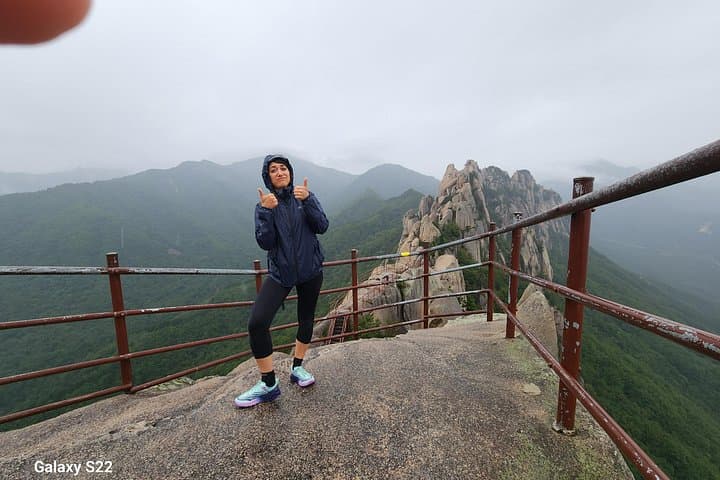


Morning light slants through pine and larch as the first ridge of Seoraksan looms ahead—granite faces braided with staircases and iron ladders, a wind that seems to want to test every step. On this nine-day loop, hikers move from the high, raw ridgelines of Seoraksan to the quiet, cedar-lined trails of Odaesan and the bomber granite spires of Bukhansan, folding into a night at a working Buddhist temple where bells and chanting mark the day.
Morning light slants through pine and larch as the first ridge of Seoraksan looms ahead—granite faces braided with staircases and iron ladders, a wind that seems to want to test every step. On this nine-day loop, hikers move from the high, raw ridgelines of Seoraksan to the quiet, cedar-lined trails of Odaesan and the bomber granite spires of Bukhansan, folding into a night at a working Buddhist temple where bells and chanting mark the day.
Korea is a country of mountains—roughly 70 percent—so these peaks are as much cultural highways as natural ones. Seoraksan’s jagged granite and gneiss were sculpted by weather and time into Ulsanbawi’s stacked buttresses; Odaesan’s forests sit on older metamorphic rock with streams that have long fed temple communities; Bukhansan’s proximity to Seoul made it both a defensive high ground and a weekend proving ground for city hikers. Naksansa and the temple stay included on day four offer a direct line into Korean Buddhism: centuries-old rituals, simple temple meals, a dawn chant that reframes how a tired body moves through a valley.
The itinerary blends challenging day hikes—Ulsanbawi and Gwongeumseong via cable car—with gentler valley walks at Osaek Jujeongol and the lesser-known Sibi Seonnyeotang Basin. Guides adjust routes to match ability and weather; accommodations alternate between local hotels and temple lodging, and food focuses on regional specialties—seafood on the east coast, mountain banchan and hearty stews inland.
Practicalities matter out here: expect steep stair sections and exposed ridgelines that demand solid boots and steady footing. Daily elevation changes vary—short, intense climbs at Seoraksan and Bukhansan, longer, forested ascents at Odaesan—so pack layers, a reliable rain shell, and a small first-aid kit. Water sources exist but carry a liter-plus per person; trail signage is generally good, but a guide keeps timing and park rules straightforward. Pickup and drop-off from Seoul are included, making logistics simple for international travelers.
When to go: autumn brings the sharpest views and packed trails; spring opens flowers and muddy sections; summer is humid with sudden rain; winter is snowy and technical. Leave no trace, respect temple etiquette (quiet voices, modest clothing), and give yourself an extra day in Seoul to decompress after the mountains.
This trip is equal parts natural movement and cultural immersion: a stubborn ridge demanding focus, a temple that insists on slowing you down, and enough variety to show why Korea’s mountains have been both refuge and classroom for generations.