THE ADVENTURE COLLECTIVE® · Independent discovery and booking for outdoor travel

A nine-day guided traverse of Jebel M'goun that climbs to roughly 4,000 m through plateaus, gorges, and Berber villages. Expect long summit days, camping and gîtes, and local mule support from Marrakech.
A nine-day guided traverse of Jebel M'goun that climbs to roughly 4,000 m through plateaus, gorges, and Berber villages. Expect long summit days, camping and gîtes, and local mule support from Marrakech.
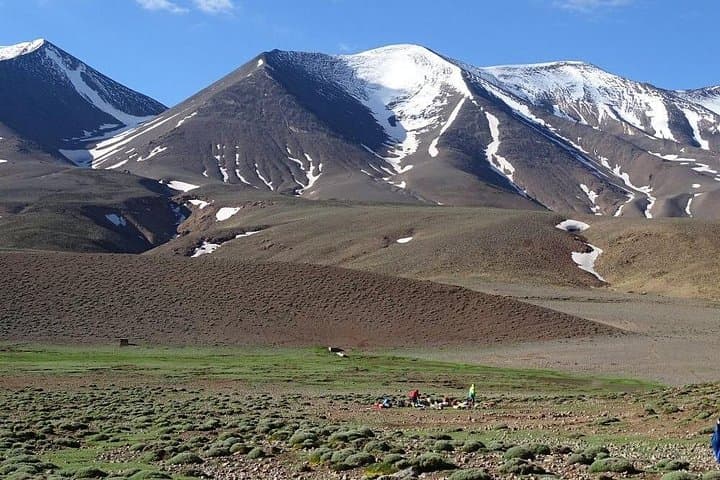
Dawn breaks over Azib n'Ikkis and the camp stirs: breath hangs in the cold air as mule bells rattle and a line of trekkers begins the first steep switchbacks.
Verified experiences and guided adventures in the surrounding area.
Operated by Smart Morocco Tours Excursions · Marrakech, Marrakesh-Safi
Dawn breaks over Azib n'Ikkis and the camp stirs: breath hangs in the cold air as mule bells rattle and a line of trekkers begins the first steep switchbacks.
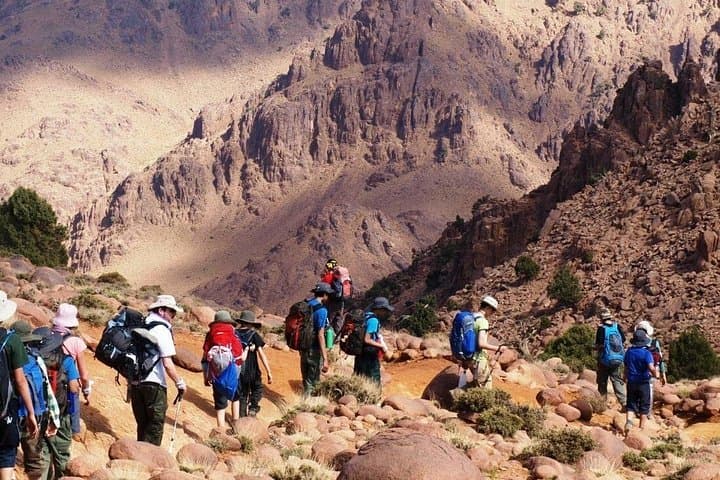
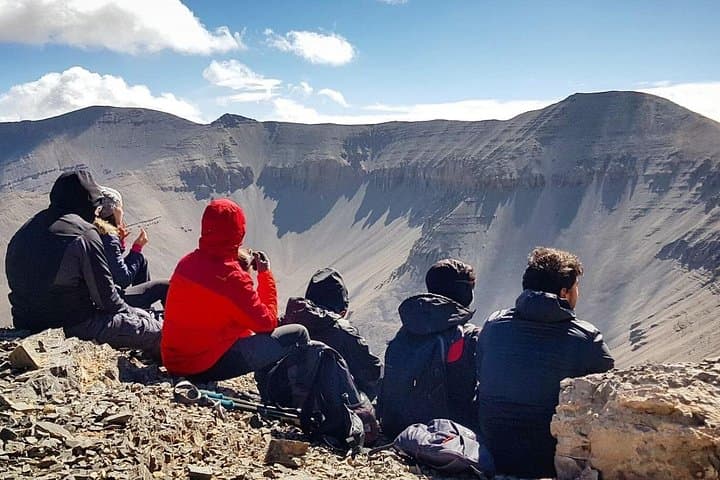
Over nine days this guided route climbs from high pastures at ~2,300 m to the jagged crest of Jebel M'goun at about 4,000 m, then wanders down through wild valleys carved from limestone and volcanic intrusions. The massif’s geology is raw—steep cirques, shelved plateaus like Tarkeddit, and river-cut gorges that dare you to look over the lip.
The trail crosses Amazigh (Berber) villages where houses are built from local stone and trading routes once linked these valleys to Ouarzazate and the Dades Gorge. Rose cultivation and walnut orchards color the lower slopes; mule drivers and simple gîtes maintain the region’s transport and hospitality traditions.
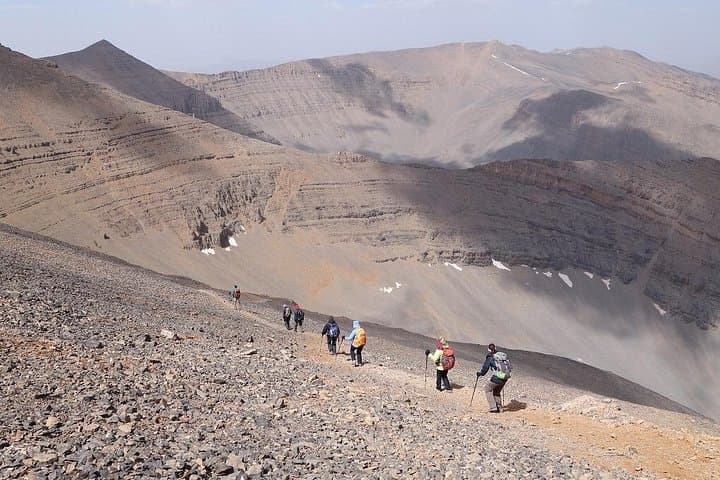
Practically: expect daily hiking of 3–9 hours with a hard summit day (about 5 hours ascent, ~1,100 m gain). Terrain alternates packed track, scree, and river crossings; basic scrambling appears near the summit. Accommodation alternates camp and local gîtes; meals are provided on trek days. Guides handle logistics and mule support, but come prepared for cold nights, sun at altitude, and fluctuating weather.
Bring layered insulation, sturdy boots, poles for descent, and a small daypack for summit essentials. Hydrate, pace on the ascent, and consider a pre-trek night in Marrakech to adjust before the transfer over the Tizi n'Oughbar pass.
Late spring (May–June) and early fall (September–October) offer the best combination of stable weather, accessible trails, and pleasant temperatures.
The summit day involves about 5 hours of ascent and roughly 1,100 m gain; it's steep and may include loose rock—fitness and steady pacing are important.
Yes—this guided tour includes camping and occasional gîtes, plus breakfast, lunch, and dinner on trekking days as described in the itinerary.
No technical climbing is required for the standard route; guided mule support is available, but in winter technical snow gear and experience are necessary.
Smart Morocco Tours Excursions operates guided outdoor trips and adventures with an emphasis on safety, stewardship, and memorable experiences.
Dawn breaks over Azib n'Ikkis and the camp stirs: breath hangs in the cold air as mule bells rattle and a line of trekkers begins the first steep switchbacks.
Dawn breaks over Azib n'Ikkis and the camp stirs: breath hangs in the cold air as mule bells rattle and a line of trekkers begins the first steep switchbacks.
Over nine days this guided route climbs from high pastures at ~2,300 m to the jagged crest of Jebel M'goun at about 4,000 m, then wanders down through wild valleys carved from limestone and volcanic intrusions. The massif’s geology is raw—steep cirques, shelved plateaus like Tarkeddit, and river-cut gorges that dare you to look over the lip.
The trail crosses Amazigh (Berber) villages where houses are built from local stone and trading routes once linked these valleys to Ouarzazate and the Dades Gorge. Rose cultivation and walnut orchards color the lower slopes; mule drivers and simple gîtes maintain the region’s transport and hospitality traditions.
Practically: expect daily hiking of 3–9 hours with a hard summit day (about 5 hours ascent, ~1,100 m gain). Terrain alternates packed track, scree, and river crossings; basic scrambling appears near the summit. Accommodation alternates camp and local gîtes; meals are provided on trek days. Guides handle logistics and mule support, but come prepared for cold nights, sun at altitude, and fluctuating weather.
Bring layered insulation, sturdy boots, poles for descent, and a small daypack for summit essentials. Hydrate, pace on the ascent, and consider a pre-trek night in Marrakech to adjust before the transfer over the Tizi n'Oughbar pass.