THE ADVENTURE COLLECTIVE® · Independent discovery and booking for outdoor travel

A compact nine-day loop from Marrakech across the High Atlas to Merzouga’s dunes, then north through Fes and the blue alleys of Chefchaouen. Expect long drives, a sunset camel ride, Berber camps, and contrasting landscapes from cedar forests to sandy ridgelines.
A compact nine-day loop from Marrakech across the High Atlas to Merzouga’s dunes, then north through Fes and the blue alleys of Chefchaouen. Expect long drives, a sunset camel ride, Berber camps, and contrasting landscapes from cedar forests to sandy ridgelines.
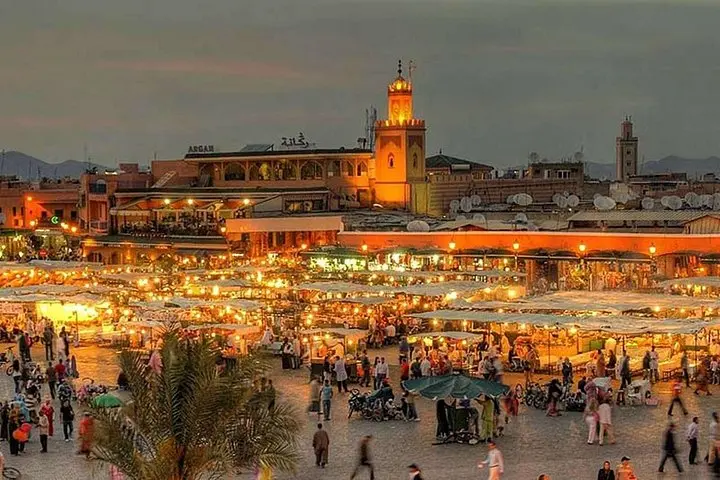
The sun slants low over Marrakech’s ochre walls as vehicles pull away toward the Atlas—the first motion of a nine-day route that trades city spice for Sahara stillness.
Verified experiences and guided adventures in the surrounding area.
Operated by This Desert Experience · Marrakech, Marrakech-Safi
The sun slants low over Marrakech’s ochre walls as vehicles pull away toward the Atlas—the first motion of a nine-day route that trades city spice for Sahara stillness.
Travelers cross Tizi n’Tichka, where ancient volcanic ridges and folded limestone give way to terraced fields, then follow the road through kasbah towns that rose where trade routes met water. Ouarzazate’s studios and the earthen towers of Ait Ben Haddou speak to Morocco’s cinematic and imperial past; further east, the Dades and Todra gorges carve narrow clefts through red rock, a geology of abrupt vertical theater.
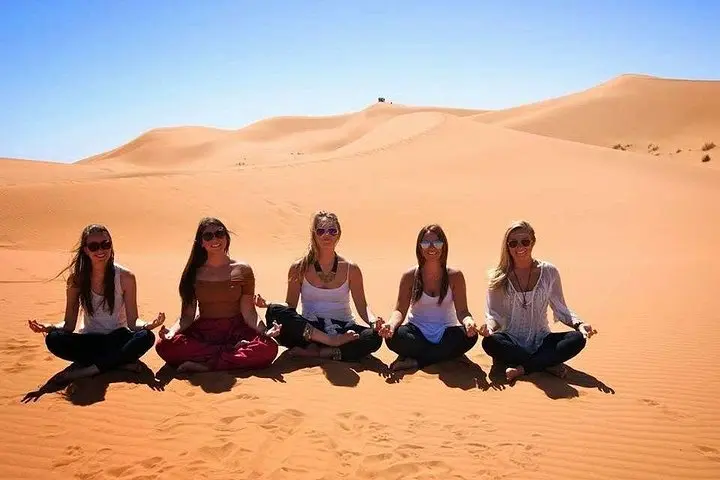
By Merzouga the landscape softens: Erg Chebbi’s dunes are wind-sculpted ridges of quartz and mica that glow amber at sunset. Nights in Berber tents put visitors under the same stars that guided caravan routes for centuries. Northward, the Middle Atlas cedar forests and the blue-painted alleys of Chefchaouen contrast sharply with the desert day—each region offering distinct foodways, language variants, and crafts rooted in Amazigh and Arab cultures.
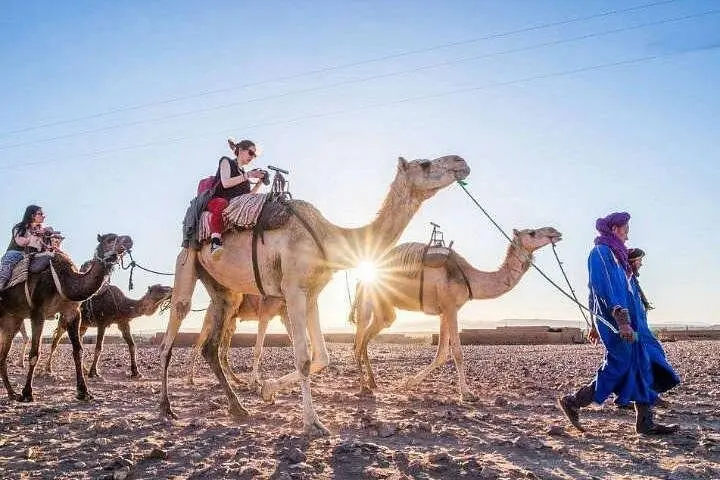
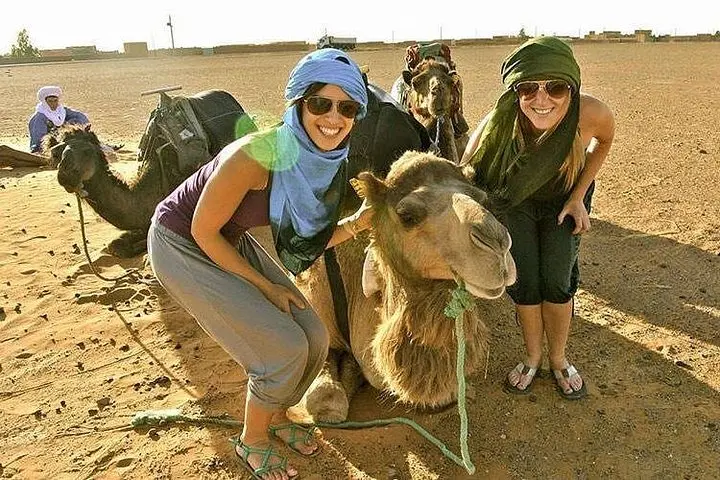
Practical guidance: expect long driving days (several 3–6 hour legs), short on-foot explorations in medinas and gorges, and a 1–2 hour camel transfer across dunes at sunset. Pack layers for hot days and cold desert nights, a brimmed hat, sunscreen, sturdy walking shoes, and enough cash for small markets and tipping. Stay hydrated—refill bottles when opportunities arise—and plan arrival to Marrakech a day early to absorb the medina without rushing. Respect local customs: modest dress in rural and sacred sites, and ask before photographing people.
This itinerary balances road travel, light hikes, and cultural stops—an accessible sweep through Morocco’s climatic and cultural edges.
Expect multiple long drives—many legs range 3–6 hours; some days combine shorter cultural stops with longer transfers between regions.
The typical sunset camel transfer is 1–2 hours and gentle; it requires basic balance but no technical skill—alternative transport may be available for those unable to ride.
The itinerary lists private riads, hotels, and desert tents; camps generally provide private bedding and basic sanitary facilities—confirm standards with the operator beforehand.
Visa requirements depend on your nationality; routine vaccinations are usually sufficient—check health and entry requirements for Morocco before travel.
This Desert Experience operates guided outdoor trips and adventures with an emphasis on safety, stewardship, and memorable experiences.
The sun slants low over Marrakech’s ochre walls as vehicles pull away toward the Atlas—the first motion of a nine-day route that trades city spice for Sahara stillness.
The sun slants low over Marrakech’s ochre walls as vehicles pull away toward the Atlas—the first motion of a nine-day route that trades city spice for Sahara stillness.
Travelers cross Tizi n’Tichka, where ancient volcanic ridges and folded limestone give way to terraced fields, then follow the road through kasbah towns that rose where trade routes met water. Ouarzazate’s studios and the earthen towers of Ait Ben Haddou speak to Morocco’s cinematic and imperial past; further east, the Dades and Todra gorges carve narrow clefts through red rock, a geology of abrupt vertical theater.
By Merzouga the landscape softens: Erg Chebbi’s dunes are wind-sculpted ridges of quartz and mica that glow amber at sunset. Nights in Berber tents put visitors under the same stars that guided caravan routes for centuries. Northward, the Middle Atlas cedar forests and the blue-painted alleys of Chefchaouen contrast sharply with the desert day—each region offering distinct foodways, language variants, and crafts rooted in Amazigh and Arab cultures.
Practical guidance: expect long driving days (several 3–6 hour legs), short on-foot explorations in medinas and gorges, and a 1–2 hour camel transfer across dunes at sunset. Pack layers for hot days and cold desert nights, a brimmed hat, sunscreen, sturdy walking shoes, and enough cash for small markets and tipping. Stay hydrated—refill bottles when opportunities arise—and plan arrival to Marrakech a day early to absorb the medina without rushing. Respect local customs: modest dress in rural and sacred sites, and ask before photographing people.
This itinerary balances road travel, light hikes, and cultural stops—an accessible sweep through Morocco’s climatic and cultural edges.