THE ADVENTURE COLLECTIVE® · Independent discovery and booking for outdoor travel

A deliberate nine-day trek that rises from montane forest to alpine rock, this Mount Kenya route targets Lenana Peak with staged camps for acclimatization. Read on for route specifics, elevation gains, and practical tips to prepare for high-altitude walking in Kenya.
A deliberate nine-day trek that rises from montane forest to alpine rock, this Mount Kenya route targets Lenana Peak with staged camps for acclimatization. Read on for route specifics, elevation gains, and practical tips to prepare for high-altitude walking in Kenya.
A thin dawn cuts across the Sirimon Gate as the van drops you at the park boundary; the massif rises, a granite spine that will pull you up through montane forest into an alpine world. Birdsong fades to wind and the trail narrows—streams push forward, ridgelines dare you to keep pace.
Verified experiences and guided adventures in the surrounding area.
Operated by Africa Tours · Nanyuki, Central Province
A thin dawn cuts across the Sirimon Gate as the van drops you at the park boundary; the massif rises, a granite spine that will pull you up through montane forest into an alpine world. Birdsong fades to wind and the trail narrows—streams push forward, ridgelines dare you to keep pace.
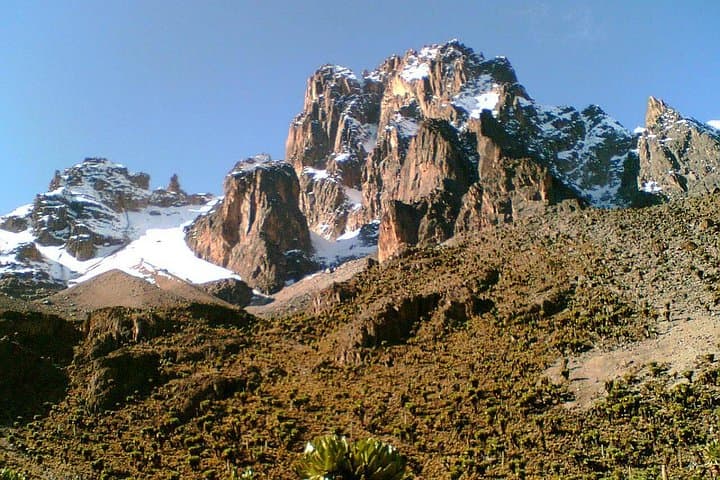
Mount Kenya is Kenya’s highest mountain and Africa’s second-highest massif, its peaks carved from ancient volcanic rock and sculpted by glaciation. The mountain sits at the meeting point of Kikuyu and Meru cultural landscapes; local communities have long regarded the peaks as sacred, and early European exploration mapped its steep ridges in the late 19th century. Geologically, granite domes and glacial cirques define routes like Sirimon and Chogoria, each offering different exposures and views.
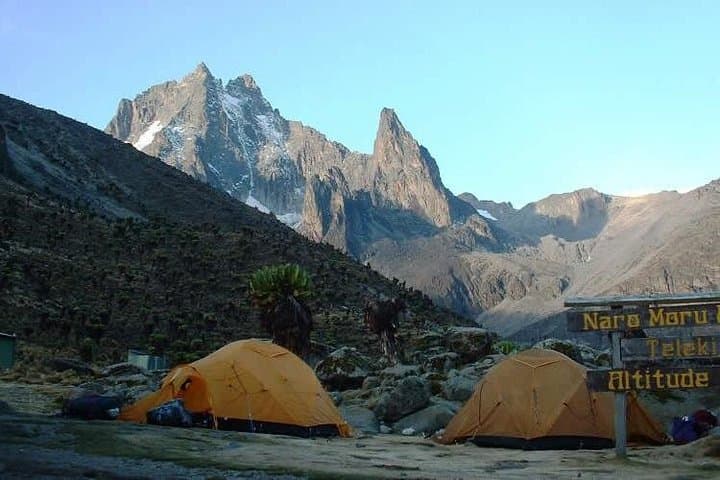
This 9-day itinerary moves deliberately for acclimatization: transfer from Nairobi, trek to Old Moses Camp (3–4 hours, ~700 m gain to 3,440 m), push to Shipton (7 hours, ~950 m gain to 4,236 m), cross Husberg pass and reach Mackinder (4 hours, ~550 m), then the classic summit push from Mackinder via the Austrian Hut (about 6 hours roundtrip, ~700 m ascent to Lenana at ~4,985 m) before descending the Chogoria side to Bandas Lodge and back to Nairobi.
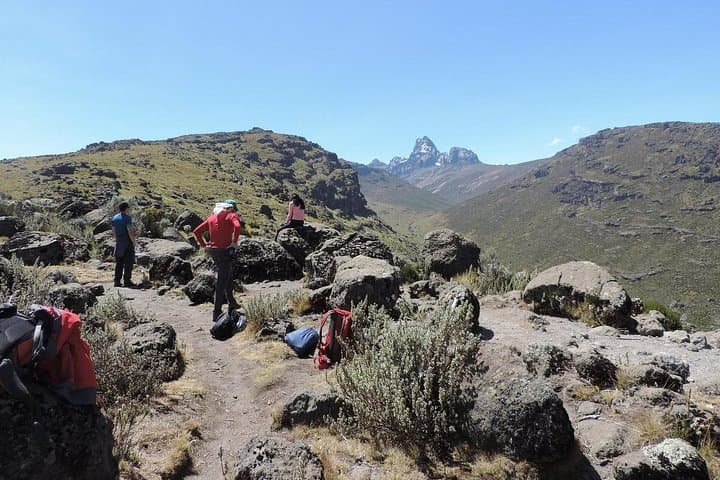
Expect varied terrain—muddy forest tracks, rocky scree, tussock slopes—and sharply changing weather. Practical notes: prioritize slow ascent for acclimatization, pack layers for freezing nights at altitude, and bring a headlamp for early summit starts. Local guides, hut accommodation, porter support and park permits are standard; they reduce load and increase safety. With steady pacing and respect for the mountain, Lenana Peak is an achievable high-altitude objective that rewards persistent walkers with sweeping panoramas and near-vertical granite presence.
No; Lenana is a non-technical summit accessed by established trails and requires fitness and acclimatization rather than rock-climbing skills.
Yes; Mount Kenya National Park requires permits and route guidance—most organized trips include park fees, guides, and porters in the package.
The driest months (January–March and July–October) offer more stable weather and clearer summit windows, but conditions can change quickly year-round.
Guides monitor symptoms, enforce rest and hydration, and descend if needed; carrying medication like acetazolamide should be discussed with your physician before travel.
Africa Tours operates guided outdoor trips and adventures with an emphasis on safety, stewardship, and memorable experiences.

A thin dawn cuts across the Sirimon Gate as the van drops you at the park boundary; the massif rises, a granite spine that will pull you up through montane forest into an alpine world. Birdsong fades to wind and the trail narrows—streams push forward, ridgelines dare you to keep pace.
A thin dawn cuts across the Sirimon Gate as the van drops you at the park boundary; the massif rises, a granite spine that will pull you up through montane forest into an alpine world. Birdsong fades to wind and the trail narrows—streams push forward, ridgelines dare you to keep pace.
Mount Kenya is Kenya’s highest mountain and Africa’s second-highest massif, its peaks carved from ancient volcanic rock and sculpted by glaciation. The mountain sits at the meeting point of Kikuyu and Meru cultural landscapes; local communities have long regarded the peaks as sacred, and early European exploration mapped its steep ridges in the late 19th century. Geologically, granite domes and glacial cirques define routes like Sirimon and Chogoria, each offering different exposures and views.
This 9-day itinerary moves deliberately for acclimatization: transfer from Nairobi, trek to Old Moses Camp (3–4 hours, ~700 m gain to 3,440 m), push to Shipton (7 hours, ~950 m gain to 4,236 m), cross Husberg pass and reach Mackinder (4 hours, ~550 m), then the classic summit push from Mackinder via the Austrian Hut (about 6 hours roundtrip, ~700 m ascent to Lenana at ~4,985 m) before descending the Chogoria side to Bandas Lodge and back to Nairobi.
Expect varied terrain—muddy forest tracks, rocky scree, tussock slopes—and sharply changing weather. Practical notes: prioritize slow ascent for acclimatization, pack layers for freezing nights at altitude, and bring a headlamp for early summit starts. Local guides, hut accommodation, porter support and park permits are standard; they reduce load and increase safety. With steady pacing and respect for the mountain, Lenana Peak is an achievable high-altitude objective that rewards persistent walkers with sweeping panoramas and near-vertical granite presence.