THE ADVENTURE COLLECTIVE® · Independent discovery and booking for outdoor travel

A nine-day trek from Marrakech up to Toubkal’s 4,167 m summit, traversing Berber villages, glacial moraines and high-altitude passes. Perfect for hikers ready for sustained elevation gain, rocky trails and cultural immersion in the High Atlas.
A nine-day trek from Marrakech up to Toubkal’s 4,167 m summit, traversing Berber villages, glacial moraines and high-altitude passes. Perfect for hikers ready for sustained elevation gain, rocky trails and cultural immersion in the High Atlas.
You leave Marrakech before dawn, the city’s call to prayer fading as the road climbs toward the High Atlas. The valley opens into terraces of ocher and green, mule tracks threading villages where smoke and bread ovens still set the morning rhythm. By evening you sleep in a guesthouse at Aremd or Imlil, the mountains’ rough shoulders pressing close.
Verified experiences and guided adventures in the surrounding area.
Operated by Sunny Morocco · Imlil, Marrakesh-Safi
You leave Marrakech before dawn, the city’s call to prayer fading as the road climbs toward the High Atlas. The valley opens into terraces of ocher and green, mule tracks threading villages where smoke and bread ovens still set the morning rhythm. By evening you sleep in a guesthouse at Aremd or Imlil, the mountains’ rough shoulders pressing close.
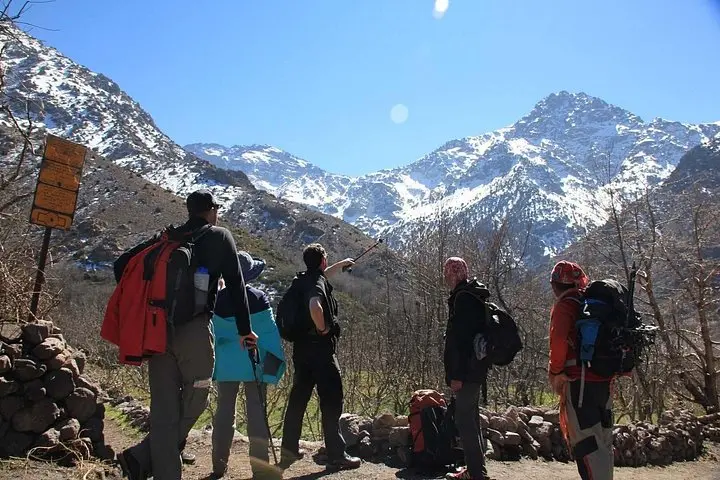
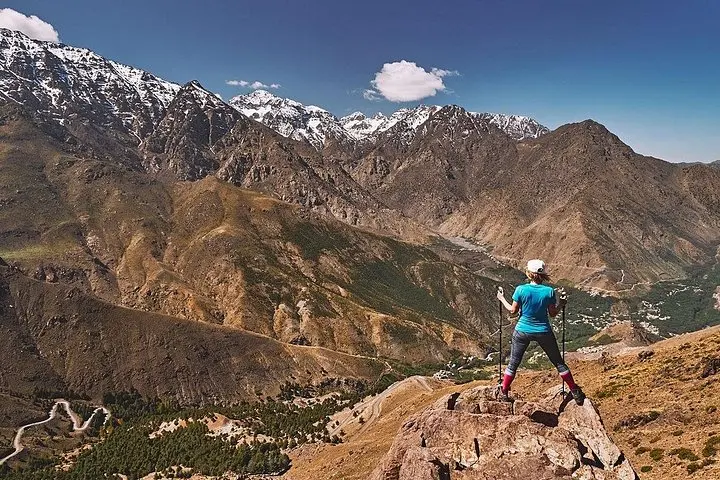
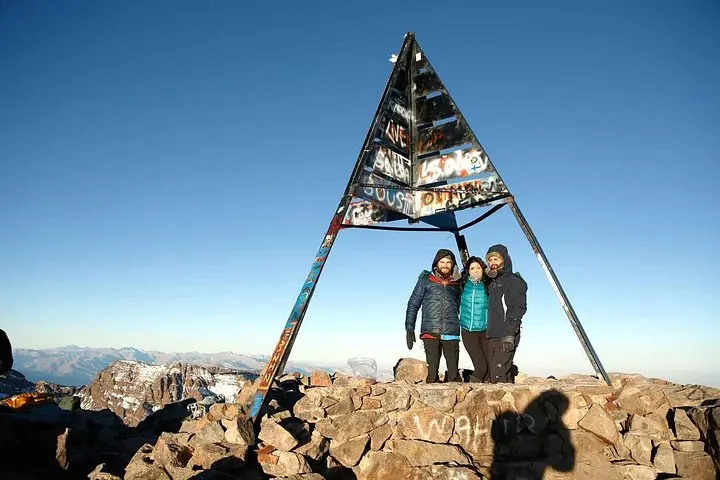
This route follows traditional Berber paths carved along glacial moraines and volcanic rock. Toubkal’s 4,167 m summit is the range’s highest point; on clear days the Haouz plain, the distant Saghro massif and even the edge of the Sahara push into view. Local culture centers on seasonal transhumance: shepherds move flocks to high azibs in summer, and small terraced plots feed valley families. Historic marabouts like Sidi Chamharouch remain active pilgrimage spots.
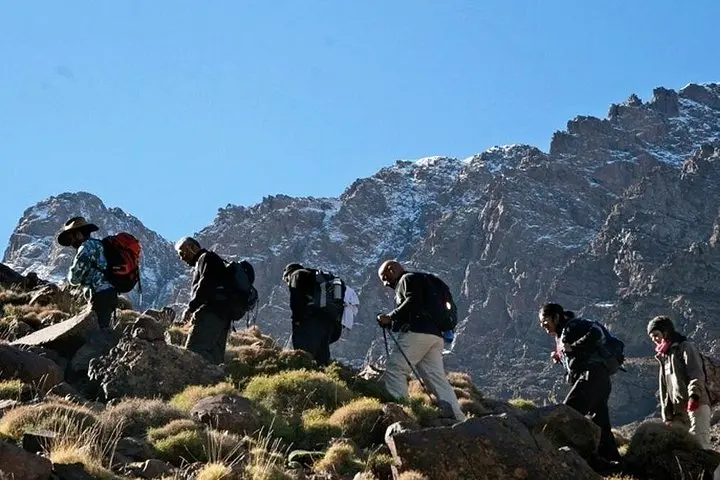
Expect 7–8 days of walking before summit day, daily ascents and descents between 300–1,000 m, rocky scree, stone trails and a high camp/refuge at about 3,200 m. Early-season snow can require crampons; mules often carry luggage while you hike with a daypack. Hydration and sun protection matter—sun and wind alternately test you on exposed saddles, streams dare you to pause and cool off in summer.
Practical notes: pace for acclimatization, pack layered insulation for high-altitude nights, and bring sturdy boots with good ankle support. Guides are standard on multi-day treks here; they handle logistics and route-finding. With preparation this itinerary is an achievable, memorable high-mountain experience that balances cultural contact with serious alpine hiking.
Expect sustained hiking over consecutive days with altitude gains; participants should be in good cardio shape and comfortable with 5–8 hour hiking days.
Most operators include a local guide and muleteers; guides are recommended for navigation, safety and cultural access.
Late spring to early fall offers milder conditions; spring can have lingering snow above 3,000 m and winter brings technical snow and ice.
Yes, mule transport is commonly provided so you only need a daypack for essentials while hiking.
Sunny Morocco operates guided outdoor trips and adventures with an emphasis on safety, stewardship, and memorable experiences.
You leave Marrakech before dawn, the city’s call to prayer fading as the road climbs toward the High Atlas. The valley opens into terraces of ocher and green, mule tracks threading villages where smoke and bread ovens still set the morning rhythm. By evening you sleep in a guesthouse at Aremd or Imlil, the mountains’ rough shoulders pressing close.
You leave Marrakech before dawn, the city’s call to prayer fading as the road climbs toward the High Atlas. The valley opens into terraces of ocher and green, mule tracks threading villages where smoke and bread ovens still set the morning rhythm. By evening you sleep in a guesthouse at Aremd or Imlil, the mountains’ rough shoulders pressing close.
This route follows traditional Berber paths carved along glacial moraines and volcanic rock. Toubkal’s 4,167 m summit is the range’s highest point; on clear days the Haouz plain, the distant Saghro massif and even the edge of the Sahara push into view. Local culture centers on seasonal transhumance: shepherds move flocks to high azibs in summer, and small terraced plots feed valley families. Historic marabouts like Sidi Chamharouch remain active pilgrimage spots.
Expect 7–8 days of walking before summit day, daily ascents and descents between 300–1,000 m, rocky scree, stone trails and a high camp/refuge at about 3,200 m. Early-season snow can require crampons; mules often carry luggage while you hike with a daypack. Hydration and sun protection matter—sun and wind alternately test you on exposed saddles, streams dare you to pause and cool off in summer.
Practical notes: pace for acclimatization, pack layered insulation for high-altitude nights, and bring sturdy boots with good ankle support. Guides are standard on multi-day treks here; they handle logistics and route-finding. With preparation this itinerary is an achievable, memorable high-mountain experience that balances cultural contact with serious alpine hiking.