THE ADVENTURE COLLECTIVE® · Independent discovery and booking for outdoor travel

Nine days across Sri Lanka compress history, wildlife and coastline into an accessible loop—from Colombo’s lively streets to Sigiriya’s summit, Nuwara Eliya’s tea terraces and Mirissa’s whale-rich seas. Expect varied microclimates, comfortable road transfers and a mix of cultural rituals and wildlife viewing.
Nine days across Sri Lanka compress history, wildlife and coastline into an accessible loop—from Colombo’s lively streets to Sigiriya’s summit, Nuwara Eliya’s tea terraces and Mirissa’s whale-rich seas. Expect varied microclimates, comfortable road transfers and a mix of cultural rituals and wildlife viewing.
You step off the plane into a wash of warm air and a small paper cup of king coconut, the roadside palms bending as if to guide you toward the island’s long, slow rhythm. Over nine days and eight nights this tour threads Colombo’s frenetic markets with the quiet geometry of ancient rocks, the high-country mist of tea country, and the ocean’s indigo horizons. Each stop reads like a chapter: a seaside promenade that eats the sunset, a rock fortress that rises 200 meters above the plain, a tea factory where leaves steam and tell their own story.
Verified experiences and guided adventures in the surrounding area.
Operated by Aster Lanka Tours · Colombo, Western Province
You step off the plane into a wash of warm air and a small paper cup of king coconut, the roadside palms bending as if to guide you toward the island’s long, slow rhythm. Over nine days and eight nights this tour threads Colombo’s frenetic markets with the quiet geometry of ancient rocks, the high-country mist of tea country, and the ocean’s indigo horizons. Each stop reads like a chapter: a seaside promenade that eats the sunset, a rock fortress that rises 200 meters above the plain, a tea factory where leaves steam and tell their own story.
Sri Lanka’s history is layered—ancient irrigation works and the stone capitals of Anuradhapura and Polonnaruwa speak to a thousand-year hydraulic civilization; later, Portuguese, Dutch and British hands left fortifications, lighthouses and plantation economies that reshaped landscape and culture. Geologically, the island is the exposed edge of the Indian continental shield—ancient gneiss and granite form a rugged spine in the central highlands, where Nuwara Eliya’s cool terraces and Gregory Lake sit at roughly 1,868 meters and the air tastes of iron and tea.
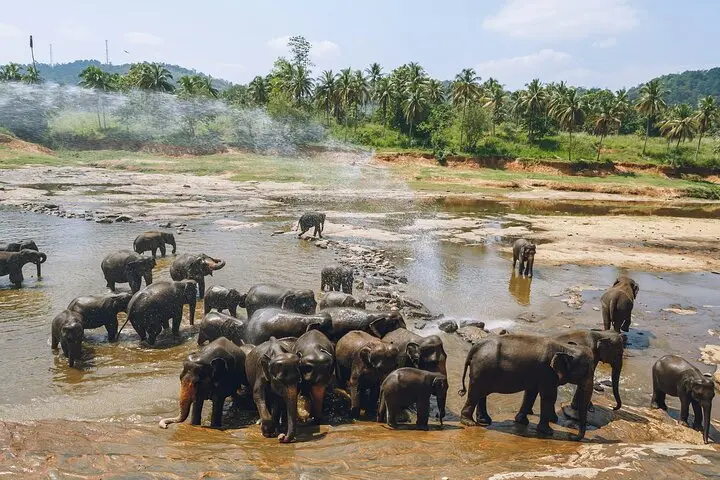
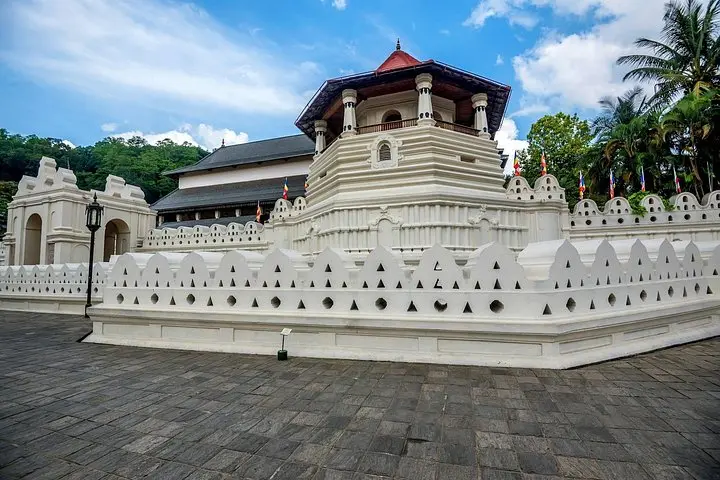
Cultural life is immediate: in Kandy, the Temple of the Tooth pulses with ceremonial drumming; in Pettah Market, the air is sharp with chilies, cardamom and the commerce of daily life. Wildlife appears on its own terms—elephants bathe in river shallows at Pinnawala and, along the southeast coast, the ocean stages whale migrations from Mirissa. Yala’s dry scrub flickers with birds and the occasional leopard’s silhouette.
Practicalities matter on a route this full. Distances between major nodes—Colombo to Sigiriya (≈ 170 km, 4–5 hours by road), Sigiriya to Kandy (≈ 90 km, 3 hours through hill country), Kandy to Nuwara Eliya (≈ 75 km, slow roads that climb through tea plantations)—mean you’ll spend several comfortable travel hours in an air-conditioned vehicle; pack motion-sickness remedies if you’re sensitive. Expect a range of microclimates: light cottons for the coast, a warm layer for hill-country mornings, and a compact rain jacket for sudden tropical downpours.
Health and money: carry a refillable water bottle and sachets for purification if you plan long walks; Lankan sun is relentless near sea level. Local guides are bilingual and your private chauffeur-guide will handle logistics—allow extra time for temple rituals and market browsing. Respect religious dress codes (shoulders and knees covered) and keep a small supply of Sri Lankan rupees for tips and street snacks.
By the final morning in Mirissa, the ocean will have taught you a new cadence—waves that push forward, palms that count the wind—and you’ll leave with an appetite for more: a spice route revisited, a wildlife sighting replayed, the quiet memory of a tea cup steaming in a hilltop dawn.
November to April is ideal for dry weather on the south and west coasts and reliable whale watching; May to September is better for the east but brings more rain in parts of the island.
Most travelers require an Electronic Travel Authorization (ETA) before arrival—check Sri Lankan government requirements for your nationality and apply in advance.
Yes; the tour is private and paced for families, though long drives and wildlife safaris can be tiring for very young children.
Yala offers good chances for elephants and birdlife, and Mirissa has seasonal whale sightings (highest probability November–April), but sightings cannot be guaranteed.
The tour includes many breakfasts and dinners and select entry tickets as listed; confirm specific site admissions with your operator prior to travel.
Consult your clinic—Sri Lanka has low malaria risk in most tourist areas, but routine vaccinations and travel health advice are recommended.
Aster Lanka Tours operates guided outdoor trips and adventures with an emphasis on safety, stewardship, and memorable experiences.
You step off the plane into a wash of warm air and a small paper cup of king coconut, the roadside palms bending as if to guide you toward the island’s long, slow rhythm. Over nine days and eight nights this tour threads Colombo’s frenetic markets with the quiet geometry of ancient rocks, the high-country mist of tea country, and the ocean’s indigo horizons. Each stop reads like a chapter: a seaside promenade that eats the sunset, a rock fortress that rises 200 meters above the plain, a tea factory where leaves steam and tell their own story.
You step off the plane into a wash of warm air and a small paper cup of king coconut, the roadside palms bending as if to guide you toward the island’s long, slow rhythm. Over nine days and eight nights this tour threads Colombo’s frenetic markets with the quiet geometry of ancient rocks, the high-country mist of tea country, and the ocean’s indigo horizons. Each stop reads like a chapter: a seaside promenade that eats the sunset, a rock fortress that rises 200 meters above the plain, a tea factory where leaves steam and tell their own story.
Sri Lanka’s history is layered—ancient irrigation works and the stone capitals of Anuradhapura and Polonnaruwa speak to a thousand-year hydraulic civilization; later, Portuguese, Dutch and British hands left fortifications, lighthouses and plantation economies that reshaped landscape and culture. Geologically, the island is the exposed edge of the Indian continental shield—ancient gneiss and granite form a rugged spine in the central highlands, where Nuwara Eliya’s cool terraces and Gregory Lake sit at roughly 1,868 meters and the air tastes of iron and tea.
Cultural life is immediate: in Kandy, the Temple of the Tooth pulses with ceremonial drumming; in Pettah Market, the air is sharp with chilies, cardamom and the commerce of daily life. Wildlife appears on its own terms—elephants bathe in river shallows at Pinnawala and, along the southeast coast, the ocean stages whale migrations from Mirissa. Yala’s dry scrub flickers with birds and the occasional leopard’s silhouette.
Practicalities matter on a route this full. Distances between major nodes—Colombo to Sigiriya (≈ 170 km, 4–5 hours by road), Sigiriya to Kandy (≈ 90 km, 3 hours through hill country), Kandy to Nuwara Eliya (≈ 75 km, slow roads that climb through tea plantations)—mean you’ll spend several comfortable travel hours in an air-conditioned vehicle; pack motion-sickness remedies if you’re sensitive. Expect a range of microclimates: light cottons for the coast, a warm layer for hill-country mornings, and a compact rain jacket for sudden tropical downpours.
Health and money: carry a refillable water bottle and sachets for purification if you plan long walks; Lankan sun is relentless near sea level. Local guides are bilingual and your private chauffeur-guide will handle logistics—allow extra time for temple rituals and market browsing. Respect religious dress codes (shoulders and knees covered) and keep a small supply of Sri Lankan rupees for tips and street snacks.
By the final morning in Mirissa, the ocean will have taught you a new cadence—waves that push forward, palms that count the wind—and you’ll leave with an appetite for more: a spice route revisited, a wildlife sighting replayed, the quiet memory of a tea cup steaming in a hilltop dawn.