THE ADVENTURE COLLECTIVE® · Independent discovery and booking for outdoor travel

Fly from Sharm for an intense day in Cairo: explore the Egyptian Museum’s antiquities, then move to the Giza Plateau to stand before the Great Pyramids and Sphinx. This full-day circuit pairs museum context with the raw scale of ancient stone.
Fly from Sharm for an intense day in Cairo: explore the Egyptian Museum’s antiquities, then move to the Giza Plateau to stand before the Great Pyramids and Sphinx. This full-day circuit pairs museum context with the raw scale of ancient stone.
You step off the short domestic flight into Cairo’s dry air and, within an hour, find yourself in Tahrir Square where the Egyptian Museum looms with rows of glass cases and gold that still catches the light. The museum’s crowded halls move at a deliberate pace: sarcophagi, funerary masks and the Tutankhamun collection tell a civic and royal story that predates modern Egypt.
Verified experiences and guided adventures in the surrounding area.
You step off the short domestic flight into Cairo’s dry air and, within an hour, find yourself in Tahrir Square where the Egyptian Museum looms with rows of glass cases and gold that still catches the light. The museum’s crowded halls move at a deliberate pace: sarcophagi, funerary masks and the Tutankhamun collection tell a civic and royal story that predates modern Egypt.
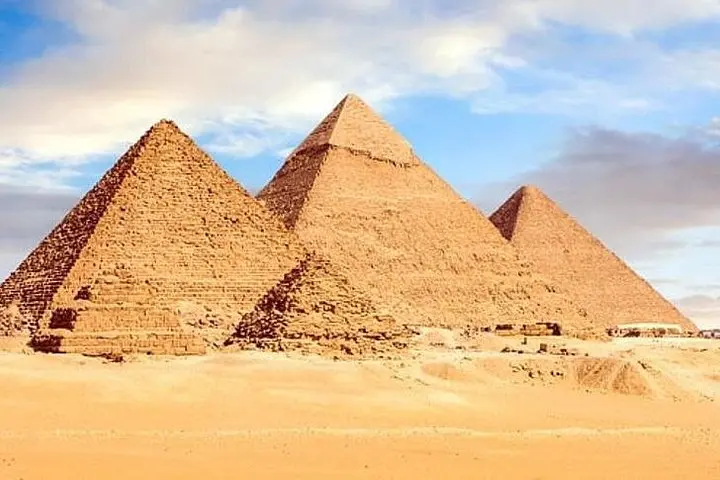
By afternoon the scene changes—sand and stone replace the museum’s hush. The Giza Plateau opens out with the Great Pyramid holding the horizon, its angled blocks older than most recorded history. Geologically the plateau is a raised shelf of Pleistocene limestone; wind-polished faces and quarried edges reveal the material labor that built these tombs. The Sphinx sits lower, its face weathered by centuries of sand and salt air, while small workshops nearby explain papyrus production and the continuing crafts economy.
Culture here is immediate: vendors offer mint tea, guides recite dynastic names, and lunch at a local restaurant delivers hearty Egyptian plates—koshari or grilled fish—before the late-afternoon light softens the stones.
Practical guidance: airports and transfers are busy—allow time for security and domestic flight schedules. Wear sturdy shoes for uneven limestone blocks and bring sun protection; the plateau has little shade. Photography is common, though museum rules and occasional restricted rooms vary. Expect a full 10–12 hour day when traveling from Sharm; plan for hydration, a power bank, and a patient pace to make the most of Cairo’s split personality: urban curator by day, ancient landscape by afternoon.
Many packaged day tours include round‑trip domestic flights and hotel transfers—confirm on booking, as inclusions vary by operator.
Ticket policies differ: some tours include entrance fees while others do not; verify before you travel to avoid surprises at the sites.
Photography rules can change; generally photos without flash are often permitted, but restricted rooms or temporary rules may require additional fees or prohibit photos altogether.
Expect several hours of walking with some staircases and uneven ground at the Giza Plateau; the day is long but not technically difficult.
You step off the short domestic flight into Cairo’s dry air and, within an hour, find yourself in Tahrir Square where the Egyptian Museum looms with rows of glass cases and gold that still catches the light. The museum’s crowded halls move at a deliberate pace: sarcophagi, funerary masks and the Tutankhamun collection tell a civic and royal story that predates modern Egypt.
You step off the short domestic flight into Cairo’s dry air and, within an hour, find yourself in Tahrir Square where the Egyptian Museum looms with rows of glass cases and gold that still catches the light. The museum’s crowded halls move at a deliberate pace: sarcophagi, funerary masks and the Tutankhamun collection tell a civic and royal story that predates modern Egypt.
By afternoon the scene changes—sand and stone replace the museum’s hush. The Giza Plateau opens out with the Great Pyramid holding the horizon, its angled blocks older than most recorded history. Geologically the plateau is a raised shelf of Pleistocene limestone; wind-polished faces and quarried edges reveal the material labor that built these tombs. The Sphinx sits lower, its face weathered by centuries of sand and salt air, while small workshops nearby explain papyrus production and the continuing crafts economy.
Culture here is immediate: vendors offer mint tea, guides recite dynastic names, and lunch at a local restaurant delivers hearty Egyptian plates—koshari or grilled fish—before the late-afternoon light softens the stones.
Practical guidance: airports and transfers are busy—allow time for security and domestic flight schedules. Wear sturdy shoes for uneven limestone blocks and bring sun protection; the plateau has little shade. Photography is common, though museum rules and occasional restricted rooms vary. Expect a full 10–12 hour day when traveling from Sharm; plan for hydration, a power bank, and a patient pace to make the most of Cairo’s split personality: urban curator by day, ancient landscape by afternoon.