THE ADVENTURE COLLECTIVE® · Independent discovery and booking for outdoor travel

A single day on Kilimanjaro doesn’t mean a small experience. The Marangu Gate hike to Mandara Hut delivers forested trails, altitude practice, and expansive moorland views in a 6–7 hour outing from Arusha.
A single day on Kilimanjaro doesn’t mean a small experience. The Marangu Gate hike to Mandara Hut delivers forested trails, altitude practice, and expansive moorland views in a 6–7 hour outing from Arusha.
The van eases out of Arusha before dawn, headlights carving through eucalyptus-scented air. By the time you reach the forest belt below Kilimanjaro, sunlight is painting the volcano’s lower flanks in slow gold. The Marangu Route is not an attempt on the summit — it’s a deliberate taste of altitude: moss-furred trunks, a river that seems to dare you onward, and the Mandara Hut perched like a weathered outlier at the edge of the moorland.
Verified experiences and guided adventures in the surrounding area.
Operated by Rupia Adventure · Arusha, Kilimanjaro Region
The van eases out of Arusha before dawn, headlights carving through eucalyptus-scented air. By the time you reach the forest belt below Kilimanjaro, sunlight is painting the volcano’s lower flanks in slow gold. The Marangu Route is not an attempt on the summit — it’s a deliberate taste of altitude: moss-furred trunks, a river that seems to dare you onward, and the Mandara Hut perched like a weathered outlier at the edge of the moorland.
Walkers have used the Marangu path for a century. Early guides tracked buffalo and elephants; later colonial surveyors mapped the ridgelines and the Kilimanjaro National Park, created in 1977, formalized access and protection. Geologically, Kilimanjaro is a triple-peaked stratovolcano — the lower rainforest around Marangu is a living archive, where volcanic soil supports giant groundsel and heather as you climb into the ericaceous zone.
Local culture threads through the hike. The Chagga people farmed the lower slopes for generations; their terraced farms and coffee plots still glitter on the approaches to the mountain. Guides and porters you meet here often come from nearby villages and bring deep practical knowledge of microclimates and trail rhythms.
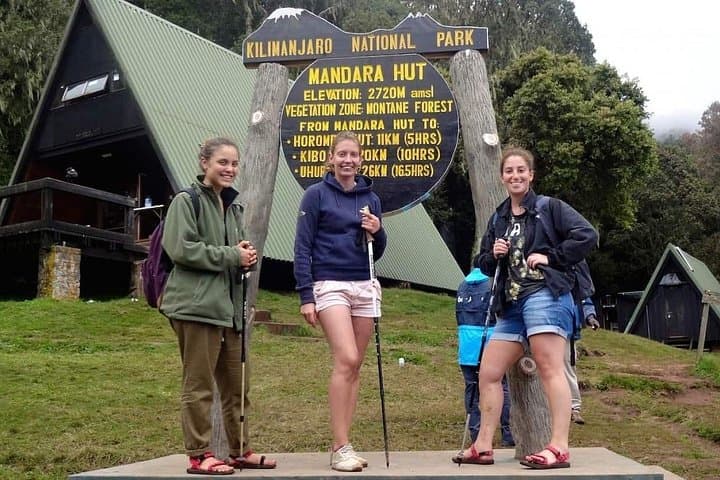
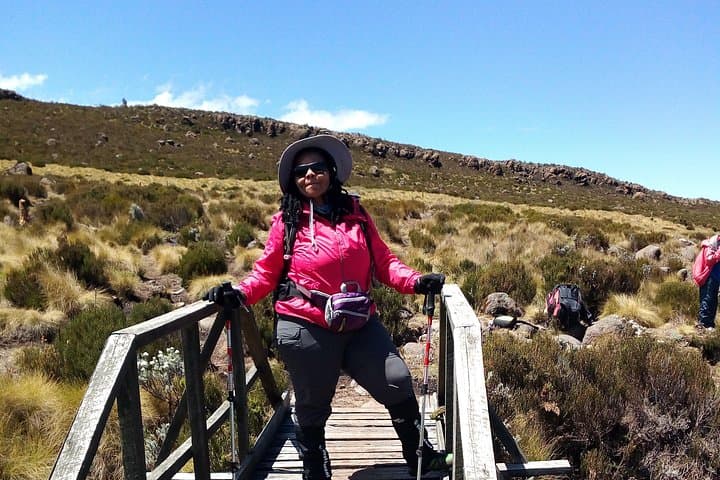
The route itself is straightforward but purposeful. From Marangu Gate (approx. 1,860 m) you gain roughly 800–900 m to reach Mandara Hut (about 2,700 m) in 3.5–4.5 hours on mixed dirt trail and root-strewn forest track. Expect 10–12 km round-trip and about 6–7 hours total including the 30-minute rest at the hut. The ascent starts in closed-canopy rainforest — cool, damp, and shaded — then opens to heath and moorland where the wind takes on a voice of its own.
Practical edge: hydrate early and often; the climb’s steady gain taxes breathing more than footing. Sturdy hiking shoes with good tread and ankle support matter more than trekking poles for most people on this route, though poles help on the descent. Start early to avoid afternoon thermal currents and to keep the return drive to Arusha before nightfall. The operator provides private transport, lunch, and park fees, but carry water, snacks, and a compact rain shell.
Permits and logistics are simple: register at Marangu Gate with park authorities and carry ID — Kilimanjaro National Park fees apply. Fitness-wise, this is a demanding day outing rather than a summit attempt; altitude can make a moderate climb feel much harder. Respect the environment: stick to trail, pack out wrappers, and tip guides and porters — this is how mountain communities sustain their relationship with Kilimanjaro.
If you want an efficient, high-value encounter with Africa’s highest peak without the multi-day commitment, the Marangu Gate to Mandara Hut day hike gives the mountain its voice — brisk, honest, and immediately memorable.
Expect about 3.5–4.5 hours uphill to Mandara Hut and roughly 2.5 hours to descend; total walking time around 6–7 hours.
Yes—Kilimanjaro National Park entry and registration at Marangu Gate are handled during your visit; park fees are included by the operator.
For this day hike it’s not mandatory, but you should be aware that altitude around 2,700 m can affect breathing—avoid strenuous activity the day before and stay hydrated.
Moderate fitness: regular walkers or hikers should manage the steady ascent, but those unaccustomed to sustained uphill walking may find it challenging.
Local guides accompany the hike; porters are typically available but not necessary for a day trip—confirm arrangements with the operator.
Children over 12 and fit older adults can do the hike, but check health considerations—anyone with heart or respiratory issues should consult a doctor first.
Rupia Adventure operates guided outdoor trips and adventures with an emphasis on safety, stewardship, and memorable experiences.

The van eases out of Arusha before dawn, headlights carving through eucalyptus-scented air. By the time you reach the forest belt below Kilimanjaro, sunlight is painting the volcano’s lower flanks in slow gold. The Marangu Route is not an attempt on the summit — it’s a deliberate taste of altitude: moss-furred trunks, a river that seems to dare you onward, and the Mandara Hut perched like a weathered outlier at the edge of the moorland.
The van eases out of Arusha before dawn, headlights carving through eucalyptus-scented air. By the time you reach the forest belt below Kilimanjaro, sunlight is painting the volcano’s lower flanks in slow gold. The Marangu Route is not an attempt on the summit — it’s a deliberate taste of altitude: moss-furred trunks, a river that seems to dare you onward, and the Mandara Hut perched like a weathered outlier at the edge of the moorland.
Walkers have used the Marangu path for a century. Early guides tracked buffalo and elephants; later colonial surveyors mapped the ridgelines and the Kilimanjaro National Park, created in 1977, formalized access and protection. Geologically, Kilimanjaro is a triple-peaked stratovolcano — the lower rainforest around Marangu is a living archive, where volcanic soil supports giant groundsel and heather as you climb into the ericaceous zone.
Local culture threads through the hike. The Chagga people farmed the lower slopes for generations; their terraced farms and coffee plots still glitter on the approaches to the mountain. Guides and porters you meet here often come from nearby villages and bring deep practical knowledge of microclimates and trail rhythms.
The route itself is straightforward but purposeful. From Marangu Gate (approx. 1,860 m) you gain roughly 800–900 m to reach Mandara Hut (about 2,700 m) in 3.5–4.5 hours on mixed dirt trail and root-strewn forest track. Expect 10–12 km round-trip and about 6–7 hours total including the 30-minute rest at the hut. The ascent starts in closed-canopy rainforest — cool, damp, and shaded — then opens to heath and moorland where the wind takes on a voice of its own.
Practical edge: hydrate early and often; the climb’s steady gain taxes breathing more than footing. Sturdy hiking shoes with good tread and ankle support matter more than trekking poles for most people on this route, though poles help on the descent. Start early to avoid afternoon thermal currents and to keep the return drive to Arusha before nightfall. The operator provides private transport, lunch, and park fees, but carry water, snacks, and a compact rain shell.
Permits and logistics are simple: register at Marangu Gate with park authorities and carry ID — Kilimanjaro National Park fees apply. Fitness-wise, this is a demanding day outing rather than a summit attempt; altitude can make a moderate climb feel much harder. Respect the environment: stick to trail, pack out wrappers, and tip guides and porters — this is how mountain communities sustain their relationship with Kilimanjaro.
If you want an efficient, high-value encounter with Africa’s highest peak without the multi-day commitment, the Marangu Gate to Mandara Hut day hike gives the mountain its voice — brisk, honest, and immediately memorable.