THE ADVENTURE COLLECTIVE® · Independent discovery and booking for outdoor travel

Walk Aachen’s old town with an English-speaking guide for 90 minutes of Roman baths, Charlemagne’s cathedral, and civic squares. This public tour pairs compact history with accessible routing—ideal for first-time visitors who want context without a museum schedule.
Walk Aachen’s old town with an English-speaking guide for 90 minutes of Roman baths, Charlemagne’s cathedral, and civic squares. This public tour pairs compact history with accessible routing—ideal for first-time visitors who want context without a museum schedule.
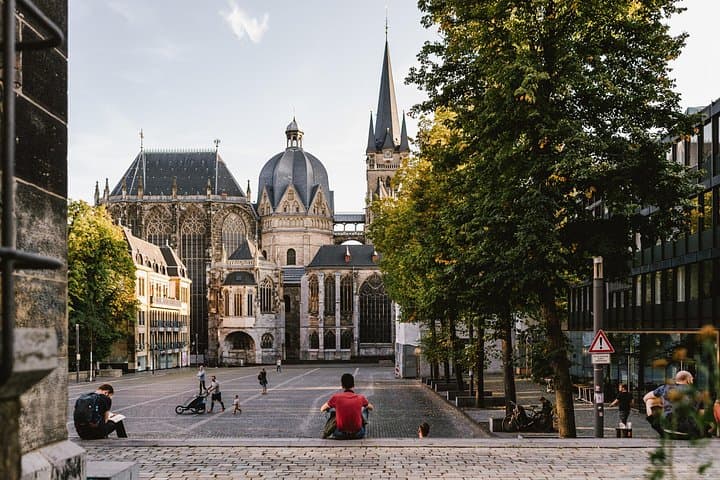
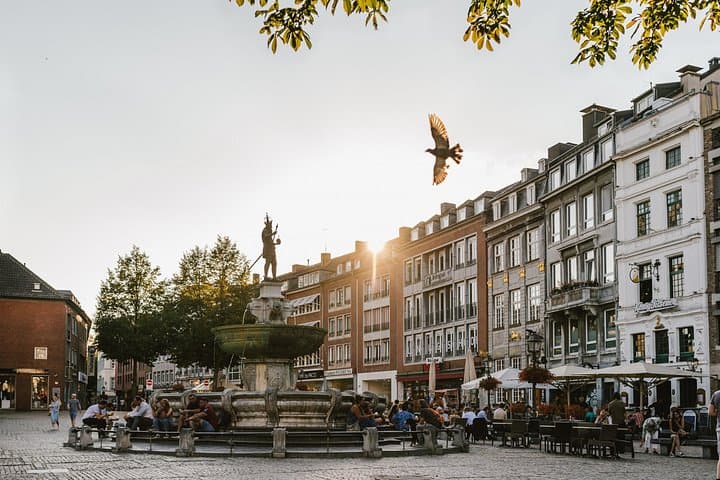
You step off the tram and the pavement of Aachen’s old town seems to pull you forward—cobbles click underfoot, fountains bob and chatter, and narrow lanes angle toward the cathedral’s stone silhouette.
Verified experiences and guided adventures in the surrounding area.
Operated by Aachen Tourismus · Aachen, North Rhine-Westphalia
You step off the tram and the pavement of Aachen’s old town seems to pull you forward—cobbles click underfoot, fountains bob and chatter, and narrow lanes angle toward the cathedral’s stone silhouette.
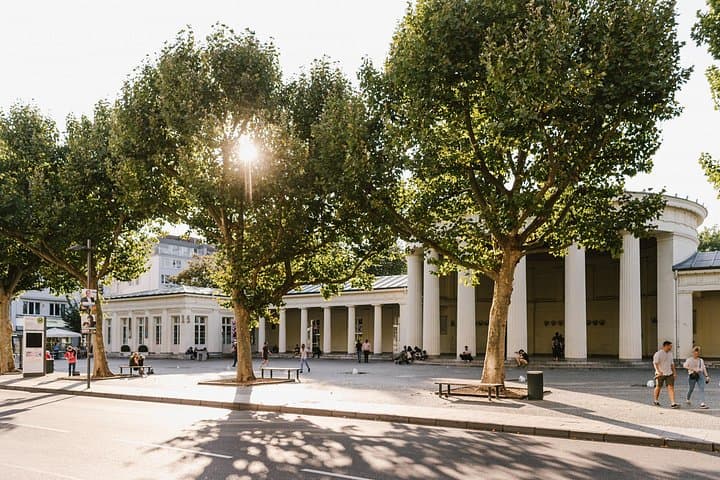
This 90-minute guided walk threads through two millennia of history: Roman thermal baths gave way to Charlemagne’s imperial court, whose octagonal cathedral still holds layers of medieval masonry and Byzantine mosaics. Geologically the area sits on warm mineral springs that shaped Aachen’s identity as a spa town; the hot water once drew nobles and pilgrims, and the city's square plans reflect that long human habit of congregation.
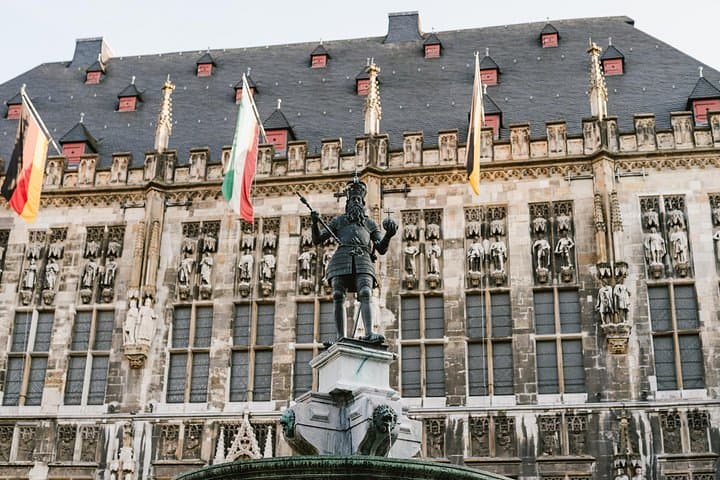
Culturally you’ll encounter Baroque town houses, municipal fountains with personalities of their own, and the Rathaus — each stop carries civic stories and local quirks. Guides often point out lesser-known details: the original spa locations, the free-admission policies for young visitors at the Town Hall and Couven Museum, and a Granus Tower that remains closed to the public.
Practical guidance: tours are public, English-speaking, capped around 20 people and start from central Old Town points accessible by tram. The route is flat with cobbles—good walking shoes matter. The pace is easy but expect standing at viewpoints and short stair sections inside courtyards. Morning tours avoid crowds; late afternoon light is best for photos. Bring a light jacket for spring/fall showers, a reusable water bottle, and a charged phone for quick research on-the-go.
The experience is low-impact but high on context: it’s an urban walk that rewards curiosity and sensible preparation.
Start locations are in Aachen’s Old Town near the Cathedral and tram stops; confirm the exact meeting point on your booking voucher and arrive 10 minutes early.
Yes—this tour is wheelchair and stroller accessible; surfaces are mostly flat and organizers note accessibility in the listing.
Admissions are generally not included; the tour visits exterior sites and provides context—check individual sites like the Couven Museum for separate entry rules and free-admission ages.
All sales are final for this tour—there are no refunds for cancellations, so plan accordingly before booking.
Aachen Tourismus operates guided outdoor trips and adventures with an emphasis on safety, stewardship, and memorable experiences.
You step off the tram and the pavement of Aachen’s old town seems to pull you forward—cobbles click underfoot, fountains bob and chatter, and narrow lanes angle toward the cathedral’s stone silhouette.
You step off the tram and the pavement of Aachen’s old town seems to pull you forward—cobbles click underfoot, fountains bob and chatter, and narrow lanes angle toward the cathedral’s stone silhouette.
This 90-minute guided walk threads through two millennia of history: Roman thermal baths gave way to Charlemagne’s imperial court, whose octagonal cathedral still holds layers of medieval masonry and Byzantine mosaics. Geologically the area sits on warm mineral springs that shaped Aachen’s identity as a spa town; the hot water once drew nobles and pilgrims, and the city's square plans reflect that long human habit of congregation.
Culturally you’ll encounter Baroque town houses, municipal fountains with personalities of their own, and the Rathaus — each stop carries civic stories and local quirks. Guides often point out lesser-known details: the original spa locations, the free-admission policies for young visitors at the Town Hall and Couven Museum, and a Granus Tower that remains closed to the public.
Practical guidance: tours are public, English-speaking, capped around 20 people and start from central Old Town points accessible by tram. The route is flat with cobbles—good walking shoes matter. The pace is easy but expect standing at viewpoints and short stair sections inside courtyards. Morning tours avoid crowds; late afternoon light is best for photos. Bring a light jacket for spring/fall showers, a reusable water bottle, and a charged phone for quick research on-the-go.
The experience is low-impact but high on context: it’s an urban walk that rewards curiosity and sensible preparation.