THE ADVENTURE COLLECTIVE® · Independent discovery and booking for outdoor travel

A short helicopter flight lands you on Abel Tasman’s sheltered shore for a guided coastal hike—then you can kayak or fly back. Expect dramatic aerial views, easy-to-moderate walking on sandy trails, and an immersive half-day in New Zealand’s coastal park.
A short helicopter flight lands you on Abel Tasman’s sheltered shore for a guided coastal hike—then you can kayak or fly back. Expect dramatic aerial views, easy-to-moderate walking on sandy trails, and an immersive half-day in New Zealand’s coastal park.
You step from the helicopter onto golden sand as gulls watch from a wind-scoured rock—salt spray and the thrum of rotors still in the air. The flight from Nelson is short but cinematic: city streets give way to serrated headlands, crescent bays and the jade ribbon of the Tasman Sea. Your guide briefs the group, and a tidy coastal trail, framed by kanuka and nikau, invites the first easy steps.
Verified experiences and guided adventures in the surrounding area.
Operated by Helicopters Nelson New Zealand · Nelson, Tasman
You step from the helicopter onto golden sand as gulls watch from a wind-scoured rock—salt spray and the thrum of rotors still in the air. The flight from Nelson is short but cinematic: city streets give way to serrated headlands, crescent bays and the jade ribbon of the Tasman Sea. Your guide briefs the group, and a tidy coastal trail, framed by kanuka and nikau, invites the first easy steps.
The Abel Tasman’s coastline is young geology—sandstone and granite carved by wave and wind—where natural coves formed by fault lines and marine abrasion reveal tidal pools and kelp beds. The park carries dual histories: Māori kāinga and seasonal kai-gathering sites, and later European charting after Abel Tasman’s 1642 encounter. Today the area is managed for conservation and low-impact recreation; small landings and guided groups keep visitation light in sensitive zones.
On the trail you’ll pass native birds that claim the canopy, and the shoreline will dare you to linger at a rock-strewn inlet. The hike sections are generally short and largely coastal with modest elevation changes—expect uneven roots, sandy steps and occasional short climbs up 30–100 meters for headland views. Guides point out marine reserves, seal haul-outs on offshore islands and the option to kayak back along sheltered bays for a different perspective.
Practicalities matter: flights run under strict weight-and-balance rules and are weather-dependent; cancelations can happen. Wear sturdy footwear, layered clothing for sudden coastal wind and sun, bring at least 1–2 liters of water, and protect electronics from spray. The experience pairs aerial perspective with walking—ideal for travelers who want a high-impact half-day that blends flight, coastline and close-up nature without a full multi-day commitment.
The scenic flight to the landing is around 20–30 minutes each way, depending on the route and weather conditions.
Yes—many operators offer an optional guided kayak return along sheltered bays; this requires basic paddling ability and is subject to tidal and weather conditions.
Pilots may cancel for safety; you’ll receive a full refund if canceled at least 24 hours beforehand or rescheduling options if available on the day.
Yes—this activity is marketed as suitable for adults, children and seniors, but passengers must meet helicopter safety/weight requirements and be mobile enough for short coastal walks.
Helicopters Nelson New Zealand operates guided outdoor trips and adventures with an emphasis on safety, stewardship, and memorable experiences.
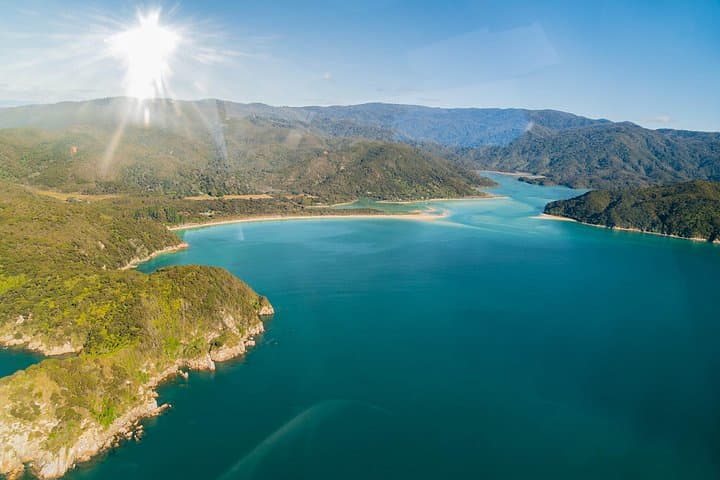


You step from the helicopter onto golden sand as gulls watch from a wind-scoured rock—salt spray and the thrum of rotors still in the air. The flight from Nelson is short but cinematic: city streets give way to serrated headlands, crescent bays and the jade ribbon of the Tasman Sea. Your guide briefs the group, and a tidy coastal trail, framed by kanuka and nikau, invites the first easy steps.
You step from the helicopter onto golden sand as gulls watch from a wind-scoured rock—salt spray and the thrum of rotors still in the air. The flight from Nelson is short but cinematic: city streets give way to serrated headlands, crescent bays and the jade ribbon of the Tasman Sea. Your guide briefs the group, and a tidy coastal trail, framed by kanuka and nikau, invites the first easy steps.
The Abel Tasman’s coastline is young geology—sandstone and granite carved by wave and wind—where natural coves formed by fault lines and marine abrasion reveal tidal pools and kelp beds. The park carries dual histories: Māori kāinga and seasonal kai-gathering sites, and later European charting after Abel Tasman’s 1642 encounter. Today the area is managed for conservation and low-impact recreation; small landings and guided groups keep visitation light in sensitive zones.
On the trail you’ll pass native birds that claim the canopy, and the shoreline will dare you to linger at a rock-strewn inlet. The hike sections are generally short and largely coastal with modest elevation changes—expect uneven roots, sandy steps and occasional short climbs up 30–100 meters for headland views. Guides point out marine reserves, seal haul-outs on offshore islands and the option to kayak back along sheltered bays for a different perspective.
Practicalities matter: flights run under strict weight-and-balance rules and are weather-dependent; cancelations can happen. Wear sturdy footwear, layered clothing for sudden coastal wind and sun, bring at least 1–2 liters of water, and protect electronics from spray. The experience pairs aerial perspective with walking—ideal for travelers who want a high-impact half-day that blends flight, coastline and close-up nature without a full multi-day commitment.