THE ADVENTURE COLLECTIVE® · Independent discovery and booking for outdoor travel

Paddle a tide-smart route through the Tonga Island Marine Reserve on a guided full-day kayak trip. Expect granite headlands, NZ fur seals, and a beach picnic timed around the best conditions.
Paddle a tide-smart route through the Tonga Island Marine Reserve on a guided full-day kayak trip. Expect granite headlands, NZ fur seals, and a beach picnic timed around the best conditions.
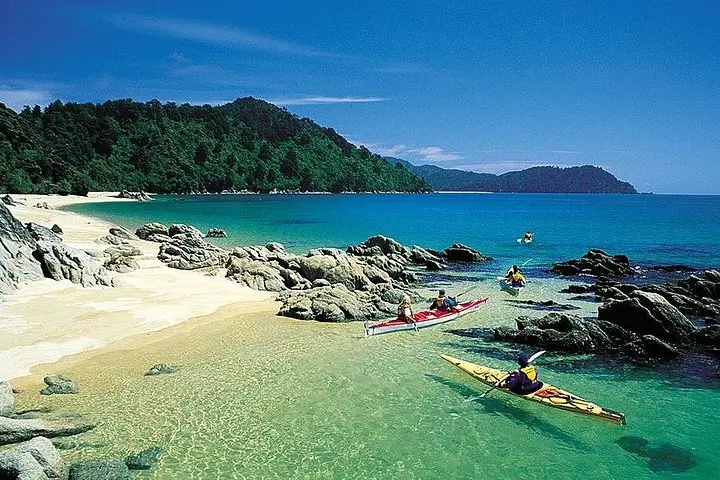
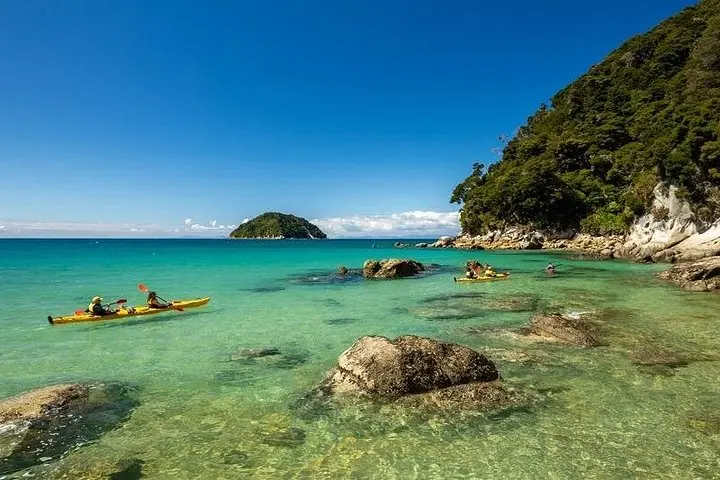
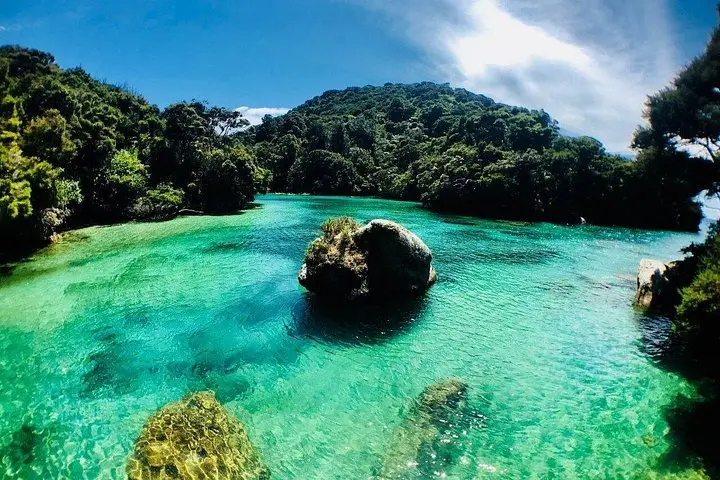
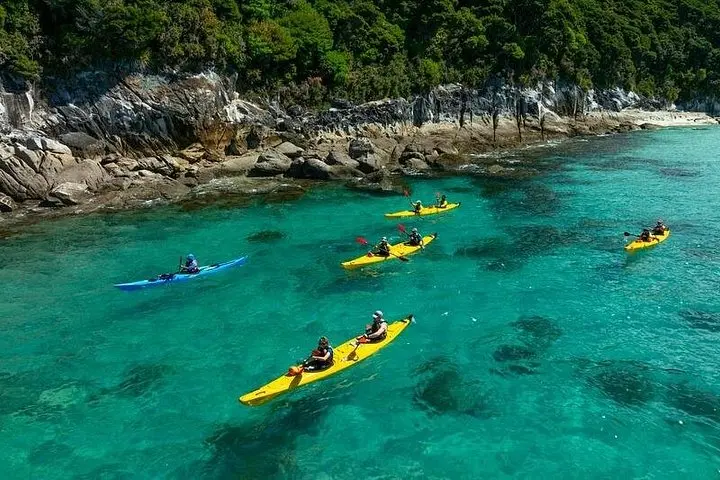
The morning opens with the salt of the Tasman on your lips and a string of kayaks sliding from a sandy cove. You push off at Awaroa or Onetahuti depending on the tide, and the coast rearranges itself as the guide times the trip to the currents—granite headlands, carved arches, and the turquoise lagoons of the Tonga Island Marine Reserve unfold in sequence.
Verified experiences and guided adventures in the surrounding area.
Operated by Abel Tasman Kayaks · Marahau, Tasman
The morning opens with the salt of the Tasman on your lips and a string of kayaks sliding from a sandy cove. You push off at Awaroa or Onetahuti depending on the tide, and the coast rearranges itself as the guide times the trip to the currents—granite headlands, carved arches, and the turquoise lagoons of the Tonga Island Marine Reserve unfold in sequence.
This coastline records geological force: ancient granite smoothed by waves and fault lines, shaped over millions of years. Māori names and stories mark places where tūpuna camped and harvested kaimoana; European sealers and early visitors left a layer of more recent history that the park now protects.
The reserve is biologically rich—New Zealand fur seals haul out on rocky ledges, and Hector’s dolphins sometimes weave near the boats. Guides interpret both natural history and local stewardship, explaining how marine protection has restored kelp beds and fish life since the reserve’s designation.
Practical side: expect 7–8 hours on the water with landing breaks and a beach picnic. Tide-led routing reduces long headland paddles but requires attention to wind and swell—the operator times starts to give calmer conditions and the best wildlife encounters. Bring layered waterproofs, sun protection, a dry bag for cameras, and a willingness to learn basic paddling technique. The trip is suitable for beginners with reasonable mobility; the guide provides safety briefing, equipment, and a water taxi transfer when needed. Plan for changing weather, follow guide instructions, and leave no trace on the park’s beaches.
You should be comfortable sitting and paddling for several hours with short walking on beaches; no advanced fitness required but basic endurance helps.
Common sightings include New Zealand fur seals, seabirds and occasionally Hector’s dolphins; wildlife encounters depend on conditions and time of year.
Lunch is included—a freshly baked roll, fruit, snack and hot drinks—with dietary requirements catered for if notified in advance.
Trips are tide- and weather-dependent; the operator may modify route, delay or cancel with full refund if conditions are unsafe (cancel at least 24 hours for full refund).
Abel Tasman Kayaks operates guided outdoor trips and adventures with an emphasis on safety, stewardship, and memorable experiences.
The morning opens with the salt of the Tasman on your lips and a string of kayaks sliding from a sandy cove. You push off at Awaroa or Onetahuti depending on the tide, and the coast rearranges itself as the guide times the trip to the currents—granite headlands, carved arches, and the turquoise lagoons of the Tonga Island Marine Reserve unfold in sequence.
The morning opens with the salt of the Tasman on your lips and a string of kayaks sliding from a sandy cove. You push off at Awaroa or Onetahuti depending on the tide, and the coast rearranges itself as the guide times the trip to the currents—granite headlands, carved arches, and the turquoise lagoons of the Tonga Island Marine Reserve unfold in sequence.
This coastline records geological force: ancient granite smoothed by waves and fault lines, shaped over millions of years. Māori names and stories mark places where tūpuna camped and harvested kaimoana; European sealers and early visitors left a layer of more recent history that the park now protects.
The reserve is biologically rich—New Zealand fur seals haul out on rocky ledges, and Hector’s dolphins sometimes weave near the boats. Guides interpret both natural history and local stewardship, explaining how marine protection has restored kelp beds and fish life since the reserve’s designation.
Practical side: expect 7–8 hours on the water with landing breaks and a beach picnic. Tide-led routing reduces long headland paddles but requires attention to wind and swell—the operator times starts to give calmer conditions and the best wildlife encounters. Bring layered waterproofs, sun protection, a dry bag for cameras, and a willingness to learn basic paddling technique. The trip is suitable for beginners with reasonable mobility; the guide provides safety briefing, equipment, and a water taxi transfer when needed. Plan for changing weather, follow guide instructions, and leave no trace on the park’s beaches.