THE ADVENTURE COLLECTIVE® · Independent discovery and booking for outdoor travel

See Landmannalaugar, the Lakagígar crater chain, outlet glaciers and braided rivers from a 75-minute sightseeing flight departing Skaftafell. This aerial route compresses Iceland’s volcanic and glacial drama into one unforgettable panorama.
See Landmannalaugar, the Lakagígar crater chain, outlet glaciers and braided rivers from a 75-minute sightseeing flight departing Skaftafell. This aerial route compresses Iceland’s volcanic and glacial drama into one unforgettable panorama.
You climb aboard a small plane at the Skaftafell terminal and a few minutes later the black ribbon of the ring road falls away beneath you. The pilot banks and the interior brightens with a fractured panorama: the moss-muffled hum of Lakagígar’s crater chain, braided silver rivers cutting through gravel plains, and the slow, ancient white of outlet glaciers reaching from Vatnajökull. From this vantage every feature behaves with intent — rivers daring you to follow their shifting channels, glaciers pushing the landscape forward in deliberate, glacial time.
Verified experiences and guided adventures in the surrounding area.
Operated by Atlantsflug/Flightseeing · Skaftafell, Southern Region
You climb aboard a small plane at the Skaftafell terminal and a few minutes later the black ribbon of the ring road falls away beneath you. The pilot banks and the interior brightens with a fractured panorama: the moss-muffled hum of Lakagígar’s crater chain, braided silver rivers cutting through gravel plains, and the slow, ancient white of outlet glaciers reaching from Vatnajökull. From this vantage every feature behaves with intent — rivers daring you to follow their shifting channels, glaciers pushing the landscape forward in deliberate, glacial time.
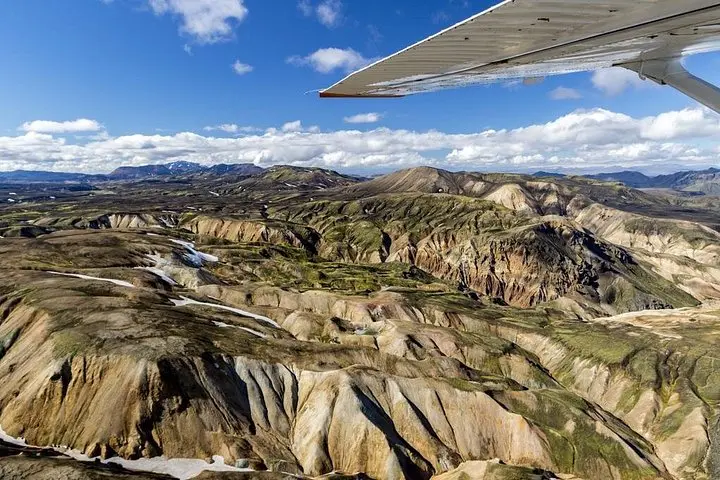
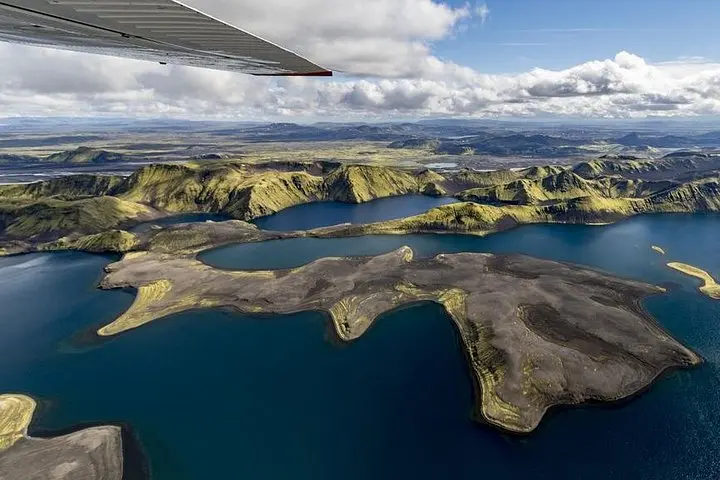
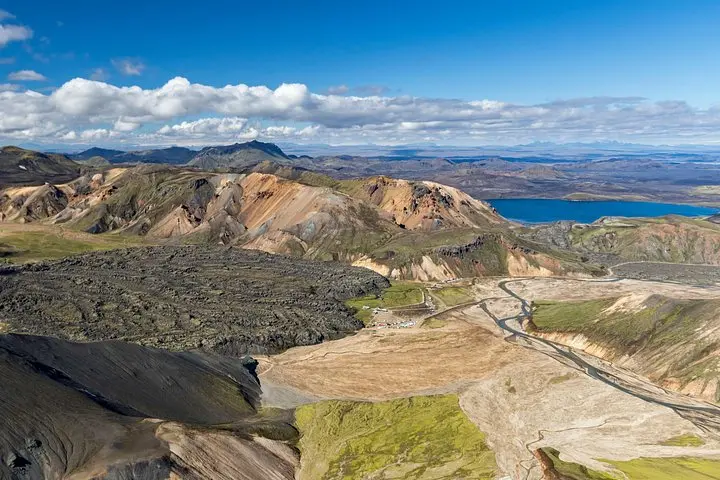
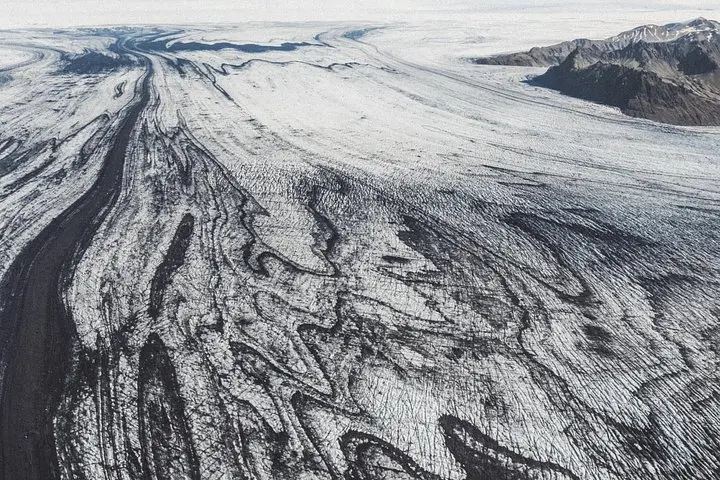
The flight stitches together chapters of Iceland’s violent geologic history. Below, Lakagígar — created by the 1783 Laki eruption — reads like a scar and a story: basalt rings blackened and repaired by cushiony green moss that clings like a stubborn afterthought. Landmannalaugar’s rhyolite ridges stand in contrast, their pastel slopes the result of repeated eruptions and geothermal activity that forged an inland highland of steamy springs and jagged peaks. Glaciers such as Skeiðarárjökull break the scene into sculpted tongues, feeding silt-laden rivers that make the lowlands look hand-painted.
Culturally, this route crosses edges between settlement and wilderness. The highlands were long avoided by regular traffic but have been threaded into modern Icelandic identity through stories of 18th-century eruptions, shepherding routes, and modern adventure tourism. From the air you can see faint human imprints — roads, huts, and the odd scattering of tents — reminders that this wildness is lived in, not owned.
Practical guidance makes the view more enjoyable. The 75-minute tour departs from Skaftafell; check in 10 minutes early at the terminal. Flights are weight-restricted and can be altered or canceled for weather or minimum passenger numbers, so confirm before traveling. Bring a warm, windproof layer even in summer — the cabin is small and window glare amplifies cold. A camera with a mid-range zoom and a pair of compact binoculars will capture the braided rivers, volcanic craters, and distant Hekla volcano.
Expect smooth stretches and moments of tight maneuvering as the pilot navigates up close to features; there’s no landing at sights — everything is observed from above. Visitors seeking a grounding follow-up can hike short trails near Skaftafell to see Svartifoss’s basalt columns or spend an afternoon walking the glacial lagoons along the coast. For photographers, the flight condenses the Highlands’ scale into a single, fast-moving frame — aim to sit on the side facing north for the best views of Landmannalaugar and Lakagígar.
Ultimately this flight is a concentrated lesson in Icelandic forces: fire that remade the land, ice that sculpts it, and rivers that refuse to stand still. From the air you understand the territory’s rhythm and the careful planning it requires — and you land with a new map in your head of how these forces fit together.
The tour is approximately 75 minutes from takeoff to return to Skaftafell terminal.
Yes, infants are allowed but must sit on an adult’s lap; bring any necessary child restraints if desired.
Flights are weather-dependent; operators may cancel or reschedule and will offer refunds or alternatives if minimum passenger numbers or safe conditions aren’t met.
Yes — the operator collects passenger weights during booking to ensure proper weight distribution and safety; provide accurate information when prompted.
The listing indicates wheelchair accessibility, but contact the operator in advance to confirm assistance needs and aircraft accessibility specifics.
Photography is encouraged—use a mid-range zoom and remove lens hoods to reduce reflections; hold tight and expect some vibration from the aircraft.
Atlantsflug/Flightseeing operates guided outdoor trips and adventures with an emphasis on safety, stewardship, and memorable experiences.
You climb aboard a small plane at the Skaftafell terminal and a few minutes later the black ribbon of the ring road falls away beneath you. The pilot banks and the interior brightens with a fractured panorama: the moss-muffled hum of Lakagígar’s crater chain, braided silver rivers cutting through gravel plains, and the slow, ancient white of outlet glaciers reaching from Vatnajökull. From this vantage every feature behaves with intent — rivers daring you to follow their shifting channels, glaciers pushing the landscape forward in deliberate, glacial time.
You climb aboard a small plane at the Skaftafell terminal and a few minutes later the black ribbon of the ring road falls away beneath you. The pilot banks and the interior brightens with a fractured panorama: the moss-muffled hum of Lakagígar’s crater chain, braided silver rivers cutting through gravel plains, and the slow, ancient white of outlet glaciers reaching from Vatnajökull. From this vantage every feature behaves with intent — rivers daring you to follow their shifting channels, glaciers pushing the landscape forward in deliberate, glacial time.
The flight stitches together chapters of Iceland’s violent geologic history. Below, Lakagígar — created by the 1783 Laki eruption — reads like a scar and a story: basalt rings blackened and repaired by cushiony green moss that clings like a stubborn afterthought. Landmannalaugar’s rhyolite ridges stand in contrast, their pastel slopes the result of repeated eruptions and geothermal activity that forged an inland highland of steamy springs and jagged peaks. Glaciers such as Skeiðarárjökull break the scene into sculpted tongues, feeding silt-laden rivers that make the lowlands look hand-painted.
Culturally, this route crosses edges between settlement and wilderness. The highlands were long avoided by regular traffic but have been threaded into modern Icelandic identity through stories of 18th-century eruptions, shepherding routes, and modern adventure tourism. From the air you can see faint human imprints — roads, huts, and the odd scattering of tents — reminders that this wildness is lived in, not owned.
Practical guidance makes the view more enjoyable. The 75-minute tour departs from Skaftafell; check in 10 minutes early at the terminal. Flights are weight-restricted and can be altered or canceled for weather or minimum passenger numbers, so confirm before traveling. Bring a warm, windproof layer even in summer — the cabin is small and window glare amplifies cold. A camera with a mid-range zoom and a pair of compact binoculars will capture the braided rivers, volcanic craters, and distant Hekla volcano.
Expect smooth stretches and moments of tight maneuvering as the pilot navigates up close to features; there’s no landing at sights — everything is observed from above. Visitors seeking a grounding follow-up can hike short trails near Skaftafell to see Svartifoss’s basalt columns or spend an afternoon walking the glacial lagoons along the coast. For photographers, the flight condenses the Highlands’ scale into a single, fast-moving frame — aim to sit on the side facing north for the best views of Landmannalaugar and Lakagígar.
Ultimately this flight is a concentrated lesson in Icelandic forces: fire that remade the land, ice that sculpts it, and rivers that refuse to stand still. From the air you understand the territory’s rhythm and the careful planning it requires — and you land with a new map in your head of how these forces fit together.