THE ADVENTURE COLLECTIVE® · Independent discovery and booking for outdoor travel

Clip in and walk the rim: a guided via ferrata at Kolob Reservoir traces an exposed slot-canyon edge with ladders, cables, and an 800‑ft waterfall finale. Designed to ease the worry of exposure while delivering uncompromised views, it’s a 3–4 hour private climb suited to many fitness levels.
Clip in and walk the rim: a guided via ferrata at Kolob Reservoir traces an exposed slot-canyon edge with ladders, cables, and an 800‑ft waterfall finale. Designed to ease the worry of exposure while delivering uncompromised views, it’s a 3–4 hour private climb suited to many fitness levels.
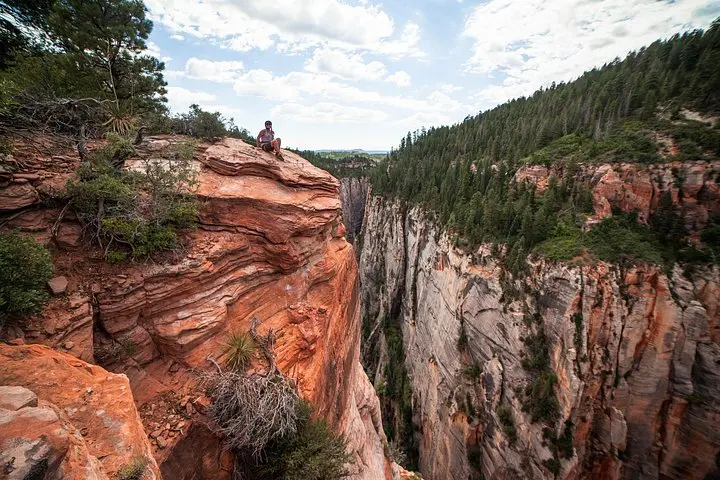
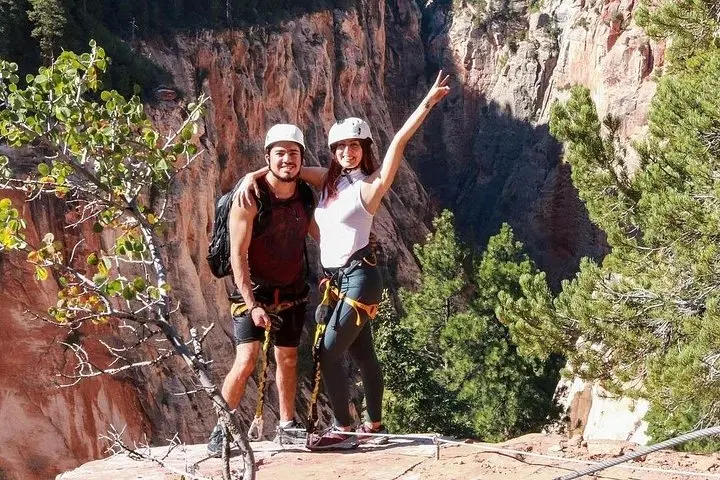
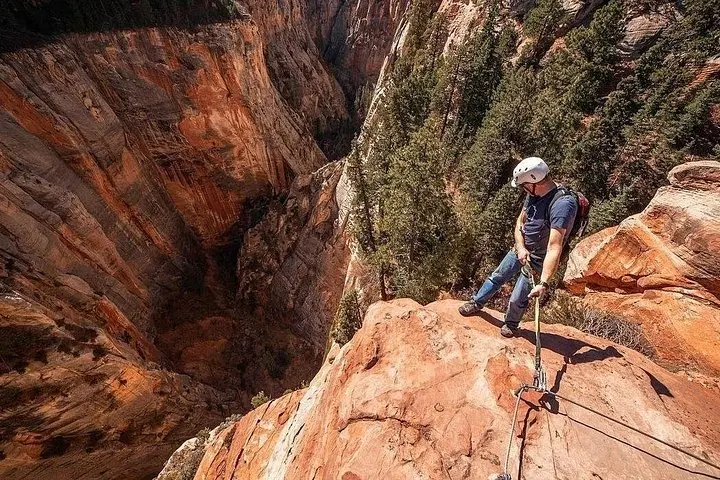
You clip in, hear the metal click that both frees and focuses you, and the world narrows to red rock and sky. The route runs an exposed ribbon along the rim of an 800-foot slot canyon that borders Zion National Park; ladder rungs and a continuous safety cable make it more a managed climb than a free-for-all scramble. Wind moves through the canyon like a living thing, testing your balance and pulling at loose thoughts until all that remains is one steady step after another.
Verified experiences and guided adventures in the surrounding area.
Operated by Utah Adventure Center · Kolob Terrace, Utah
You clip in, hear the metal click that both frees and focuses you, and the world narrows to red rock and sky. The route runs an exposed ribbon along the rim of an 800-foot slot canyon that borders Zion National Park; ladder rungs and a continuous safety cable make it more a managed climb than a free-for-all scramble. Wind moves through the canyon like a living thing, testing your balance and pulling at loose thoughts until all that remains is one steady step after another.
The cliffs here are Navajo sandstone—wind-sculpted, cross-bedded slabs that read like slow geologic handwriting. Over millions of years, sand turned to stone, then water and frost carved the slot canyon you skirt. Above Zion Waterfall, which plunges toward the slot far below, gives the route its payoff: a distant, thundering presence that frames the final approach.
Human history in the Kolob area is layered too. The Southern Paiute lived and traveled through these canyons long before Mormon settlers ran sheep along the rims. Today, the route is a modern response to a classic pull—like Angels Landing in name and view, but designed to reduce crowding and raise the margin of safety. Local guides carry knowledge of the cliff’s quirks: which anchors take weight, where the rock flakes, and when afternoon thermals make handholds slick.
Practicalities matter here. The climb is a private guided experience that takes roughly 3–4 hours and covers about two miles with short vertical sections negotiated by ladders and cables. Guides supply helmets, harnesses, and via-ferrata lanyards; you supply steady legs, closed-toe shoes, and 2 liters of water. Expect steady exposure—if you can climb a ladder and handle a narrow ledge, the technical demands are low but the psychological ones can be high.
Timing is part of the plan: mornings bring cleaner light and cooler rock, while afternoons stir wind and dust. Weather cancels this trip—rain makes the route dangerous and the canyon below quick to swell. Conservation is simple: stay clipped, stay on the fixed line, and pack your trash out. The fragile soils and sparse desert plants around Kolob heal slowly if damaged.
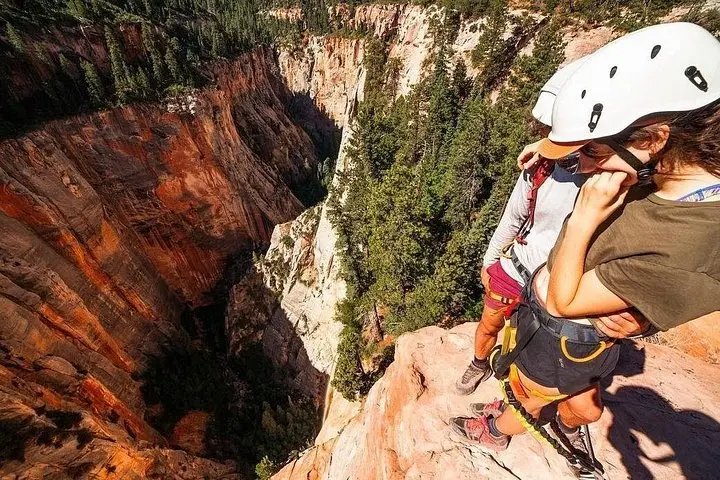
For photographers, the rim offers dramatic perspectives: wide-angle shots of the slot and waterfall, frames that show climbers mid-cable, and low-light clouds that add depth to the reds. For the eager traveler, this via ferrata delivers the vertiginous payoff of classic Zion exposure with guide-led security—an honest, physical way to meet the canyon on its own terms.
No technical climbing experience is required; guides handle all anchor work and provide instruction, but you should be comfortable with exposure and climbing short ladders.
Yes—guides supply helmets, harnesses, and via-ferrata lanyards as part of the booking.
Participants as young as 8 have completed the route, provided they can climb ladders and hike roughly two miles; expect discretion from guides for younger children.
The operator cancels for rain or high winds for safety—if the trip is canceled at least 24 hours prior you’ll receive a full refund per policy.
The route follows an exposed rim with sustained views over an 800-foot drop; you remain clipped to the safety cable for the entire climb.
Meet at the bathrooms next to the Kolob Reservoir boat ramp—your booking confirmation includes exact directions and a map pin.
Utah Adventure Center operates guided outdoor trips and adventures with an emphasis on safety, stewardship, and memorable experiences.
You clip in, hear the metal click that both frees and focuses you, and the world narrows to red rock and sky. The route runs an exposed ribbon along the rim of an 800-foot slot canyon that borders Zion National Park; ladder rungs and a continuous safety cable make it more a managed climb than a free-for-all scramble. Wind moves through the canyon like a living thing, testing your balance and pulling at loose thoughts until all that remains is one steady step after another.
You clip in, hear the metal click that both frees and focuses you, and the world narrows to red rock and sky. The route runs an exposed ribbon along the rim of an 800-foot slot canyon that borders Zion National Park; ladder rungs and a continuous safety cable make it more a managed climb than a free-for-all scramble. Wind moves through the canyon like a living thing, testing your balance and pulling at loose thoughts until all that remains is one steady step after another.
The cliffs here are Navajo sandstone—wind-sculpted, cross-bedded slabs that read like slow geologic handwriting. Over millions of years, sand turned to stone, then water and frost carved the slot canyon you skirt. Above Zion Waterfall, which plunges toward the slot far below, gives the route its payoff: a distant, thundering presence that frames the final approach.
Human history in the Kolob area is layered too. The Southern Paiute lived and traveled through these canyons long before Mormon settlers ran sheep along the rims. Today, the route is a modern response to a classic pull—like Angels Landing in name and view, but designed to reduce crowding and raise the margin of safety. Local guides carry knowledge of the cliff’s quirks: which anchors take weight, where the rock flakes, and when afternoon thermals make handholds slick.
Practicalities matter here. The climb is a private guided experience that takes roughly 3–4 hours and covers about two miles with short vertical sections negotiated by ladders and cables. Guides supply helmets, harnesses, and via-ferrata lanyards; you supply steady legs, closed-toe shoes, and 2 liters of water. Expect steady exposure—if you can climb a ladder and handle a narrow ledge, the technical demands are low but the psychological ones can be high.
Timing is part of the plan: mornings bring cleaner light and cooler rock, while afternoons stir wind and dust. Weather cancels this trip—rain makes the route dangerous and the canyon below quick to swell. Conservation is simple: stay clipped, stay on the fixed line, and pack your trash out. The fragile soils and sparse desert plants around Kolob heal slowly if damaged.
For photographers, the rim offers dramatic perspectives: wide-angle shots of the slot and waterfall, frames that show climbers mid-cable, and low-light clouds that add depth to the reds. For the eager traveler, this via ferrata delivers the vertiginous payoff of classic Zion exposure with guide-led security—an honest, physical way to meet the canyon on its own terms.