
Above Zion Via Ferrata: Rim-Running Climb Above Zion National Park
Climb a steel-lined path along an 800-foot slot canyon rim and end near a dramatic waterfall. Above Zion’s Via Ferrata blends secure exposure with sweeping canyon views — an accessible, guided vertical hike for adventurous visitors.
An Adventure In Springdale, UT.
Climb a steel-lined path along an 800-foot slot canyon rim and end near a dramatic waterfall. Above Zion’s Via Ferrata blends secure exposure with sweeping canyon views — an accessible, guided vertical hike for adventurous visitors.
Read the full experience
The climb begins with a narrow thread of sky and the raw smell of red sandstone. Hikers gather at the Kolob Reservoir boat ramp — helmets on, harnesses clipped — and a guide runs through the simple ritual of clipping in, locking a carabiner, and trusting a steel cable bolted into the cliff.
The climb begins with a narrow thread of sky and the raw smell of red sandstone. Hikers gather at the Kolob Reservoir boat ramp — helmets on, harnesses clipped — and a guide runs through the simple ritual of clipping in, locking a carabiner, and trusting a steel cable bolted into the cliff.
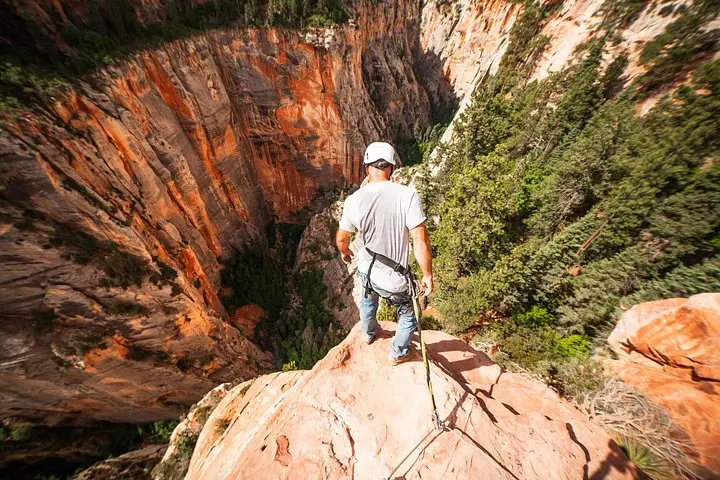
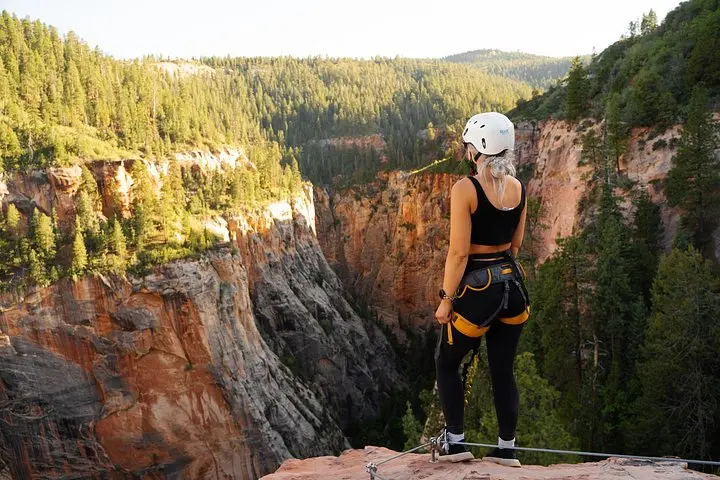
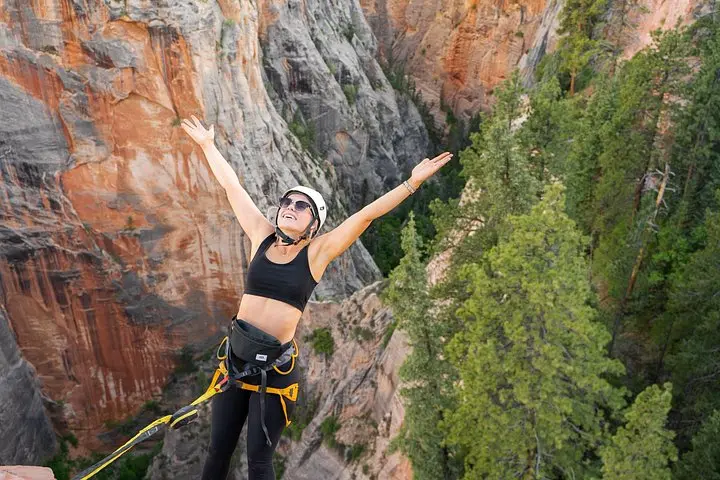
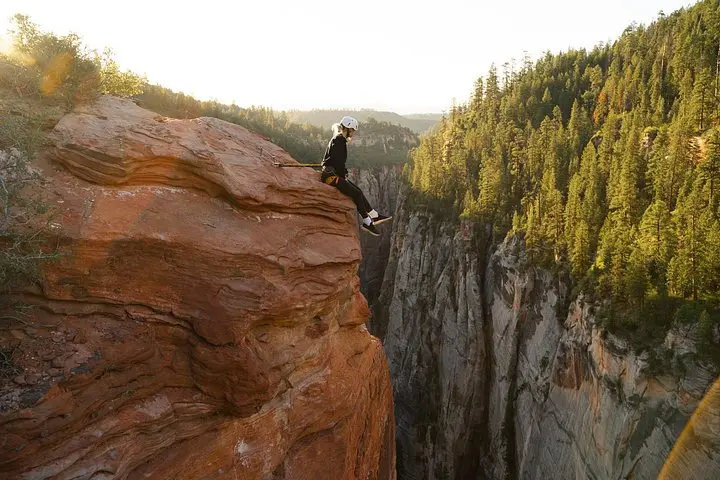
The route follows the rim of an 800-foot slot canyon that pins Zion National Park like a scar on the landscape. For two miles the trail alternates between walking on exposed ledges and hands-on sections where steel rungs and ladders turn vertical rock into a stairway. The cable is constant; the exposure is real. That safety allows you to pause at the edge and look down into a ribbon of river and, in season, the tumble of an 800-foot waterfall that pours into the gorge far below.
Geology here reads like a field guide: cross-bedded Navajo Sandstone, iron stains, and wind-polished faces that preserve the park’s deep-time story of dunes turned to stone. Humans have been part of the landscape for centuries — Indigenous people used these high benches to hunt and travel before Mormon settlers mapped the canyons in the 19th century. Today the Via Ferrata is a modern overlay, an engineered path that opens an intimate, cliff-edge perspective without the technical commitment of trad climbing.
The experience feels cinematic: the cable hums under glove, the canyon breathes cool air up from its depths, and guides point out subtle details — a fossil fragment, a lichen patch, or a peregrine falcon circling thermal currents. It’s equal parts physical and contemplative; you’re moving deliberately, placing feet on rungs, then stopping to photograph a waterfall that refuses to be ignored.
Practicalities are straightforward. The operator outfits climbers with helmets, harnesses, and via ferrata lanyards; participants should bring a daypack, water (1–2 liters), sturdy closed-toe hiking shoes, and layered clothing for changing desert temps. The route lasts about 3–4 hours, with moderate fitness required: expect steep approaches, ladder climbs, and sustained exposure.
Timing matters. Morning climbs keep you cooler and deliver softer light into the canyon; late afternoon reduces crowds and heightens warmth in the stone. Above all, leave no trace: the fragile desert soil and cryptobiotic crust recover slowly from footsteps. Respect the cable system, listen to your guide, and the route will reward you with a rare vantage point of Zion — high, honest, and unforgettable.
Frequently asked questions
No — guides provide harnesses, helmets, and instruction; basic comfort with ladders and exposure is sufficient.
The operator allows participants as young as 8 years old, provided they can climb ladders and hike the approach.
The continuous cable provides security, but sustained exposure may be uncomfortable for those with severe acrophobia.
Expect moderate effort: a steep approach and several ladder/climb sections over roughly two miles total.
Yes — helmets, harnesses, and via ferrata lanyards are included and fitted by guides.
Yes — bookings are refundable if canceled at least 24 hours before departure; operators will cancel in unsafe weather.
About This Experience
Utah Adventure Center operates guided outdoor trips and adventures with an emphasis on safety, stewardship, and memorable experiences.
Adventure tips
Recommended gear
- Closed-toe hiking shoes: Provide traction and protection on ladders, ledges, and loose approaches.
- Daypack with 1–2 L water: Keeps hydration, snacks, and layers accessible during a 3–4 hour outing.
- Grip gloves (lightweight): Protect hands while operating the via ferrata lanyard and handling steel rungs.
- Light wind/rain jacket: Desert weather can shift quickly; a shell blocks wind and late-afternoon chill.
Photos of the experience
Related adventures & guides
Read the full experience
The climb begins with a narrow thread of sky and the raw smell of red sandstone. Hikers gather at the Kolob Reservoir boat ramp — helmets on, harnesses clipped — and a guide runs through the simple ritual of clipping in, locking a carabiner, and trusting a steel cable bolted into the cliff.
The climb begins with a narrow thread of sky and the raw smell of red sandstone. Hikers gather at the Kolob Reservoir boat ramp — helmets on, harnesses clipped — and a guide runs through the simple ritual of clipping in, locking a carabiner, and trusting a steel cable bolted into the cliff.
The route follows the rim of an 800-foot slot canyon that pins Zion National Park like a scar on the landscape. For two miles the trail alternates between walking on exposed ledges and hands-on sections where steel rungs and ladders turn vertical rock into a stairway. The cable is constant; the exposure is real. That safety allows you to pause at the edge and look down into a ribbon of river and, in season, the tumble of an 800-foot waterfall that pours into the gorge far below.
Geology here reads like a field guide: cross-bedded Navajo Sandstone, iron stains, and wind-polished faces that preserve the park’s deep-time story of dunes turned to stone. Humans have been part of the landscape for centuries — Indigenous people used these high benches to hunt and travel before Mormon settlers mapped the canyons in the 19th century. Today the Via Ferrata is a modern overlay, an engineered path that opens an intimate, cliff-edge perspective without the technical commitment of trad climbing.
The experience feels cinematic: the cable hums under glove, the canyon breathes cool air up from its depths, and guides point out subtle details — a fossil fragment, a lichen patch, or a peregrine falcon circling thermal currents. It’s equal parts physical and contemplative; you’re moving deliberately, placing feet on rungs, then stopping to photograph a waterfall that refuses to be ignored.
Practicalities are straightforward. The operator outfits climbers with helmets, harnesses, and via ferrata lanyards; participants should bring a daypack, water (1–2 liters), sturdy closed-toe hiking shoes, and layered clothing for changing desert temps. The route lasts about 3–4 hours, with moderate fitness required: expect steep approaches, ladder climbs, and sustained exposure.
Timing matters. Morning climbs keep you cooler and deliver softer light into the canyon; late afternoon reduces crowds and heightens warmth in the stone. Above all, leave no trace: the fragile desert soil and cryptobiotic crust recover slowly from footsteps. Respect the cable system, listen to your guide, and the route will reward you with a rare vantage point of Zion — high, honest, and unforgettable.
Make a day of it nearby.
Verified experiences and guided adventures in the surrounding area.