THE ADVENTURE COLLECTIVE® · Independent discovery and booking for outdoor travel

A single winter day on the Icefields Parkway delivers turquoise viewpoints, glacier reflections, and Abraham Lake’s famous frozen methane bubbles. This guided tour from Banff balances accessible stops with dramatic seasonal photography opportunities.
A single winter day on the Icefields Parkway delivers turquoise viewpoints, glacier reflections, and Abraham Lake’s famous frozen methane bubbles. This guided tour from Banff balances accessible stops with dramatic seasonal photography opportunities.
The coach pulls off the Icefields Parkway and you step into a landscape that behaves like a slow exhale—air so cold it snaps, mountains that loom like old guards, and a ribbon of highway threading them together. At Abraham Lake the stillness is deceptive: under a smooth sheet of ice, methane bubbles rise and freeze in place like breath caught mid-sentence. Photographers crouch, lenses fog, and for a moment the world reduces to rings and cracks beneath a blue-white ceiling.
Verified experiences and guided adventures in the surrounding area.
Operated by Banff Journey · Banff, Alberta
The coach pulls off the Icefields Parkway and you step into a landscape that behaves like a slow exhale—air so cold it snaps, mountains that loom like old guards, and a ribbon of highway threading them together. At Abraham Lake the stillness is deceptive: under a smooth sheet of ice, methane bubbles rise and freeze in place like breath caught mid-sentence. Photographers crouch, lenses fog, and for a moment the world reduces to rings and cracks beneath a blue-white ceiling.
This full-day loop—leaving from Banff or Canmore—threads three classic Rockies scenes. Peyto Lake, seen from its high viewpoint, throws glacier-fed turquoise into sharp relief against serrated ridgelines; Bow Lake sits lower, a mirror for Crowfoot Glacier’s dwindling toes; and Sunwapta Falls (visited on shoulder seasons) announces itself with raw, glacial force. The geology here reads like a layered field guide: Pleistocene ice carved cirques and scooped basins, while ongoing glacial melt feeds rivers that still shape the valley floors.
These places are part of the traditional territories of the Stoney Nakoda and Îyârhe Nakoda peoples; the route follows river corridors long used for travel and seasonal harvesting. The lakes and falls also carry modern weight—Abraham Lake’s bubbles are a visible hint of permafrost and methane processes, while Crowfoot Glacier’s retreat is an unambiguous reminder of a warming climate.
On the tour you’ll get short on-foot stops and longer photo windows; crampons are provided for safe walking on packed snow and ice. Guides aim to balance timing for light with road conditions—winter on the Parkway is as much about patience and visibility as it is about scenery.
Practical notes: dress in layers and expect wind at exposed viewpoints; slow-moving motorcoaches and seasonal road closures can alter the order of stops. Bring a warm lunch, a camera with a spare battery (cold drains them fast), and a sense of flexibility—sometimes the best bubble formations appear for only a few days.
This route is ideal for travelers who want high-impact sights without backcountry commitment: minimal hiking, maximum visual payoff. If you time it for January–February you increase your odds of seeing the densest, most photogenic ice bubbles at Abraham Lake; early mornings and late afternoons produce the richest light across the frozen lakes. Above all, treat the landscape as fragile—stay on packed trails, follow your guide’s instructions, and carry out everything you carry in.
January to February typically yields the most extensive and photogenic bubble formations, though their appearance depends on temperature cycles that vary year to year.
No major hikes—stops are short walks from the coach to viewpoints; expect 5–20 minute walks on uneven, icy ground.
Yes—physical demands are low, but icy conditions and cold temperatures mean extra care for young children and older adults.
Pickup/dropoff (selected locations), a guide/driver, crampons, and transport; you should bring your own lunch and warm clothing.
Yes—elk, deer, and occasionally bighorn sheep or coyotes are seen along the Bow Valley Parkway; always view from the vehicle or designated areas.
The operator may alter the itinerary or cancel for safety; they’ll inform travelers in advance and follow their cancellation policy for refunds.
Banff Journey operates guided outdoor trips and adventures with an emphasis on safety, stewardship, and memorable experiences.

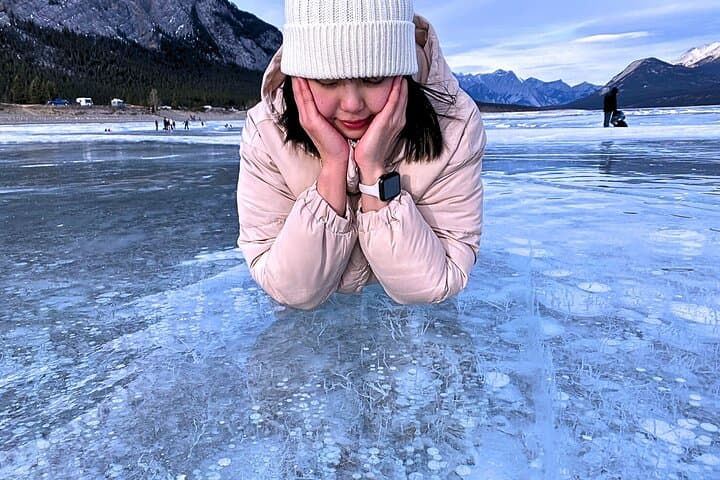
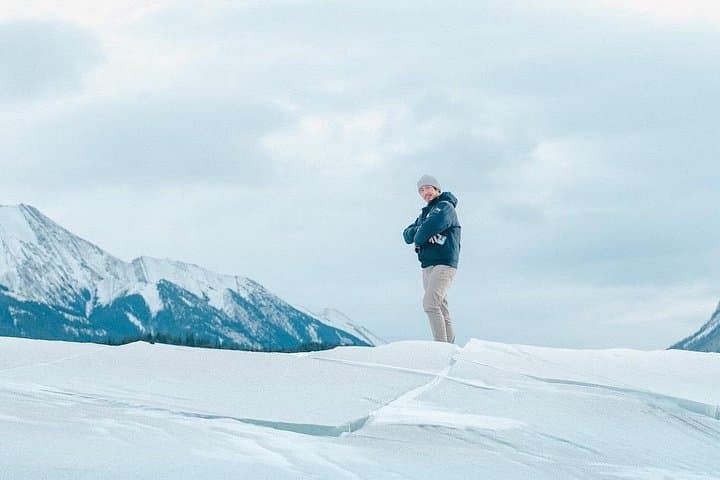
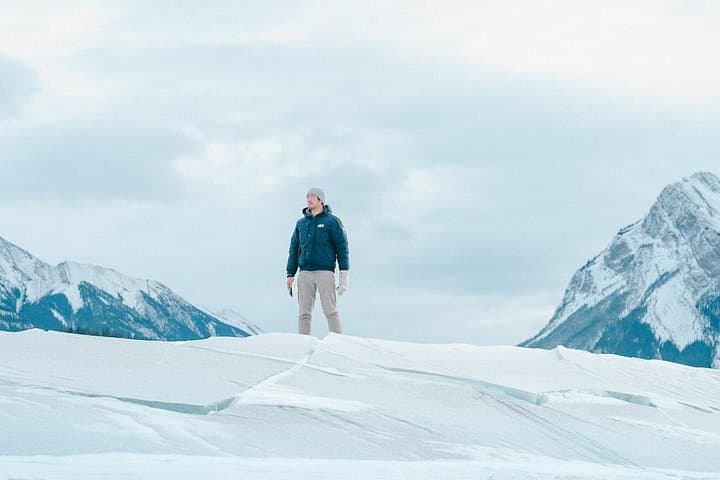
The coach pulls off the Icefields Parkway and you step into a landscape that behaves like a slow exhale—air so cold it snaps, mountains that loom like old guards, and a ribbon of highway threading them together. At Abraham Lake the stillness is deceptive: under a smooth sheet of ice, methane bubbles rise and freeze in place like breath caught mid-sentence. Photographers crouch, lenses fog, and for a moment the world reduces to rings and cracks beneath a blue-white ceiling.
The coach pulls off the Icefields Parkway and you step into a landscape that behaves like a slow exhale—air so cold it snaps, mountains that loom like old guards, and a ribbon of highway threading them together. At Abraham Lake the stillness is deceptive: under a smooth sheet of ice, methane bubbles rise and freeze in place like breath caught mid-sentence. Photographers crouch, lenses fog, and for a moment the world reduces to rings and cracks beneath a blue-white ceiling.
This full-day loop—leaving from Banff or Canmore—threads three classic Rockies scenes. Peyto Lake, seen from its high viewpoint, throws glacier-fed turquoise into sharp relief against serrated ridgelines; Bow Lake sits lower, a mirror for Crowfoot Glacier’s dwindling toes; and Sunwapta Falls (visited on shoulder seasons) announces itself with raw, glacial force. The geology here reads like a layered field guide: Pleistocene ice carved cirques and scooped basins, while ongoing glacial melt feeds rivers that still shape the valley floors.
These places are part of the traditional territories of the Stoney Nakoda and Îyârhe Nakoda peoples; the route follows river corridors long used for travel and seasonal harvesting. The lakes and falls also carry modern weight—Abraham Lake’s bubbles are a visible hint of permafrost and methane processes, while Crowfoot Glacier’s retreat is an unambiguous reminder of a warming climate.
On the tour you’ll get short on-foot stops and longer photo windows; crampons are provided for safe walking on packed snow and ice. Guides aim to balance timing for light with road conditions—winter on the Parkway is as much about patience and visibility as it is about scenery.
Practical notes: dress in layers and expect wind at exposed viewpoints; slow-moving motorcoaches and seasonal road closures can alter the order of stops. Bring a warm lunch, a camera with a spare battery (cold drains them fast), and a sense of flexibility—sometimes the best bubble formations appear for only a few days.
This route is ideal for travelers who want high-impact sights without backcountry commitment: minimal hiking, maximum visual payoff. If you time it for January–February you increase your odds of seeing the densest, most photogenic ice bubbles at Abraham Lake; early mornings and late afternoons produce the richest light across the frozen lakes. Above all, treat the landscape as fragile—stay on packed trails, follow your guide’s instructions, and carry out everything you carry in.