THE ADVENTURE COLLECTIVE® · Independent discovery and booking for outdoor travel

Travel from Luxor to Aswan for island temples, a Nubian felucca ride and an early-morning Abu Simbel visit. This private two-day tour pairs monumental archaeology with riverfront culture and modern engineering landmarks.
Travel from Luxor to Aswan for island temples, a Nubian felucca ride and an early-morning Abu Simbel visit. This private two-day tour pairs monumental archaeology with riverfront culture and modern engineering landmarks.
At dawn the road south from Aswan unspools under a pastel sky, the desert flattening while a green ribbon—the Nile—holds villages and palms. You arrive first on Elephantine's edge: felucca masts dip, children wave from Nubian-hued houses, and Philae’s colonnades rise from an island like a staged myth. Overnight in Aswan gives time to breathe the river air before the predawn drive to Abu Simbel.
Verified experiences and guided adventures in the surrounding area.
Operated by Eyes On Egypt · Aswan, Aswan Governorate
At dawn the road south from Aswan unspools under a pastel sky, the desert flattening while a green ribbon—the Nile—holds villages and palms. You arrive first on Elephantine's edge: felucca masts dip, children wave from Nubian-hued houses, and Philae’s colonnades rise from an island like a staged myth. Overnight in Aswan gives time to breathe the river air before the predawn drive to Abu Simbel.
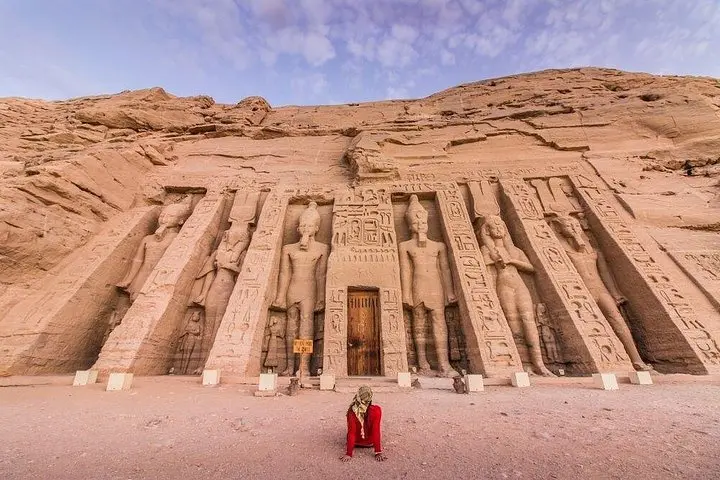
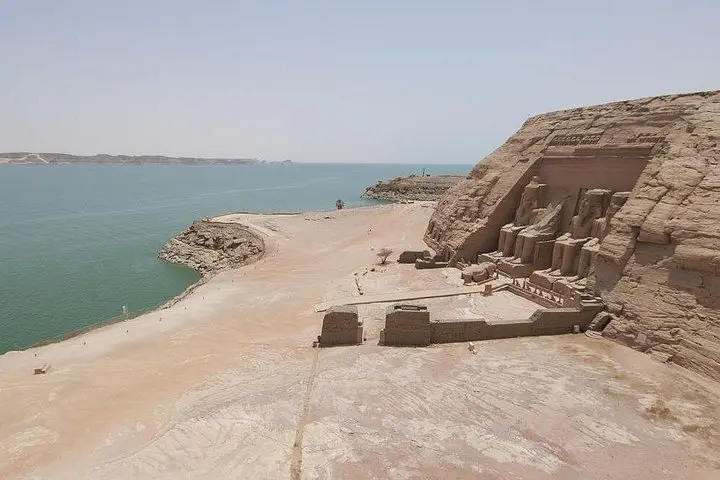
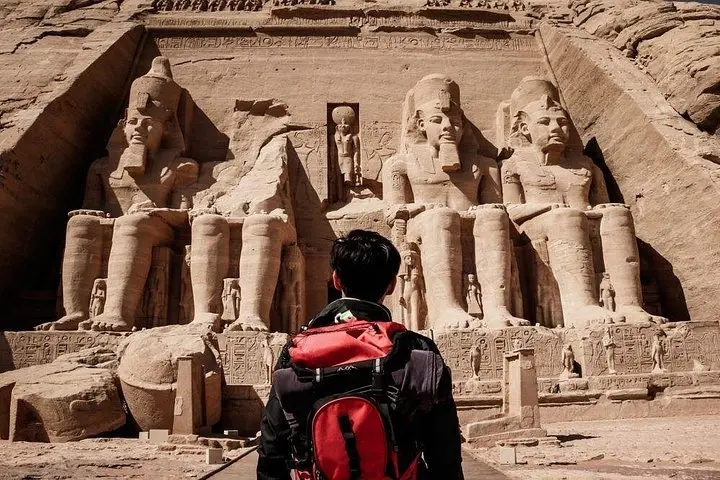
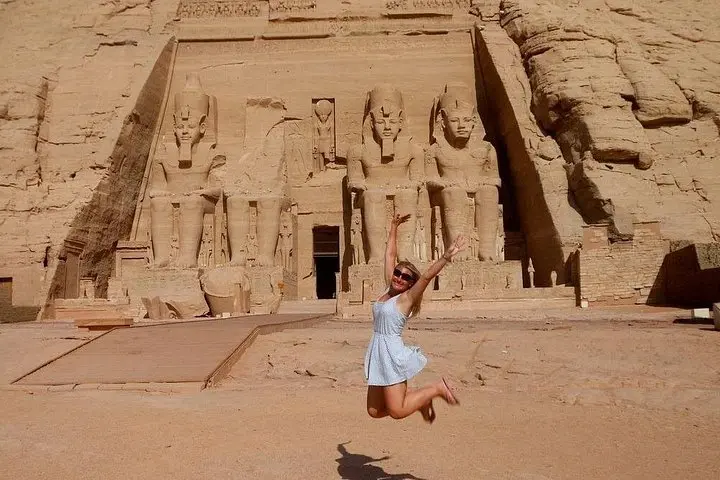
Abu Simbel’s twin temples, carved in the 13th century BCE under Ramesses II, stare from the rock with colossal seated figures that once greeted the Nile’s floodplain. In the 1960s UNESCO and the Egyptian government moved them, block by block, to escape the High Dam’s reservoir—a modern salvage that shaped the region’s recent history. Along the way you’ll pass the Unfinished Obelisk and the massive concrete curve of the Aswan High Dam, engineering that reshaped ecology and agriculture downstream.
Expect long but scenic drives, short guided walks around temple complexes, and a quiet felucca crossing to a Nubian village where local life is slow and colorful. Practical notes: start very early for Abu Simbel to avoid heat and crowds, bring sun protection and plenty of water, and wear stable shoes for uneven temple stone and ramps. Photography is excellent at golden hour; cash for small purchases in Nubian markets helps local vendors. This itinerary mixes cultural depth with roadside geology and riverine life—an efficient, revealing two-day loop for travelers who want major monuments plus local color.
Organized tours vary; this private tour typically includes transfers and guide services—confirm whether site entrance fees are covered when booking.
The round trip is about 280–300 km (each way ~120–150 km) and takes roughly 3–4 hours one way by road depending on stops and traffic.
Major sites have uneven stone and steps; Aswan transfers and some vehicles may be wheelchair accessible but check specifics with the operator prior to booking.
Yes—photos are welcome in villages, but ask permission first and consider offering a small tip when photographing people or private homes.
Eyes On Egypt operates guided outdoor trips and adventures with an emphasis on safety, stewardship, and memorable experiences.
At dawn the road south from Aswan unspools under a pastel sky, the desert flattening while a green ribbon—the Nile—holds villages and palms. You arrive first on Elephantine's edge: felucca masts dip, children wave from Nubian-hued houses, and Philae’s colonnades rise from an island like a staged myth. Overnight in Aswan gives time to breathe the river air before the predawn drive to Abu Simbel.
At dawn the road south from Aswan unspools under a pastel sky, the desert flattening while a green ribbon—the Nile—holds villages and palms. You arrive first on Elephantine's edge: felucca masts dip, children wave from Nubian-hued houses, and Philae’s colonnades rise from an island like a staged myth. Overnight in Aswan gives time to breathe the river air before the predawn drive to Abu Simbel.
Abu Simbel’s twin temples, carved in the 13th century BCE under Ramesses II, stare from the rock with colossal seated figures that once greeted the Nile’s floodplain. In the 1960s UNESCO and the Egyptian government moved them, block by block, to escape the High Dam’s reservoir—a modern salvage that shaped the region’s recent history. Along the way you’ll pass the Unfinished Obelisk and the massive concrete curve of the Aswan High Dam, engineering that reshaped ecology and agriculture downstream.
Expect long but scenic drives, short guided walks around temple complexes, and a quiet felucca crossing to a Nubian village where local life is slow and colorful. Practical notes: start very early for Abu Simbel to avoid heat and crowds, bring sun protection and plenty of water, and wear stable shoes for uneven temple stone and ramps. Photography is excellent at golden hour; cash for small purchases in Nubian markets helps local vendors. This itinerary mixes cultural depth with roadside geology and riverine life—an efficient, revealing two-day loop for travelers who want major monuments plus local color.