THE ADVENTURE COLLECTIVE® · Independent discovery and booking for outdoor travel

A compact two-day journey from Luxor to Aswan and Abu Simbel that pairs river-side temples with desert drives and Nubian culture. Expect early mornings, long drives, and spectacular rock-cut monuments rescued from Lake Nasser.
A compact two-day journey from Luxor to Aswan and Abu Simbel that pairs river-side temples with desert drives and Nubian culture. Expect early mornings, long drives, and spectacular rock-cut monuments rescued from Lake Nasser.
Dawn slides across the Nile as your vehicle leaves Luxor, the river pulling you south with a steady, convincing motion.
Daylight warms the desert plain; by late afternoon the Philae Temple sits like a carved island of stone and shadow, its pylons and colonnades catching the low sun.
You’ll sleep in Aswan, an easy town with palm-scented evenings, then rise before dawn for the desert drive to Abu Simbel—two massive rock-cut temples that dominate the flat horizon.
Verified experiences and guided adventures in the surrounding area.
Operated by Egypt Lovely Tours · Abu Simbel, Aswan Governorate
Dawn slides across the Nile as your vehicle leaves Luxor, the river pulling you south with a steady, convincing motion.
Daylight warms the desert plain; by late afternoon the Philae Temple sits like a carved island of stone and shadow, its pylons and colonnades catching the low sun.
You’ll sleep in Aswan, an easy town with palm-scented evenings, then rise before dawn for the desert drive to Abu Simbel—two massive rock-cut temples that dominate the flat horizon.
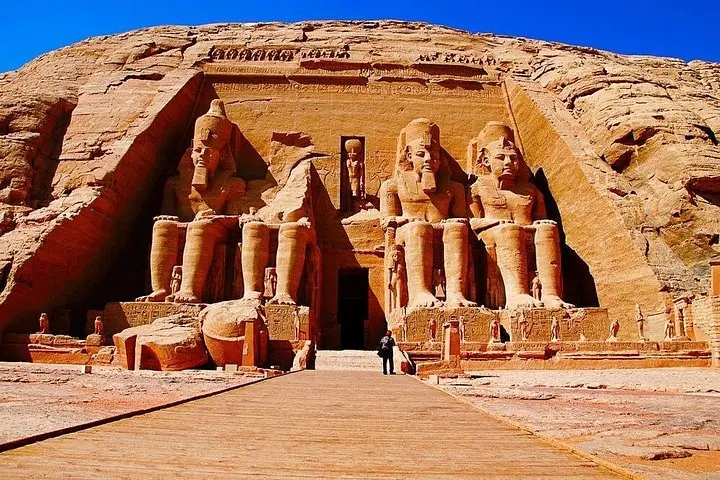
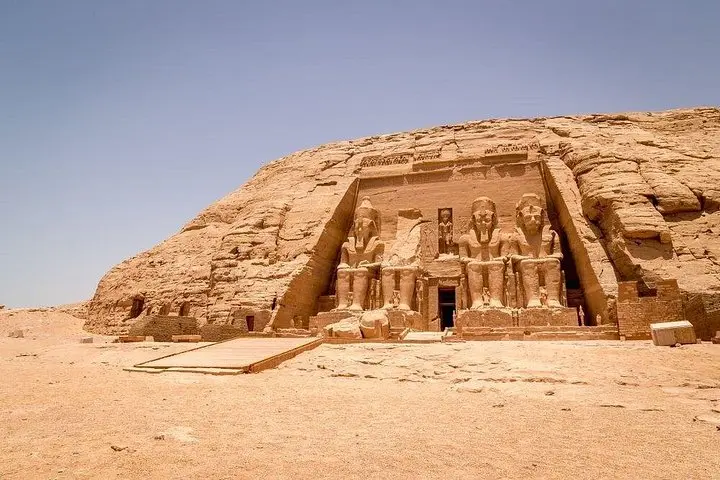
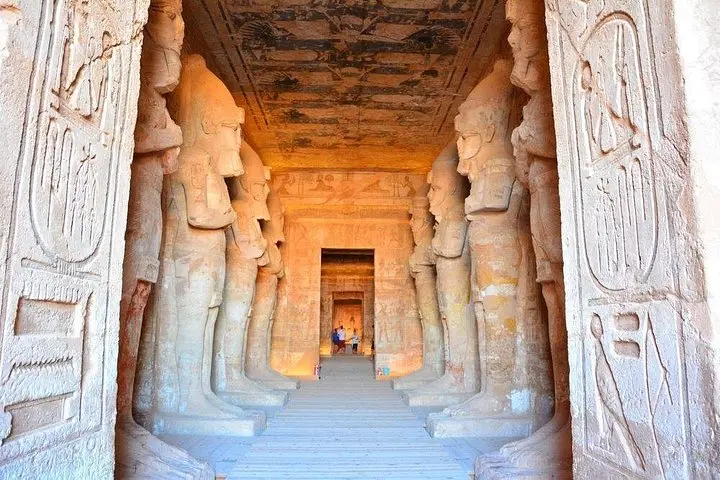
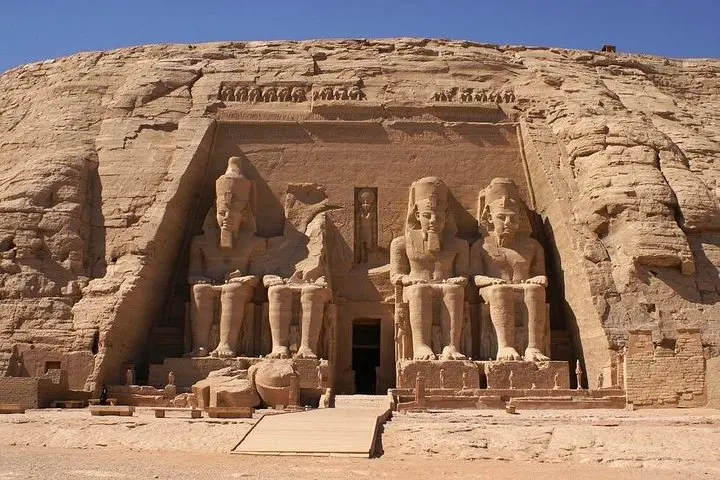
Carved under Ramses II, Abu Simbel’s façade is guarded by four 20‑meter seated colossi, while the small temple to Nefertari honors Hathor with delicate reliefs. Geologically the temples are hewn from Nubian sandstone and now sit on a reconstructed ridge above Lake Nasser after the 1960s UNESCO relocation to save them from the rising dam waters.
Culturally the visit moves between Pharaonic power and living Nile traditions—a felucca glide by Elephantine Island and a stop in a Nubian village reveal pottery, painted houses, and direct hospitality.
Practical notes: the Aswan–Abu Simbel road is about 280 km one way (roughly 3–4 hours); expect early starts and minimal elevation change across sun-baked desert. Entrance and guide are included on private departures; wear sun protection, carry extra water, and plan for limited shade at the temples. Timing matters—morning light softens reliefs and crowds are thinner. Bring local currency for small purchases, keep to marked paths, and respect a quiet pace inside sanctuaries to protect fragile reliefs.
The road is roughly 280 km each way; plan for about 3–4 hours one way depending on stops and traffic.
This private tour includes entrance fees to the listed historical sites and an English-speaking guide per the itinerary.
Yes—this tour is described as easy physically, but long drives and early starts can be tiring; check mobility needs ahead of booking.
Photography is generally allowed at the sites, but rules can vary for interior chambers—follow signage and guide instructions, and avoid tripods in busy areas.
Egypt Lovely Tours operates guided outdoor trips and adventures with an emphasis on safety, stewardship, and memorable experiences.
Dawn slides across the Nile as your vehicle leaves Luxor, the river pulling you south with a steady, convincing motion.
Daylight warms the desert plain; by late afternoon the Philae Temple sits like a carved island of stone and shadow, its pylons and colonnades catching the low sun.
You’ll sleep in Aswan, an easy town with palm-scented evenings, then rise before dawn for the desert drive to Abu Simbel—two massive rock-cut temples that dominate the flat horizon.
Carved under Ramses II, Abu Simbel’s façade is guarded by four 20‑meter seated colossi, while the small temple to Nefertari honors Hathor with delicate reliefs. Geologically the temples are hewn from Nubian sandstone and now sit on a reconstructed ridge above Lake Nasser after the 1960s UNESCO relocation to save them from the rising dam waters.
Culturally the visit moves between Pharaonic power and living Nile traditions—a felucca glide by Elephantine Island and a stop in a Nubian village reveal pottery, painted houses, and direct hospitality.
Practical notes: the Aswan–Abu Simbel road is about 280 km one way (roughly 3–4 hours); expect early starts and minimal elevation change across sun-baked desert. Entrance and guide are included on private departures; wear sun protection, carry extra water, and plan for limited shade at the temples. Timing matters—morning light softens reliefs and crowds are thinner. Bring local currency for small purchases, keep to marked paths, and respect a quiet pace inside sanctuaries to protect fragile reliefs.