THE ADVENTURE COLLECTIVE® · Independent discovery and booking for outdoor travel

Fly from Aswan for a private, time-efficient visit to Abu Simbel’s colossal temples. See Ramses II’s four seated statues, the intimate Temple of Hathor, and learn about the 1960s relocation while avoiding long Nile transfers.
Fly from Aswan for a private, time-efficient visit to Abu Simbel’s colossal temples. See Ramses II’s four seated statues, the intimate Temple of Hathor, and learn about the 1960s relocation while avoiding long Nile transfers.
You step off a short regional flight into a low, sunbaked plain where the desert seems to hold its breath. Across black asphalt the sandstone cliff looms, the four colossal seated figures of Ramses II imposing like a pharaoh’s welcome party frozen in time. Wind moves sand in thin sheets; the desert sun dares you to keep looking.
Verified experiences and guided adventures in the surrounding area.
Operated by Your Egypt Tours · Abu Simbel, Aswan Governorate
You step off a short regional flight into a low, sunbaked plain where the desert seems to hold its breath. Across black asphalt the sandstone cliff looms, the four colossal seated figures of Ramses II imposing like a pharaoh’s welcome party frozen in time. Wind moves sand in thin sheets; the desert sun dares you to keep looking.
Carved more than 3,200 years ago, Abu Simbel’s Great Temple and the adjoining Temple of Hathor for Queen Nefertari are carved directly into a Nubian sandstone bluff. The site reveals both imperial ambition and deft engineering—colossal façades, axial halls, and reliefs celebrating military victory and divine kingship. In the 1960s an international rescue operation lifted and reassembled the temples above the rising waters of Lake Nasser, a modern engineering chapter that sits close to the ancient story.
The geology is direct: compacted sandstone that preserves deep carving but flakes in places; the desert climate produces sharp light and cool mornings, brutally hot afternoons. Cultural context is immediate—this is a living memory of New Kingdom Egypt and modern international cooperation.
Practical guidance: plan a morning visit to avoid the peak heat; a short runway hop from Aswan (roughly 40–60 minutes) compresses travel time so you get several hours at the site. Wear closed-toe shoes for walking on uneven stone and sand, carry sun protection and at least 1–2 liters of water, and bring a camera with a mid-range zoom—statues and reliefs reward both wide and detailed shots. Respect local signage and the sanctity of inner chambers; photography rules can change during religious observances. With a private guide, timing and context arrive with your transport—this is part archaeology lesson, part desert theater.
Regional flights typically take about 40–60 minutes each way, making a day trip efficient compared with lengthy overland transfers.
The site has some accessible features and transfers are possible, but access into interior chambers can be limited—check in advance and request assistance if needed.
Twice a year (around late October and late February) the rising sun penetrates the sanctuary, illuminating statues inside; exact dates can vary slightly and special events attract crowds.
Visitors to Egypt generally require a valid visa; your tour operator or guide will advise on current entry rules and local ticketing for the temples.
Your Egypt Tours operates guided outdoor trips and adventures with an emphasis on safety, stewardship, and memorable experiences.
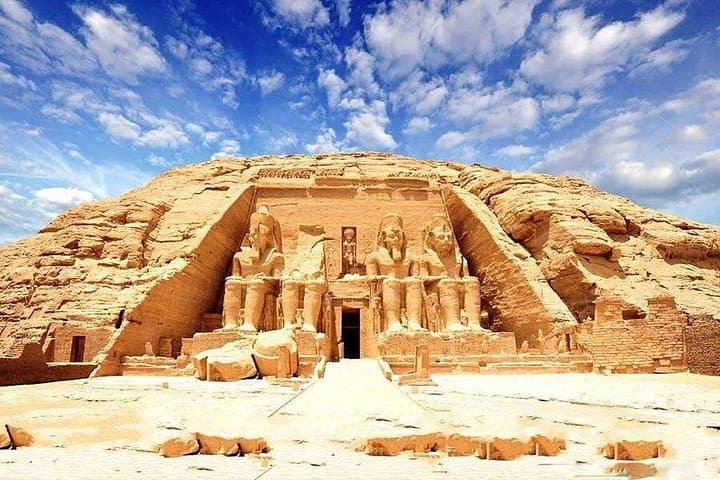


You step off a short regional flight into a low, sunbaked plain where the desert seems to hold its breath. Across black asphalt the sandstone cliff looms, the four colossal seated figures of Ramses II imposing like a pharaoh’s welcome party frozen in time. Wind moves sand in thin sheets; the desert sun dares you to keep looking.
You step off a short regional flight into a low, sunbaked plain where the desert seems to hold its breath. Across black asphalt the sandstone cliff looms, the four colossal seated figures of Ramses II imposing like a pharaoh’s welcome party frozen in time. Wind moves sand in thin sheets; the desert sun dares you to keep looking.
Carved more than 3,200 years ago, Abu Simbel’s Great Temple and the adjoining Temple of Hathor for Queen Nefertari are carved directly into a Nubian sandstone bluff. The site reveals both imperial ambition and deft engineering—colossal façades, axial halls, and reliefs celebrating military victory and divine kingship. In the 1960s an international rescue operation lifted and reassembled the temples above the rising waters of Lake Nasser, a modern engineering chapter that sits close to the ancient story.
The geology is direct: compacted sandstone that preserves deep carving but flakes in places; the desert climate produces sharp light and cool mornings, brutally hot afternoons. Cultural context is immediate—this is a living memory of New Kingdom Egypt and modern international cooperation.
Practical guidance: plan a morning visit to avoid the peak heat; a short runway hop from Aswan (roughly 40–60 minutes) compresses travel time so you get several hours at the site. Wear closed-toe shoes for walking on uneven stone and sand, carry sun protection and at least 1–2 liters of water, and bring a camera with a mid-range zoom—statues and reliefs reward both wide and detailed shots. Respect local signage and the sanctity of inner chambers; photography rules can change during religious observances. With a private guide, timing and context arrive with your transport—this is part archaeology lesson, part desert theater.