THE ADVENTURE COLLECTIVE® · Independent discovery and booking for outdoor travel

An early‑start road journey from Aswan rewards you with the monumental temples of Abu Simbel — colossal statues, carved interiors and a dramatic relocation story tied to Lake Nasser. Expect an 8–10 hour day with a short, intensive visit at the site.
An early‑start road journey from Aswan rewards you with the monumental temples of Abu Simbel — colossal statues, carved interiors and a dramatic relocation story tied to Lake Nasser. Expect an 8–10 hour day with a short, intensive visit at the site.
You wake before dawn in Aswan and the bus pushes out across a scorched plain as the sky lightens. The road runs flat and empty, the desert daring you to keep watch; after roughly three hours the silhouette of rock and stone resolves into four colossal seated figures carved into a mountainside — Abu Simbel’s twin temples rise like a deliberate challenge from the sand.
Verified experiences and guided adventures in the surrounding area.
Operated by Oman Day Tours · Abu Simbel, Aswan Governorate
You wake before dawn in Aswan and the bus pushes out across a scorched plain as the sky lightens. The road runs flat and empty, the desert daring you to keep watch; after roughly three hours the silhouette of rock and stone resolves into four colossal seated figures carved into a mountainside — Abu Simbel’s twin temples rise like a deliberate challenge from the sand.
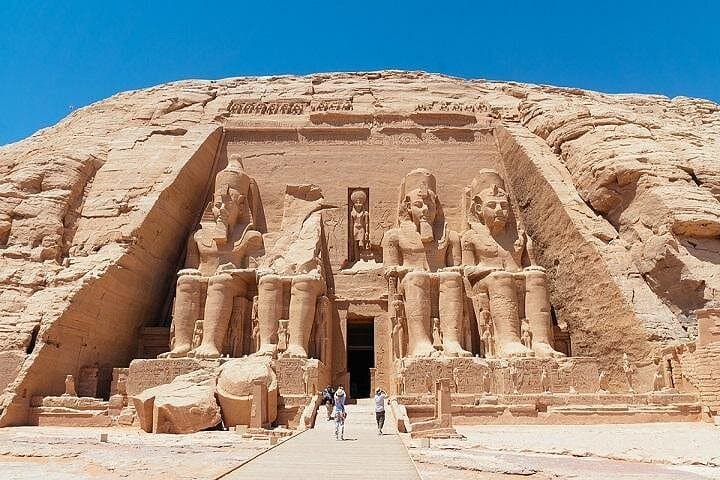
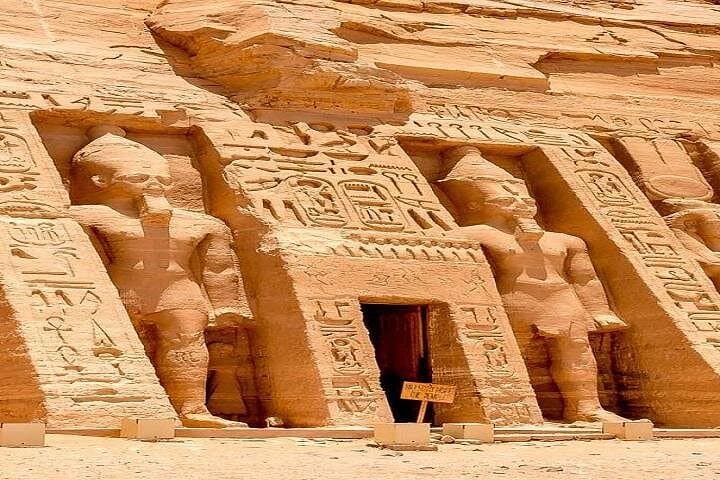
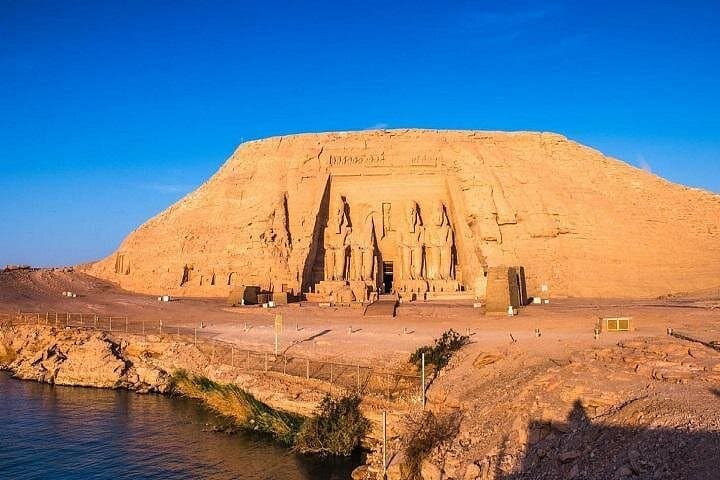
The larger temple honors Ramses II, its façade dominated by the king’s statues and an interior layered with reliefs of victories and ritual scenes. A smaller temple dedicated to Nefertari stands nearby, fronted by statues of the queen. Both were cut into the cliff during the 13th century BCE and, in the 1960s, painstakingly moved block‑by‑block to higher ground to survive the creation of Lake Nasser — an engineering rescue and a defining chapter in modern Egyptian heritage work.
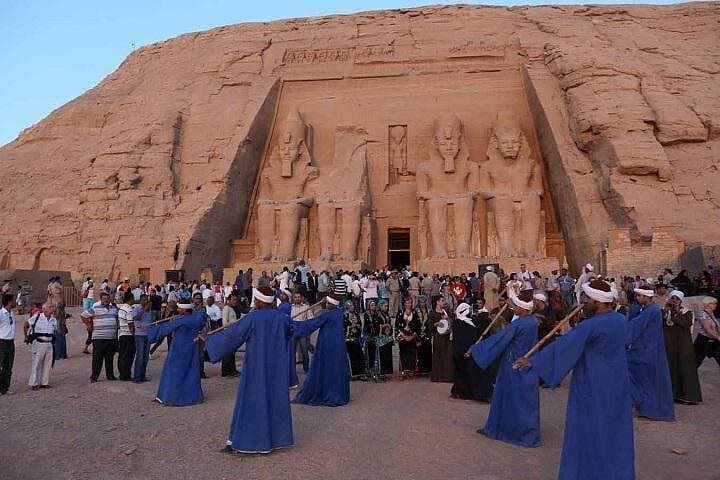
Geology here is granite bedrock and alluvial plains; culture is Nubian and Pharaonic, with villages and the lake’s horizons visible on the return drive. Expect strong sun, reflective heat off the stone, and a compact visit: most groups spend 2–3 hours at the site before heading back.
Practical guidance: start early to avoid midday heat, bring sun protection and plenty of water, and wear sturdy, comfortable shoes for uneven temple floors. Photography is allowed but be respectful of interior sanctity and follow your guide’s timelines — the drive and the monuments are the core of this long but rewarding day.
The road transfer is about 3 hours each way (approx. 280 km round trip), making this an 8–10 hour day including time at the temples.
This tour includes entrance fees and a private Egyptology guide as listed in the inclusions.
The site has uneven surfaces and steps; travelers should have moderate fitness — those with severe mobility issues may find access limited.
Photography is generally allowed, but follow your guide’s instructions and avoid flash where signage or staff request it to protect delicate reliefs.
Oman Day Tours operates guided outdoor trips and adventures with an emphasis on safety, stewardship, and memorable experiences.
You wake before dawn in Aswan and the bus pushes out across a scorched plain as the sky lightens. The road runs flat and empty, the desert daring you to keep watch; after roughly three hours the silhouette of rock and stone resolves into four colossal seated figures carved into a mountainside — Abu Simbel’s twin temples rise like a deliberate challenge from the sand.
You wake before dawn in Aswan and the bus pushes out across a scorched plain as the sky lightens. The road runs flat and empty, the desert daring you to keep watch; after roughly three hours the silhouette of rock and stone resolves into four colossal seated figures carved into a mountainside — Abu Simbel’s twin temples rise like a deliberate challenge from the sand.
The larger temple honors Ramses II, its façade dominated by the king’s statues and an interior layered with reliefs of victories and ritual scenes. A smaller temple dedicated to Nefertari stands nearby, fronted by statues of the queen. Both were cut into the cliff during the 13th century BCE and, in the 1960s, painstakingly moved block‑by‑block to higher ground to survive the creation of Lake Nasser — an engineering rescue and a defining chapter in modern Egyptian heritage work.
Geology here is granite bedrock and alluvial plains; culture is Nubian and Pharaonic, with villages and the lake’s horizons visible on the return drive. Expect strong sun, reflective heat off the stone, and a compact visit: most groups spend 2–3 hours at the site before heading back.
Practical guidance: start early to avoid midday heat, bring sun protection and plenty of water, and wear sturdy, comfortable shoes for uneven temple floors. Photography is allowed but be respectful of interior sanctity and follow your guide’s timelines — the drive and the monuments are the core of this long but rewarding day.