THE ADVENTURE COLLECTIVE® · Independent discovery and booking for outdoor travel

Journey south from Aswan by air-conditioned coach to the dramatic rock-cut temples of Abu Simbel. Spend several hours exploring the relocated temples of Ramesses II and Nefertari and learn about the UNESCO engineering feat that saved them.
Journey south from Aswan by air-conditioned coach to the dramatic rock-cut temples of Abu Simbel. Spend several hours exploring the relocated temples of Ramesses II and Nefertari and learn about the UNESCO engineering feat that saved them.
Dawn on the desert road feels deliberate: the coach slips south beneath a pale sky while Lake Nasser widens on the horizon, and the colossal faces of Ramesses II appear like a promise carved in stone. Arriving at Abu Simbel, the two rock-cut temples stare down the plain — the larger for Ramesses II, the smaller for Nefertari — their façades catching sun and wind that have shaped this landscape for millennia.
Verified experiences and guided adventures in the surrounding area.
Operated by Tamer Safari · Abu Simbel, Aswan Governorate
Dawn on the desert road feels deliberate: the coach slips south beneath a pale sky while Lake Nasser widens on the horizon, and the colossal faces of Ramesses II appear like a promise carved in stone. Arriving at Abu Simbel, the two rock-cut temples stare down the plain — the larger for Ramesses II, the smaller for Nefertari — their façades catching sun and wind that have shaped this landscape for millennia.
These temples date to the 13th century BCE and mark the height of New Kingdom ambition. In the 1960s they were moved, block by block, to higher ground during a UNESCO-led operation to save them from the rising waters of the newly formed lake. The sandstone here is soft but ancient; the engineering aligns chambers to sunlight and myth, while local Nubian culture and modern Egyptian stewardship shape visitor narratives.
Practical guidance: this is a full-day outing — expect about a three-hour drive each way from Aswan and roughly three hours on-site. The terrain at the temples is compacted gravel with steps and low inclines; shade is minimal. Guided commentary clarifies iconography and the relocation story, and entrance fees are usually included in organized tours.
Bring sun protection, a refillable water bottle, and sturdy shoes for walking on uneven ground. Plan for early starts to avoid midday heat and allow time to absorb the scale of the sculptures and the subtle alignments inside the temples.
Expect about a three-hour drive each way along paved roads; travel time can vary slightly with traffic and stops.
Many organized coach tours include entrance fees and an Egyptologist guide; confirm this on booking details.
Visitors can enter some interior chambers, though access is guided and certain areas may be restricted to protect fragile surfaces.
There is uneven ground and some steps; while the main façades are viewable from flat areas, full access to interiors may be limited for those with mobility constraints.
Tamer Safari operates guided outdoor trips and adventures with an emphasis on safety, stewardship, and memorable experiences.
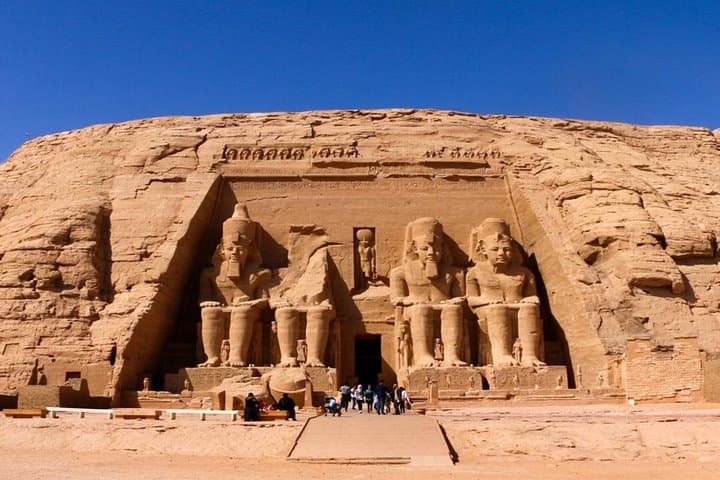


Dawn on the desert road feels deliberate: the coach slips south beneath a pale sky while Lake Nasser widens on the horizon, and the colossal faces of Ramesses II appear like a promise carved in stone. Arriving at Abu Simbel, the two rock-cut temples stare down the plain — the larger for Ramesses II, the smaller for Nefertari — their façades catching sun and wind that have shaped this landscape for millennia.
Dawn on the desert road feels deliberate: the coach slips south beneath a pale sky while Lake Nasser widens on the horizon, and the colossal faces of Ramesses II appear like a promise carved in stone. Arriving at Abu Simbel, the two rock-cut temples stare down the plain — the larger for Ramesses II, the smaller for Nefertari — their façades catching sun and wind that have shaped this landscape for millennia.
These temples date to the 13th century BCE and mark the height of New Kingdom ambition. In the 1960s they were moved, block by block, to higher ground during a UNESCO-led operation to save them from the rising waters of the newly formed lake. The sandstone here is soft but ancient; the engineering aligns chambers to sunlight and myth, while local Nubian culture and modern Egyptian stewardship shape visitor narratives.
Practical guidance: this is a full-day outing — expect about a three-hour drive each way from Aswan and roughly three hours on-site. The terrain at the temples is compacted gravel with steps and low inclines; shade is minimal. Guided commentary clarifies iconography and the relocation story, and entrance fees are usually included in organized tours.
Bring sun protection, a refillable water bottle, and sturdy shoes for walking on uneven ground. Plan for early starts to avoid midday heat and allow time to absorb the scale of the sculptures and the subtle alignments inside the temples.