THE ADVENTURE COLLECTIVE® · Independent discovery and booking for outdoor travel

A dayroad trip from Aswan to Abu Simbel brings you face-to-face with Ramses II’s mountain-carved temple — an 8-hour excursion that mixes archaeology, engineering history and desert light. Depart at dawn to beat the heat and catch the best views.
A dayroad trip from Aswan to Abu Simbel brings you face-to-face with Ramses II’s mountain-carved temple — an 8-hour excursion that mixes archaeology, engineering history and desert light. Depart at dawn to beat the heat and catch the best views.
Dawn breaks over the desert and the road south shimmers like a promise — three hours, roughly 280 km, of flat asphalt that opens onto the volcanic-face where Ramses II stares out in stone. The twin facades of Abu Simbel rise from the sand-plains and the edge of Lake Nasser; arriving feels like walking up to a carved mountain that kept its own calendar.
Verified experiences and guided adventures in the surrounding area.
Operated by Sueño Travel Egipto · Abu Simbel, Aswan Governorate
Dawn breaks over the desert and the road south shimmers like a promise — three hours, roughly 280 km, of flat asphalt that opens onto the volcanic-face where Ramses II stares out in stone. The twin facades of Abu Simbel rise from the sand-plains and the edge of Lake Nasser; arriving feels like walking up to a carved mountain that kept its own calendar.
The temples date to the 13th century BCE and celebrate Ramses II and the sun-god Amun. In the 1960s the entire complex was dismantled and moved to higher ground to save it from the Aswan High Dam’s rising waters, a modern engineering migration that preserved an ancient solar alignment — twice a year sunlight reaches the inner sanctuary.
Geology is obvious here: the monument is hewn from a sandstone cliff, smoothed and then painted, its proportions designed to be read from the plain. Local culture is Nubian and Egyptian — expect straightforward hospitality in Aswan and quieter rhythms at the site itself. Lake Nasser’s broad surface now edges the temple, pushing the horizon flat and blue.
Practicalities: plan a dawn departure to avoid peak heat and to maximize light for photography. The tour runs about eight hours total including drive time; the site has levelled approaches though surfaces can be uneven. Bring sun protection, a printed or mobile ticket and your passport details (required at booking). Bottled water and air-conditioned transport are commonly provided, but carry extra water and sensible walking shoes. Visitors with serious mobility, cardiac or pregnancy concerns should consult the operator in advance.
Approximately 3 hours each way by road (about 280 km), making the full tour roughly 8 hours door-to-door.
Photography is permitted in most exterior and interior areas, but follow guide instructions and avoid flash inside fragile spaces.
The inner sanctuary alignment happens twice a year (around late February and late October), when sunlight reaches the triangular inner chamber.
The tour lists wheelchair and stroller accessibility, but some steps and uneven ground may exist; contact the operator if you require special assistance.
Sueño Travel Egipto operates guided outdoor trips and adventures with an emphasis on safety, stewardship, and memorable experiences.
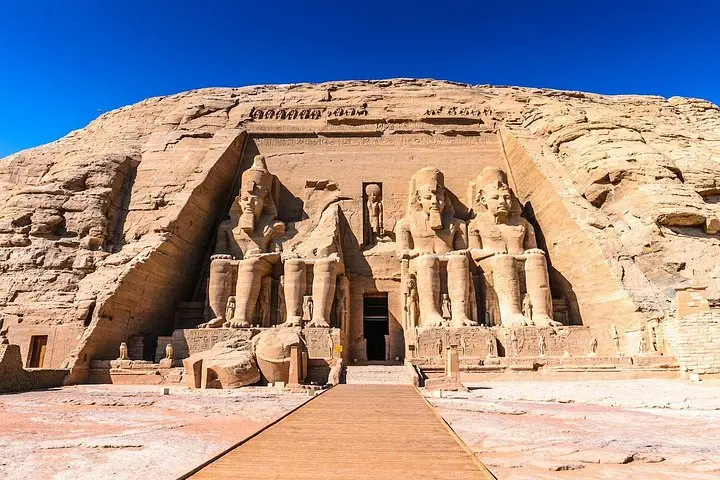
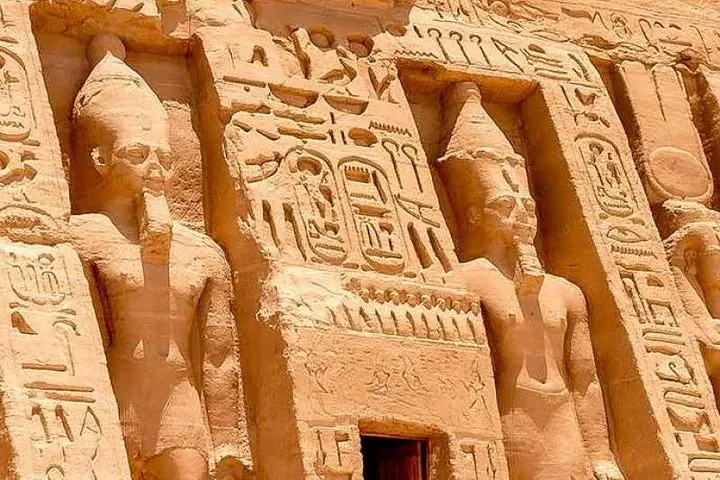
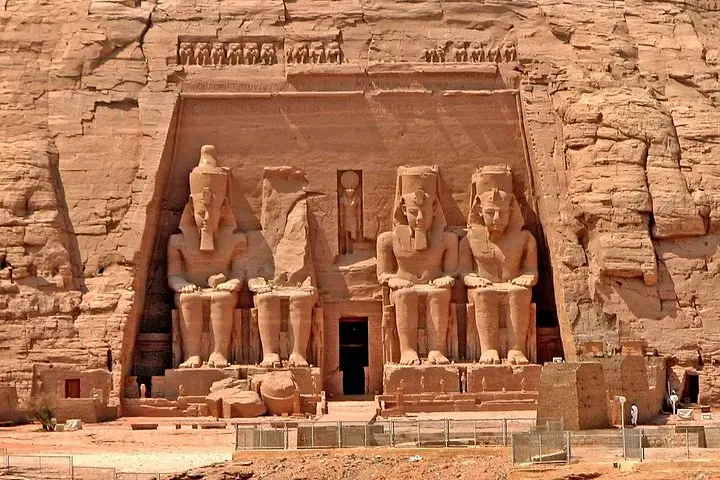
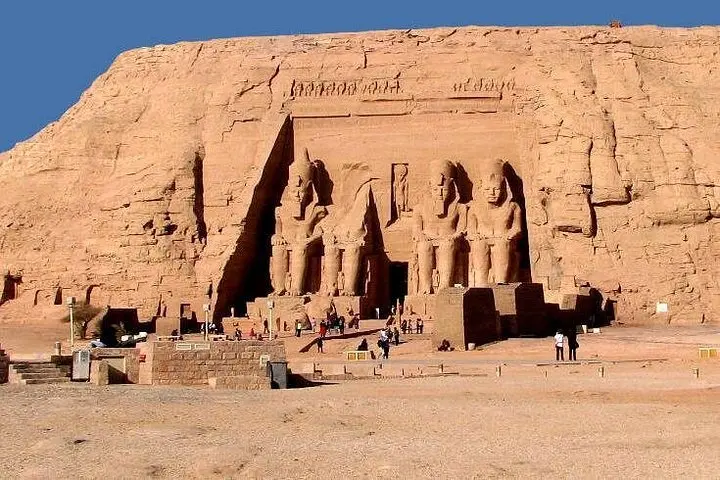
Dawn breaks over the desert and the road south shimmers like a promise — three hours, roughly 280 km, of flat asphalt that opens onto the volcanic-face where Ramses II stares out in stone. The twin facades of Abu Simbel rise from the sand-plains and the edge of Lake Nasser; arriving feels like walking up to a carved mountain that kept its own calendar.
Dawn breaks over the desert and the road south shimmers like a promise — three hours, roughly 280 km, of flat asphalt that opens onto the volcanic-face where Ramses II stares out in stone. The twin facades of Abu Simbel rise from the sand-plains and the edge of Lake Nasser; arriving feels like walking up to a carved mountain that kept its own calendar.
The temples date to the 13th century BCE and celebrate Ramses II and the sun-god Amun. In the 1960s the entire complex was dismantled and moved to higher ground to save it from the Aswan High Dam’s rising waters, a modern engineering migration that preserved an ancient solar alignment — twice a year sunlight reaches the inner sanctuary.
Geology is obvious here: the monument is hewn from a sandstone cliff, smoothed and then painted, its proportions designed to be read from the plain. Local culture is Nubian and Egyptian — expect straightforward hospitality in Aswan and quieter rhythms at the site itself. Lake Nasser’s broad surface now edges the temple, pushing the horizon flat and blue.
Practicalities: plan a dawn departure to avoid peak heat and to maximize light for photography. The tour runs about eight hours total including drive time; the site has levelled approaches though surfaces can be uneven. Bring sun protection, a printed or mobile ticket and your passport details (required at booking). Bottled water and air-conditioned transport are commonly provided, but carry extra water and sensible walking shoes. Visitors with serious mobility, cardiac or pregnancy concerns should consult the operator in advance.