THE ADVENTURE COLLECTIVE® · Independent discovery and booking for outdoor travel

Fly from Cairo to Aswan for a full-day private tour of Abu Simbel’s giant temples followed by a cultural stop in a Nubian village. Early start, long drives, and expert guides make this a compact way to see one of Egypt’s most dramatic archaeological sites.
Fly from Cairo to Aswan for a full-day private tour of Abu Simbel’s giant temples followed by a cultural stop in a Nubian village. Early start, long drives, and expert guides make this a compact way to see one of Egypt’s most dramatic archaeological sites.
You step out before dawn in Cairo, the city still soft with sleep, and ride toward the airport under a low, cooling sky. By 5:00 a.m. the plane lifts, and the desert unfurls below—sandy ridges, the Nile’s thin green ribbon—and by midmorning you’re moving south through a landscape that pushes the horizon flat.
Verified experiences and guided adventures in the surrounding area.
Operated by Egypt Best Day Tours · Abu Simbel, Aswan Governorate
You step out before dawn in Cairo, the city still soft with sleep, and ride toward the airport under a low, cooling sky. By 5:00 a.m. the plane lifts, and the desert unfurls below—sandy ridges, the Nile’s thin green ribbon—and by midmorning you’re moving south through a landscape that pushes the horizon flat.
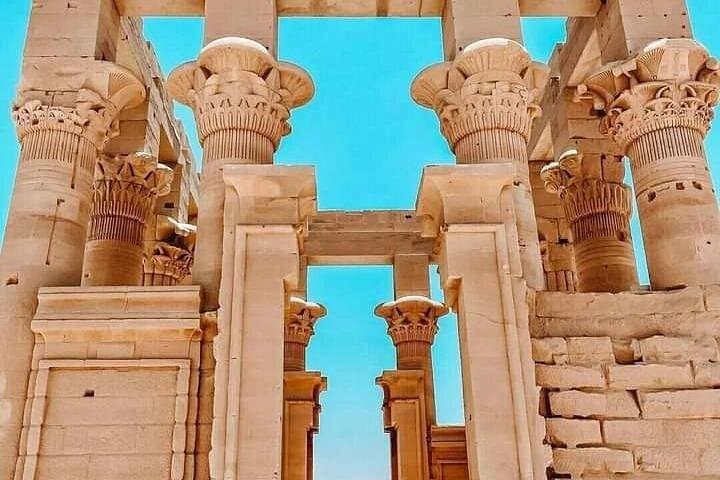
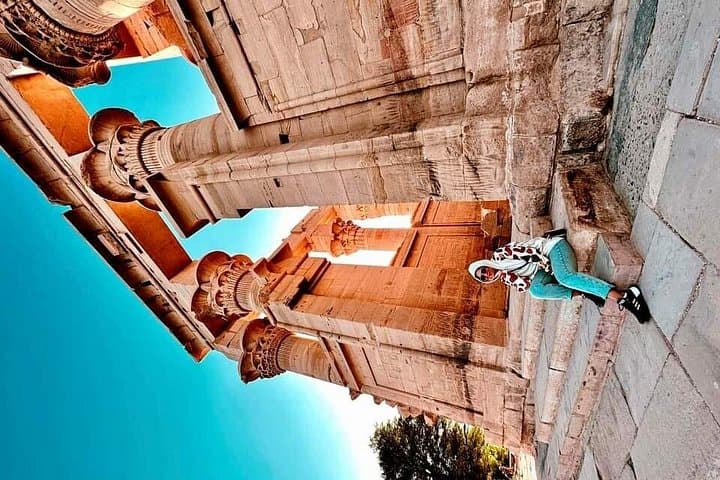
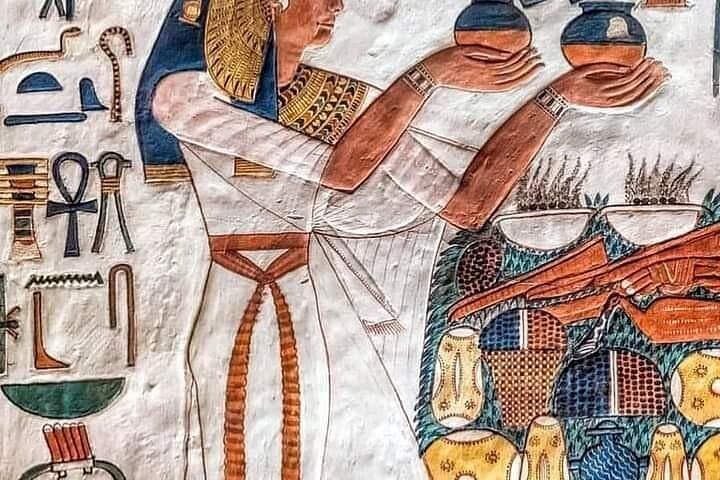
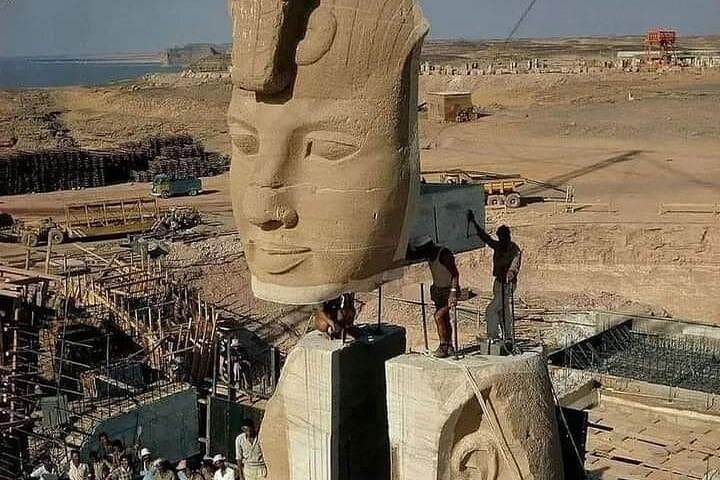
Abu Simbel’s two rock-cut temples arrive suddenly: colossal seated figures of Ramses II watch you approach, their faces carved to meet the sun. Built in the 13th century BCE during Egypt’s New Kingdom, the temples celebrate pharaonic might and divine order. In the 1960s, the whole complex was carefully cut from its original site and reconstructed on higher ground to escape the rising waters of the Aswan High Dam — a rare, large-scale rescue in modern conservation history.
Beyond archaeology, the day includes a visit to a Nubian village near Aswan. Painted houses, handwoven textiles and homemade meals reveal living traditions that contrast with the ancient stone. The Nile’s currents and the desert winds both seem to move with intent here, shaping livelihoods and landscapes.
Practical guidance: expect a long, well-paced day—pick-up around 3:00 a.m., flights to and from Aswan, about three hours’ drive each way to Abu Simbel, and guided time at each temple and in the village. Bring sun protection, refillable water, comfortable closed shoes for uneven surfaces and a camera with spare batteries. The site is wheelchair-accessible in many areas but surfaces can be uneven; plan for early starts, limited shade, and a full 16-hour day out of Cairo.
The full circuit is about 16 hours door-to-door with an early-morning flight to Aswan, a roughly three-hour drive to Abu Simbel each way, and guided stops at the temples and a Nubian village.
The itinerary notes admission is included for Abu Simbel; confirm with the operator at booking for any site or optional-fee variations.
Many areas are wheelchair-accessible and transport is provided, but some temple surfaces are uneven; contact the operator to discuss specific needs and assistance.
Lightweight, modest clothing that covers shoulders and knees is respectful; layers are useful for cooler early mornings and warm afternoons.
Egypt Best Day Tours operates guided outdoor trips and adventures with an emphasis on safety, stewardship, and memorable experiences.
You step out before dawn in Cairo, the city still soft with sleep, and ride toward the airport under a low, cooling sky. By 5:00 a.m. the plane lifts, and the desert unfurls below—sandy ridges, the Nile’s thin green ribbon—and by midmorning you’re moving south through a landscape that pushes the horizon flat.
You step out before dawn in Cairo, the city still soft with sleep, and ride toward the airport under a low, cooling sky. By 5:00 a.m. the plane lifts, and the desert unfurls below—sandy ridges, the Nile’s thin green ribbon—and by midmorning you’re moving south through a landscape that pushes the horizon flat.
Abu Simbel’s two rock-cut temples arrive suddenly: colossal seated figures of Ramses II watch you approach, their faces carved to meet the sun. Built in the 13th century BCE during Egypt’s New Kingdom, the temples celebrate pharaonic might and divine order. In the 1960s, the whole complex was carefully cut from its original site and reconstructed on higher ground to escape the rising waters of the Aswan High Dam — a rare, large-scale rescue in modern conservation history.
Beyond archaeology, the day includes a visit to a Nubian village near Aswan. Painted houses, handwoven textiles and homemade meals reveal living traditions that contrast with the ancient stone. The Nile’s currents and the desert winds both seem to move with intent here, shaping livelihoods and landscapes.
Practical guidance: expect a long, well-paced day—pick-up around 3:00 a.m., flights to and from Aswan, about three hours’ drive each way to Abu Simbel, and guided time at each temple and in the village. Bring sun protection, refillable water, comfortable closed shoes for uneven surfaces and a camera with spare batteries. The site is wheelchair-accessible in many areas but surfaces can be uneven; plan for early starts, limited shade, and a full 16-hour day out of Cairo.