THE ADVENTURE COLLECTIVE® · Independent discovery and booking for outdoor travel

A one-day loop from Cairo: fly to Aswan, drive to Abu Simbel, and tour Ramses II’s relocated temples on the shore of Lake Nasser. Early starts and sun-ready gear deliver the best experience.
A one-day loop from Cairo: fly to Aswan, drive to Abu Simbel, and tour Ramses II’s relocated temples on the shore of Lake Nasser. Early starts and sun-ready gear deliver the best experience.
The motor hum of the transfer vehicle fades as the temple facades rise out of the desert flat like a carved horizon. At Abu Simbel the stone is bright and abrupt; four colossal seated figures of Ramses II confront the heat and reflection off Lake Nasser, while the smaller temple to Nefertari shelters detailed reliefs that reward close reading.
Verified experiences and guided adventures in the surrounding area.
Operated by This Is Egypt Aswan · Abu Simbel, Aswan Governorate
The motor hum of the transfer vehicle fades as the temple facades rise out of the desert flat like a carved horizon. At Abu Simbel the stone is bright and abrupt; four colossal seated figures of Ramses II confront the heat and reflection off Lake Nasser, while the smaller temple to Nefertari shelters detailed reliefs that reward close reading.
Built in the 13th century BCE under Ramses II, both temples were long buried by sand until the 19th century and famously moved block-by-block in the 1960s when the Aswan High Dam created Lake Nasser. The geology here is hard sandstone and schist perched above an artificial shoreline, a human story written across millennia of Nile management and modern engineering.
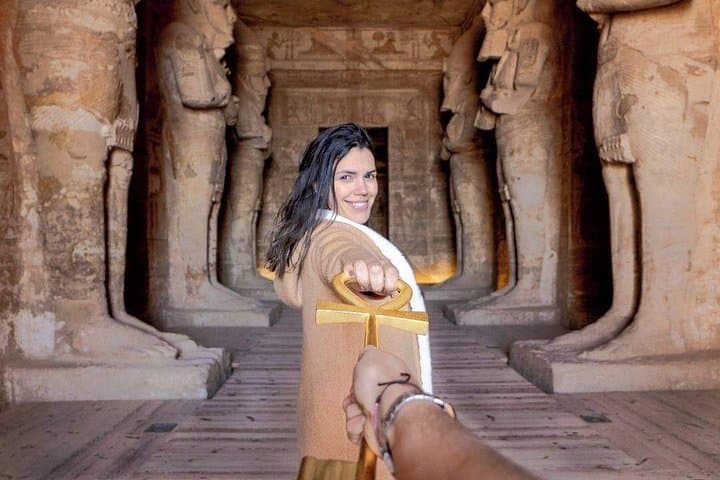
Culture arrives in the details: Egyptian hieroglyphs, solar alignments in the inner sanctum, and local Nubian communities in Aswan that still sell woven textiles and share oral histories with travelers. Expect the crowd rhythms of a major UNESCO site—quiet in early morning light, busy mid-day.
Practical guidance: the full day includes an early flight to Aswan, a two-hour drive each way to Abu Simbel, and several hours on-site. Wear sunproof layers, sturdy shoes for stepped approaches, and bring water; shade is limited. Photography is allowed but avoid flash inside the inner sanctum. Timing matters—arriving with the first light gives the best temperatures and photography. Allow a long layback for airport transfers; the itinerary is a long but highly rewarding single-day loop for travelers based in Cairo who want a concentrated encounter with New Kingdom Egypt.
The drive takes about 2 to 2.5 hours each way along a paved desert highway; expect roughly four to five hours round-trip driving time.
This tour typically includes domestic flights Cairo–Aswan–Cairo as part of the itinerary—confirm booking details for flight times and baggage limits.
The main temple forecourts are level, but there are steps into inner chambers; discuss mobility needs with the operator to arrange the smoothest transfers.
Photography is generally allowed in exterior and interior areas, but avoid using flash on delicate reliefs and follow posted restrictions.
This Is Egypt Aswan operates guided outdoor trips and adventures with an emphasis on safety, stewardship, and memorable experiences.
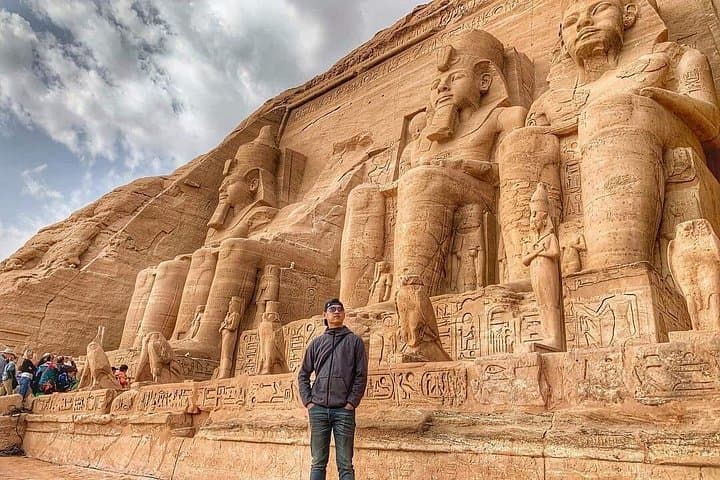
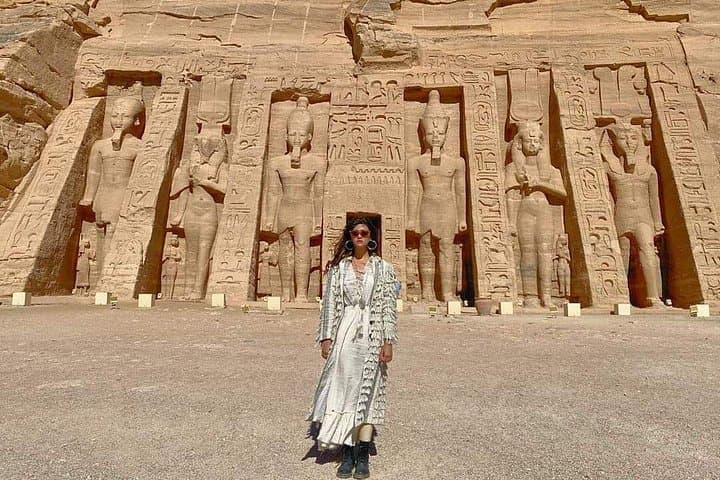
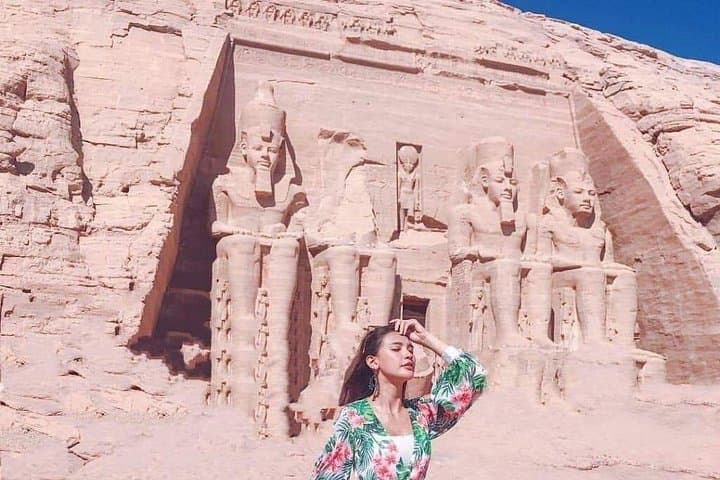
The motor hum of the transfer vehicle fades as the temple facades rise out of the desert flat like a carved horizon. At Abu Simbel the stone is bright and abrupt; four colossal seated figures of Ramses II confront the heat and reflection off Lake Nasser, while the smaller temple to Nefertari shelters detailed reliefs that reward close reading.
The motor hum of the transfer vehicle fades as the temple facades rise out of the desert flat like a carved horizon. At Abu Simbel the stone is bright and abrupt; four colossal seated figures of Ramses II confront the heat and reflection off Lake Nasser, while the smaller temple to Nefertari shelters detailed reliefs that reward close reading.
Built in the 13th century BCE under Ramses II, both temples were long buried by sand until the 19th century and famously moved block-by-block in the 1960s when the Aswan High Dam created Lake Nasser. The geology here is hard sandstone and schist perched above an artificial shoreline, a human story written across millennia of Nile management and modern engineering.
Culture arrives in the details: Egyptian hieroglyphs, solar alignments in the inner sanctum, and local Nubian communities in Aswan that still sell woven textiles and share oral histories with travelers. Expect the crowd rhythms of a major UNESCO site—quiet in early morning light, busy mid-day.
Practical guidance: the full day includes an early flight to Aswan, a two-hour drive each way to Abu Simbel, and several hours on-site. Wear sunproof layers, sturdy shoes for stepped approaches, and bring water; shade is limited. Photography is allowed but avoid flash inside the inner sanctum. Timing matters—arriving with the first light gives the best temperatures and photography. Allow a long layback for airport transfers; the itinerary is a long but highly rewarding single-day loop for travelers based in Cairo who want a concentrated encounter with New Kingdom Egypt.