THE ADVENTURE COLLECTIVE® · Independent discovery and booking for outdoor travel

A full-day private drive from Aswan brings you to Abu Simbel’s twin temples and the shores of Lake Nasser. Experience Ramses II’s sun-facing sanctuary with a local guide, included transfers, and reserved entry.
A full-day private drive from Aswan brings you to Abu Simbel’s twin temples and the shores of Lake Nasser. Experience Ramses II’s sun-facing sanctuary with a local guide, included transfers, and reserved entry.
Dawn breaks over the desert and the road south unfurls toward a cliff face carved into colossal stone. By midmorning the two great facades of Abu Simbel rise from the sand: four seated Ramses II statues staring east and a smaller companion temple honoring Nefertari. The drive from Aswan feels cinematic — Lake Nasser’s flat blue pressing against the horizon, the sun daring you to keep pace.
Verified experiences and guided adventures in the surrounding area.
Operated by CRUISE ERA · Abu Simbel, Aswan Governorate
Dawn breaks over the desert and the road south unfurls toward a cliff face carved into colossal stone. By midmorning the two great facades of Abu Simbel rise from the sand: four seated Ramses II statues staring east and a smaller companion temple honoring Nefertari. The drive from Aswan feels cinematic — Lake Nasser’s flat blue pressing against the horizon, the sun daring you to keep pace.
Carved in the New Kingdom’s heyday, the temples at Abu Simbel are cut directly into a sandstone bluff and oriented to catch the sun. In the 1960s UNESCO undertook one of archaeology’s largest rescue projects, lifting and reassembling the complex to save it from the rising waters of the Aswan High Dam. Geology here is plain and powerful: wind-polished sandstone, occasional chisel marks, and the broad man-made lake that now defines the coast.
Culturally the site speaks to imperial Egypt’s spectacle — colossal statuary, detailed reliefs of battle and deities, and the rare paired dedication to a king and his queen. Expect an efficient visit: about three hours at the monuments, bilingual guide commentary, and time to scan the shoreline for migratory birds.
Practical guidance: start early (cooler temperatures, clearer light), bring sun protection and at least 1–2 liters of water, wear closed-toe shoes for steps and uneven surfaces, and carry a charged camera with extra memory. Security and visitor facilities are in place; the site is largely paved but includes steps and short walks. The whole excursion returns to Aswan by late afternoon after roughly eight hours total.
Yes — the tour includes entrance fees, private air‑conditioned transfers, hotel pickup and drop‑off, and a professional English-speaking guide.
Expect roughly a 3‑hour drive each way in a private, air‑conditioned vehicle; the full excursion lasts about eight hours including time at the temples.
The site has wheelchair-accessible options and paved paths, but there are some steps and short distances; confirm vehicle and assistance needs when booking.
October through April offers milder temperatures and clearer skies; note the solar alignment into the inner sanctuary occurs around February 22 and October 22 each year.
CRUISE ERA operates guided outdoor trips and adventures with an emphasis on safety, stewardship, and memorable experiences.
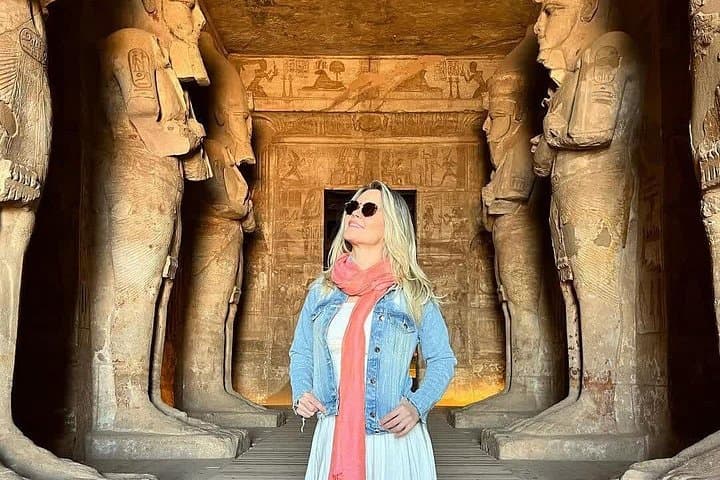
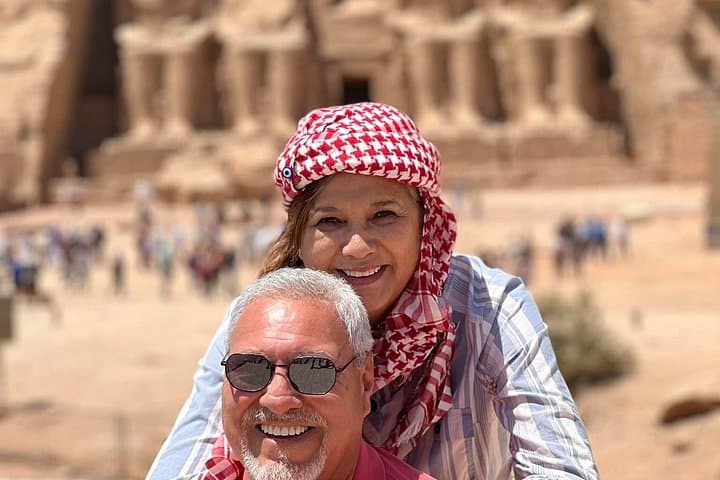
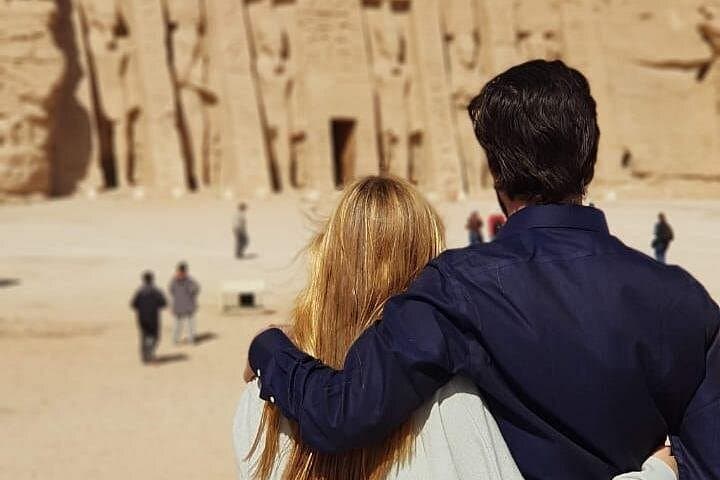
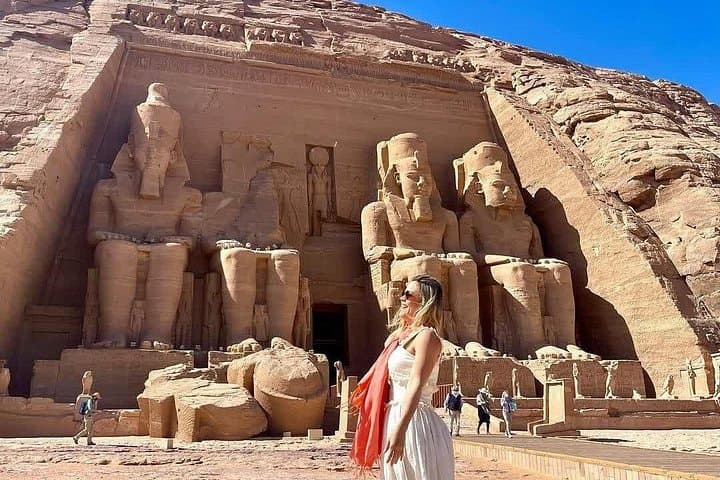
Dawn breaks over the desert and the road south unfurls toward a cliff face carved into colossal stone. By midmorning the two great facades of Abu Simbel rise from the sand: four seated Ramses II statues staring east and a smaller companion temple honoring Nefertari. The drive from Aswan feels cinematic — Lake Nasser’s flat blue pressing against the horizon, the sun daring you to keep pace.
Dawn breaks over the desert and the road south unfurls toward a cliff face carved into colossal stone. By midmorning the two great facades of Abu Simbel rise from the sand: four seated Ramses II statues staring east and a smaller companion temple honoring Nefertari. The drive from Aswan feels cinematic — Lake Nasser’s flat blue pressing against the horizon, the sun daring you to keep pace.
Carved in the New Kingdom’s heyday, the temples at Abu Simbel are cut directly into a sandstone bluff and oriented to catch the sun. In the 1960s UNESCO undertook one of archaeology’s largest rescue projects, lifting and reassembling the complex to save it from the rising waters of the Aswan High Dam. Geology here is plain and powerful: wind-polished sandstone, occasional chisel marks, and the broad man-made lake that now defines the coast.
Culturally the site speaks to imperial Egypt’s spectacle — colossal statuary, detailed reliefs of battle and deities, and the rare paired dedication to a king and his queen. Expect an efficient visit: about three hours at the monuments, bilingual guide commentary, and time to scan the shoreline for migratory birds.
Practical guidance: start early (cooler temperatures, clearer light), bring sun protection and at least 1–2 liters of water, wear closed-toe shoes for steps and uneven surfaces, and carry a charged camera with extra memory. Security and visitor facilities are in place; the site is largely paved but includes steps and short walks. The whole excursion returns to Aswan by late afternoon after roughly eight hours total.