THE ADVENTURE COLLECTIVE® · Independent discovery and booking for outdoor travel

Experience the rare Sun Festival alignment at Abu Simbel on a full-day road trip from Aswan. This guided tour combines a long scenic drive, expert commentary, and close-up views of Ramesses II’s sunlit temple.
Experience the rare Sun Festival alignment at Abu Simbel on a full-day road trip from Aswan. This guided tour combines a long scenic drive, expert commentary, and close-up views of Ramesses II’s sunlit temple.
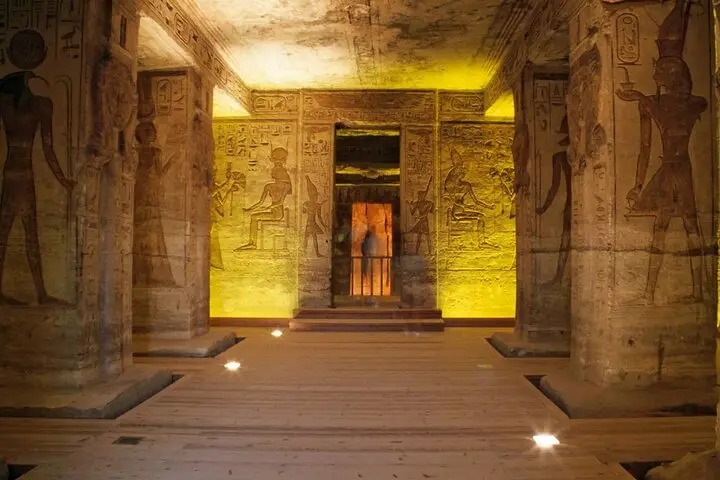
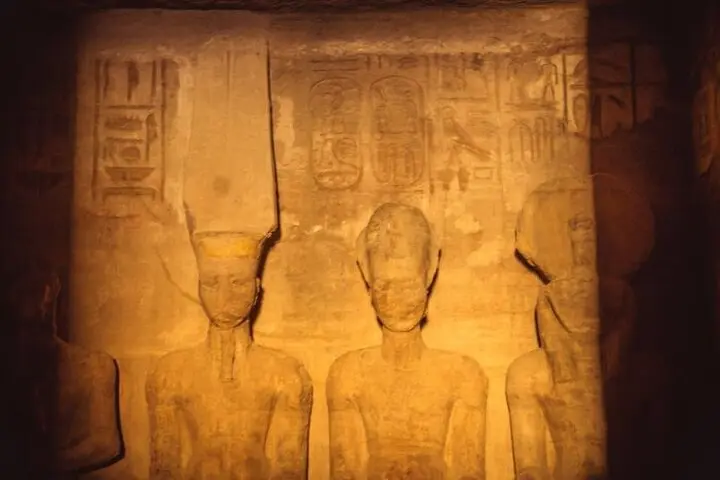
You arrive before dawn and the desert is already warm—an ocean of ochre that seems to push the horizon toward the colossal stone faces. By the time you step out of the air-conditioned vehicle, light is already reaching the stern gaze of Ramesses II; during the Sun Festival it pushes through the temple’s axis and finds the inner statues as if someone had flipped a switch.
Verified experiences and guided adventures in the surrounding area.
Operated by NORTH AFRICAN SHIPPING AND TOURISM COMPANY (NASCO TOURS) · Abu Simbel, Aswan Governorate
You arrive before dawn and the desert is already warm—an ocean of ochre that seems to push the horizon toward the colossal stone faces. By the time you step out of the air-conditioned vehicle, light is already reaching the stern gaze of Ramesses II; during the Sun Festival it pushes through the temple’s axis and finds the inner statues as if someone had flipped a switch.
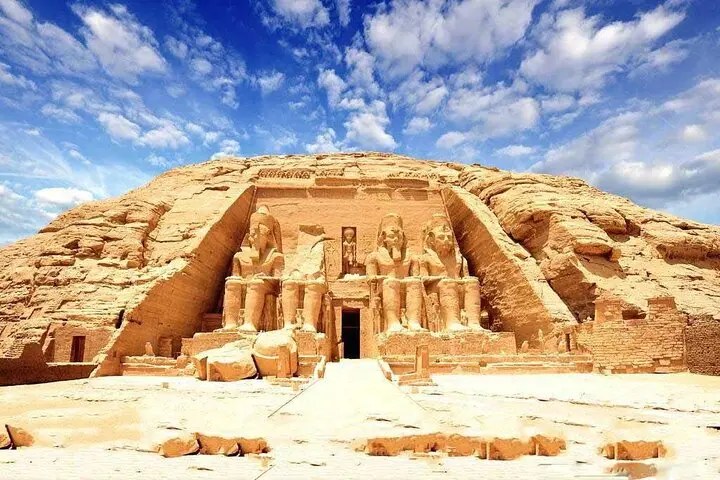
Carved around 1264 BC, Abu Simbel was set into sandstone cliffs on Egypt’s far southern frontier. Its façades of four seated colossi and the fallen fragmented statue tell a story of imperial power and seismic fragility. In the 1960s the whole complex was cut from its bedrock and moved to higher ground to escape Lake Nasser—a feat of engineering that kept the solar alignment and the temple’s presence intact.
Local culture in Aswan Governorate mixes Nubian traditions with Nile trade history; drivers, guides, and small vendors are part of the pilgrimage rhythm to this site. Geologically the temple sits on consolidated sandstone; the flat desert around it throws back heat and light, which is why timing matters.
Practical guidance: expect a full 9-hour day with roughly 3.5 hours of driving each way and about two hours at the site. Comfortable, modest clothing, a wide-brim hat, and plenty of water are essential. The tour often includes entrance and a specialized guide; bring cash for tips and small purchases. Arrive early for the best light, and move deliberately around the site—climbing is prohibited and shade is scarce.
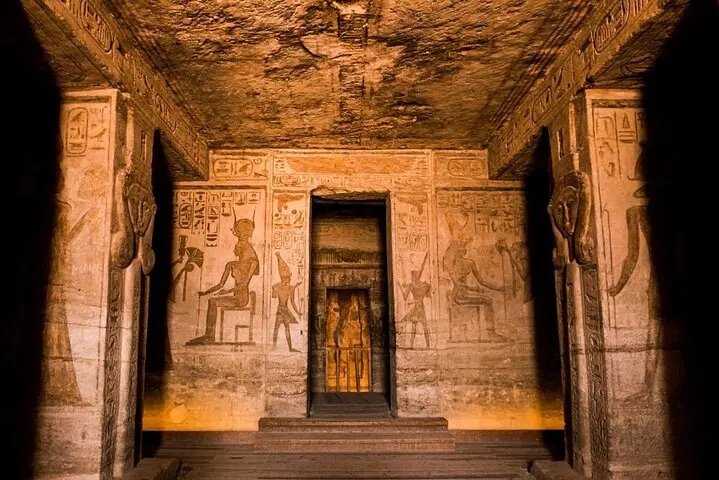
The solar alignment traditionally occurs twice yearly—around February 22 and October 22—when the sun penetrates the sanctuary to illuminate the inner statues; exact dates can vary by a day or two.
This tour typically includes the site admission; check your booking confirmation for specifics and any seasonal changes.
Plan for approximately 3–4 hours each way (about 210 minutes listed per travel segment), making the trip a full-day excursion of around 9 hours.
The temple area has level walkways but limited shade and uneven stone at points; travelers with serious mobility restrictions should consult the operator in advance for assistance options.
NORTH AFRICAN SHIPPING AND TOURISM COMPANY (NASCO TOURS) operates guided outdoor trips and adventures with an emphasis on safety, stewardship, and memorable experiences.
You arrive before dawn and the desert is already warm—an ocean of ochre that seems to push the horizon toward the colossal stone faces. By the time you step out of the air-conditioned vehicle, light is already reaching the stern gaze of Ramesses II; during the Sun Festival it pushes through the temple’s axis and finds the inner statues as if someone had flipped a switch.
You arrive before dawn and the desert is already warm—an ocean of ochre that seems to push the horizon toward the colossal stone faces. By the time you step out of the air-conditioned vehicle, light is already reaching the stern gaze of Ramesses II; during the Sun Festival it pushes through the temple’s axis and finds the inner statues as if someone had flipped a switch.
Carved around 1264 BC, Abu Simbel was set into sandstone cliffs on Egypt’s far southern frontier. Its façades of four seated colossi and the fallen fragmented statue tell a story of imperial power and seismic fragility. In the 1960s the whole complex was cut from its bedrock and moved to higher ground to escape Lake Nasser—a feat of engineering that kept the solar alignment and the temple’s presence intact.
Local culture in Aswan Governorate mixes Nubian traditions with Nile trade history; drivers, guides, and small vendors are part of the pilgrimage rhythm to this site. Geologically the temple sits on consolidated sandstone; the flat desert around it throws back heat and light, which is why timing matters.
Practical guidance: expect a full 9-hour day with roughly 3.5 hours of driving each way and about two hours at the site. Comfortable, modest clothing, a wide-brim hat, and plenty of water are essential. The tour often includes entrance and a specialized guide; bring cash for tips and small purchases. Arrive early for the best light, and move deliberately around the site—climbing is prohibited and shade is scarce.