THE ADVENTURE COLLECTIVE® · Independent discovery and booking for outdoor travel

Spend a night on Acatenango’s ridge watching Fuego punctuate the sky with eruptions. This two-day, community-run hike pairs a hard uphill push with an unforgettable volcanic campsite and sunrise summit.
Spend a night on Acatenango’s ridge watching Fuego punctuate the sky with eruptions. This two-day, community-run hike pairs a hard uphill push with an unforgettable volcanic campsite and sunrise summit.
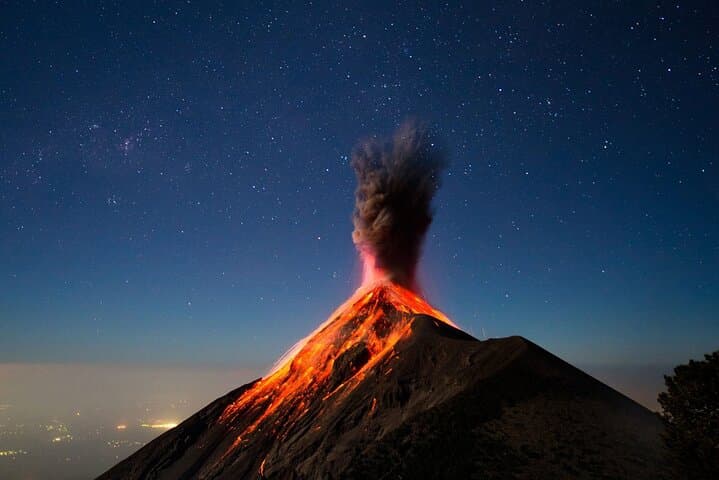
You stand on a shoulder of volcanic rock as wind pushes cold air up from the valley and dark smoke from Fuego throws flying sparks into the night — the volcano keeps its own schedule and you watch it work.
Verified experiences and guided adventures in the surrounding area.
Operated by CA Travelers · Antigua Guatemala, Sacatepéquez
You stand on a shoulder of volcanic rock as wind pushes cold air up from the valley and dark smoke from Fuego throws flying sparks into the night — the volcano keeps its own schedule and you watch it work.
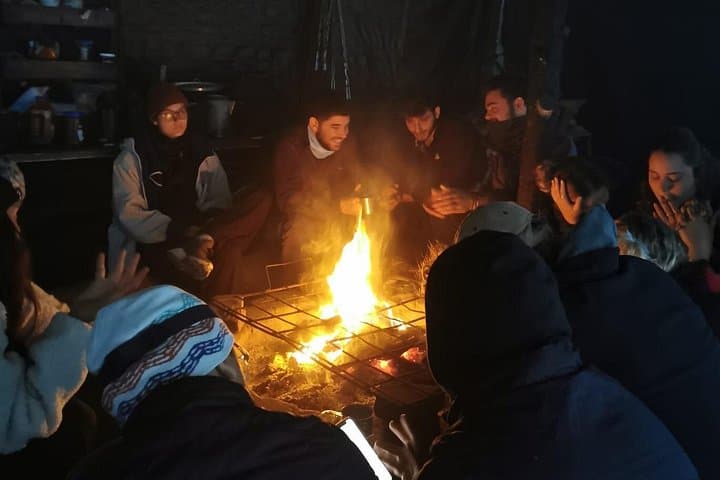
Acatenango is an andesitic stratovolcano that shares a ridge with the persistently active Fuego. The twin peaks are products of the Central American volcanic arc; their slopes tell a recent geological story of lava flows, ash layers and fast-changing ridgelines. Local families from San Jose Calderas run guide cooperatives (CAT), and the overnight camps are run in collaboration with the community — expect shared cabins and local meals like hot chocolate made from real cacao.
Culturally the route threads rural highland farmland, coffee plots and stone trails that have seen foot traffic for generations. At night the exposed campsite gives clear views of Fuego’s eruptions — the ash and incandescent material punctuate the dark and the air smells faintly of sulfur.
Practical side: the hike is steep and loose in sections; you’ll gain roughly 1,200–1,500 meters over 6–8 hours on day one and summit before sunrise on day two with a shorter, steeper push. Temperatures swing from near-freezing at camp to mild in the valley. Bring layers, a headlamp, 3 liters of water, and a warm sleeping bag; guides supply basic camping gear and a 3-liter CamelBak.
Plan for variable weather — the dry season (Nov–Apr) gives the most reliable views. Respect campsite rules, pack out waste, and give Fuego space: it is active and unpredictable.
You should be comfortable hiking 6–8 hours uphill with a daypack and be capable of a 1.5-hour steep summit push at altitude; prior multi-hour hikes are strongly recommended.
The tour supplies preset camping gear, sleeping bag liner, winter jackets, gloves and a 3-liter CamelBak; confirm specifics at booking.
Fuego is frequently active and commonly produces visible explosions and incandescent material at night, but volcanic activity varies and sightings cannot be guaranteed.
Night temperatures often approach freezing (around 0–5°C); a sleeping bag rated to -6°C and warm layers are recommended.
CA Travelers operates guided outdoor trips and adventures with an emphasis on safety, stewardship, and memorable experiences.
You stand on a shoulder of volcanic rock as wind pushes cold air up from the valley and dark smoke from Fuego throws flying sparks into the night — the volcano keeps its own schedule and you watch it work.
You stand on a shoulder of volcanic rock as wind pushes cold air up from the valley and dark smoke from Fuego throws flying sparks into the night — the volcano keeps its own schedule and you watch it work.
Acatenango is an andesitic stratovolcano that shares a ridge with the persistently active Fuego. The twin peaks are products of the Central American volcanic arc; their slopes tell a recent geological story of lava flows, ash layers and fast-changing ridgelines. Local families from San Jose Calderas run guide cooperatives (CAT), and the overnight camps are run in collaboration with the community — expect shared cabins and local meals like hot chocolate made from real cacao.
Culturally the route threads rural highland farmland, coffee plots and stone trails that have seen foot traffic for generations. At night the exposed campsite gives clear views of Fuego’s eruptions — the ash and incandescent material punctuate the dark and the air smells faintly of sulfur.
Practical side: the hike is steep and loose in sections; you’ll gain roughly 1,200–1,500 meters over 6–8 hours on day one and summit before sunrise on day two with a shorter, steeper push. Temperatures swing from near-freezing at camp to mild in the valley. Bring layers, a headlamp, 3 liters of water, and a warm sleeping bag; guides supply basic camping gear and a 3-liter CamelBak.
Plan for variable weather — the dry season (Nov–Apr) gives the most reliable views. Respect campsite rules, pack out waste, and give Fuego space: it is active and unpredictable.