THE ADVENTURE COLLECTIVE® · Independent discovery and booking for outdoor travel

Spend a night on Acatenango’s flank and watch Volcán Fuego’s eruptions light the sky. This two-day ascent combines steep high-altitude hiking, a private campsite, and a summit push at sunrise.
Spend a night on Acatenango’s flank and watch Volcán Fuego’s eruptions light the sky. This two-day ascent combines steep high-altitude hiking, a private campsite, and a summit push at sunrise.
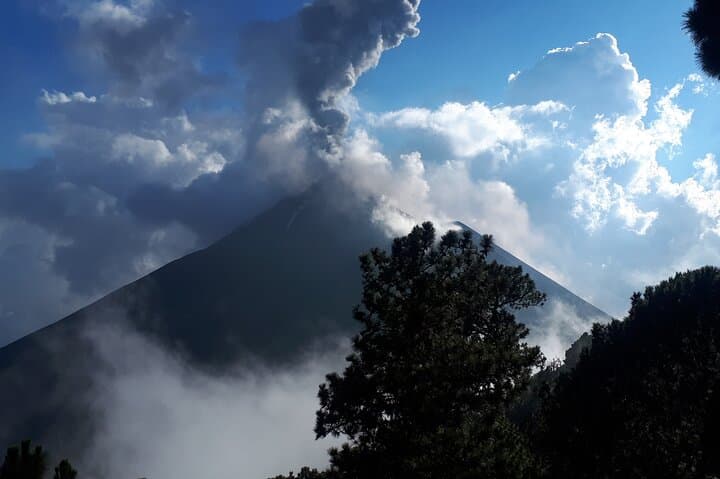
A raw wind pushes across the ridge as you step from Jeep into the thin, electric air of La Soledad. The trail climbs immediately—switchbacks chiseling through fields, then into a patchwork of microclimates: warm scrub, pine-scented slopes, and finally the wind-swept alpine fringe where the camp is bench-cut into the volcano’s flank. At night, Volcán Fuego throws sudden, living sparks across the sky; the earth seems to exhale with each eruption.
Verified experiences and guided adventures in the surrounding area.
Operated by OLD TOWN OUTFITTERS · La Soledad, Sacatepéquez
A raw wind pushes across the ridge as you step from Jeep into the thin, electric air of La Soledad. The trail climbs immediately—switchbacks chiseling through fields, then into a patchwork of microclimates: warm scrub, pine-scented slopes, and finally the wind-swept alpine fringe where the camp is bench-cut into the volcano’s flank. At night, Volcán Fuego throws sudden, living sparks across the sky; the earth seems to exhale with each eruption.
Acatenango’s twin peaks were built by repeated layers of ash and lava over hundreds of thousands of years, a record of Central America’s fiery geology. The ridge has long been used by local highland communities for grazing and seasonal crops; guides from nearby villages now lead treks that connect visitors to that mountain culture. You’ll pass terraces and stone-built paths that hint at generations of human movement on these slopes.
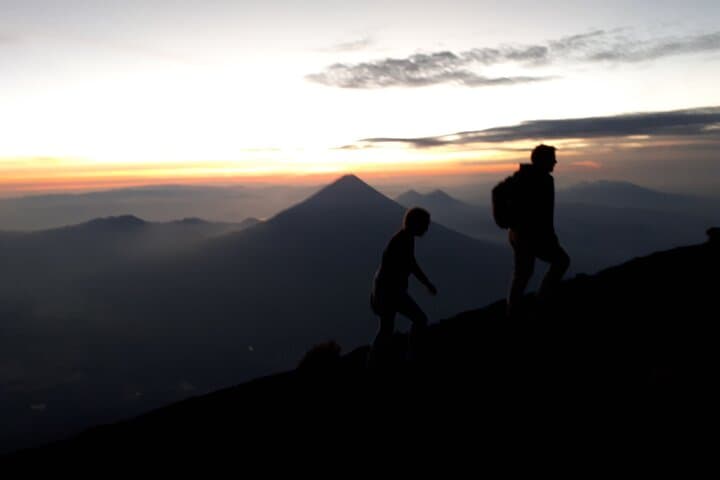
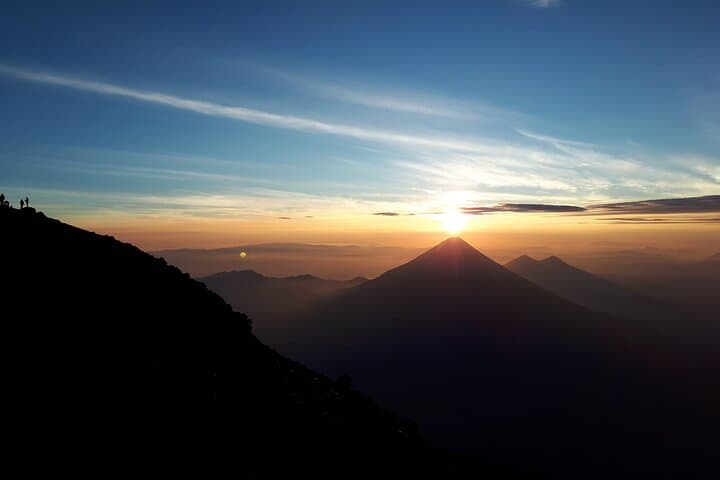
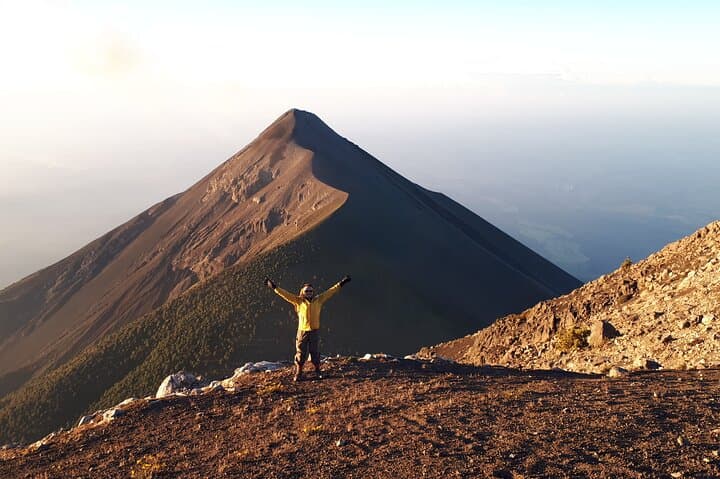
Expect a demanding two-day route: 5–6 hours to basecamp (about 3,750 m), a cold night with panoramic views, then a steep pre-dawn push to the summit for sunrise and the last morning eruptions of Fuego. Terrain shifts quickly—packed volcanic scree, exposed ridgelines, and narrow boot-packed trails—so good footwear and layered insulation matter more than speed.
Practical notes: hydrate well before the climb, eat carbohydrate-rich meals, and plan for altitude-related fatigue. Guides provide tents, sleeping bags rated to ~-6°C, meals, and transport from Antigua. Leave no trace: camp fires aren’t permitted; pack out what you pack in.
Day 1 is roughly 5–6 hours to basecamp; Day 2 is a 2–3 hour pre-dawn summit push plus descent back to the trailhead.
Yes—guides typically provide a three-person tent, sleeping bag rated to about -6°C, and a sleeping pad as described in the itinerary.
Basecamp is near 3,750 m and the summit higher; altitude sickness is possible—acclimatize, hydrate, and inform guides of any symptoms immediately.
Fit beginners with prior day-hiking experience may manage it, but the trek is strenuous and recommended for those in very good physical condition.
OLD TOWN OUTFITTERS operates guided outdoor trips and adventures with an emphasis on safety, stewardship, and memorable experiences.
A raw wind pushes across the ridge as you step from Jeep into the thin, electric air of La Soledad. The trail climbs immediately—switchbacks chiseling through fields, then into a patchwork of microclimates: warm scrub, pine-scented slopes, and finally the wind-swept alpine fringe where the camp is bench-cut into the volcano’s flank. At night, Volcán Fuego throws sudden, living sparks across the sky; the earth seems to exhale with each eruption.
A raw wind pushes across the ridge as you step from Jeep into the thin, electric air of La Soledad. The trail climbs immediately—switchbacks chiseling through fields, then into a patchwork of microclimates: warm scrub, pine-scented slopes, and finally the wind-swept alpine fringe where the camp is bench-cut into the volcano’s flank. At night, Volcán Fuego throws sudden, living sparks across the sky; the earth seems to exhale with each eruption.
Acatenango’s twin peaks were built by repeated layers of ash and lava over hundreds of thousands of years, a record of Central America’s fiery geology. The ridge has long been used by local highland communities for grazing and seasonal crops; guides from nearby villages now lead treks that connect visitors to that mountain culture. You’ll pass terraces and stone-built paths that hint at generations of human movement on these slopes.
Expect a demanding two-day route: 5–6 hours to basecamp (about 3,750 m), a cold night with panoramic views, then a steep pre-dawn push to the summit for sunrise and the last morning eruptions of Fuego. Terrain shifts quickly—packed volcanic scree, exposed ridgelines, and narrow boot-packed trails—so good footwear and layered insulation matter more than speed.
Practical notes: hydrate well before the climb, eat carbohydrate-rich meals, and plan for altitude-related fatigue. Guides provide tents, sleeping bags rated to ~-6°C, meals, and transport from Antigua. Leave no trace: camp fires aren’t permitted; pack out what you pack in.