THE ADVENTURE COLLECTIVE® · Independent discovery and booking for outdoor travel

A wheelchair‑friendly coach tour on Crete’s Akrotiri peninsula: panoramic Venizelos graves, the cinematic beach of Stavros, and the 17th‑century Agia Triada Monastery with olive‑oil tasting. Practical, short walks and onboard amenities make it ideal for accessible half‑day exploration.
A wheelchair‑friendly coach tour on Crete’s Akrotiri peninsula: panoramic Venizelos graves, the cinematic beach of Stavros, and the 17th‑century Agia Triada Monastery with olive‑oil tasting. Practical, short walks and onboard amenities make it ideal for accessible half‑day exploration.
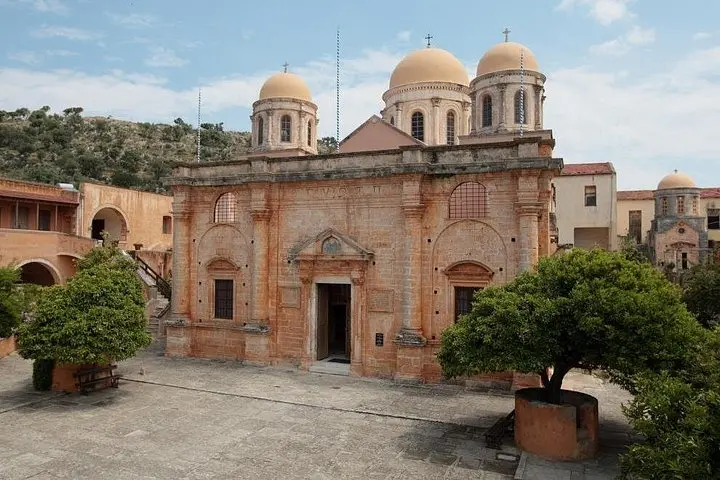
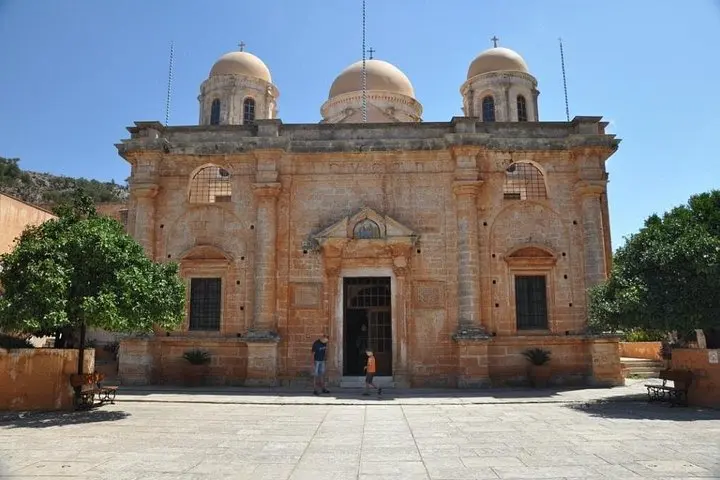
You step from an air-conditioned mini‑bus onto the low limestone plateau of Akrotiri and the sea immediately folds toward the horizon. The day moves at a gentle pace: a short climb to the Venizelos graves for a sweeping view over Chania, the white sand of Stavros beach where the Syrtaki was filmed, and the sober stone of Agia Triada Monastery with its cypress shadows.
Verified experiences and guided adventures in the surrounding area.
Operated by 7plan · Chania, Crete
You step from an air-conditioned mini‑bus onto the low limestone plateau of Akrotiri and the sea immediately folds toward the horizon. The day moves at a gentle pace: a short climb to the Venizelos graves for a sweeping view over Chania, the white sand of Stavros beach where the Syrtaki was filmed, and the sober stone of Agia Triada Monastery with its cypress shadows.
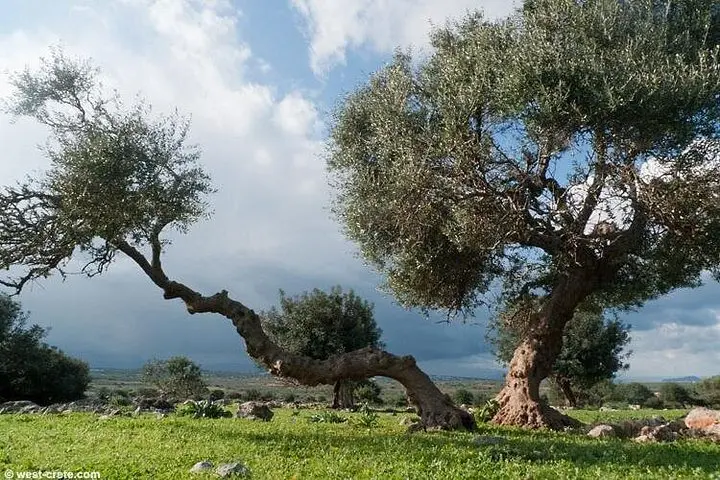
This route threads modern Cretan life with Ottoman and Venetian layers—the monastery dates to the 17th century and stores manuscripts and icons that map religious and local literacy. Geologically, Akrotiri is a raised coastal shelf of limestone and marl; paths are mostly paved or compact earth, with rocky shorelines at Stavros. Culturally, the area balances tourism with olive groves and small-scale viticulture—the monastery still presses olive oil and produces wine, a direct link to island agriculture.
Practical guidance: tours last roughly 4–6 hours with timed stops at three sites; most surfaces and the mini‑bus are wheelchair accessible but confirm space for two wheelchairs or one mobility scooter at booking. Bring sun protection, a light layer for coastal wind, and modest clothing for the monastery. Expect some short walks and steps at viewpoints; banks, cafes and small markets are available in Stavros for snacks. Photography is welcome but observe signage in sacred spaces and keep noise low during services. Hydrate between stops—the company provides bottled water and onboard Wi‑Fi for maps and translation. This tour is a practical, inclusive way to experience Chania’s coastline, history, and living olive‑oil traditions in a single accessible day out.
The mini‑bus and listed sites indicate wheelchair accessibility and the operator can carry two wheelchairs or one mobility scooter—confirm at booking to secure space.
Typical stops are about 60 minutes for the Venizelos graves viewpoint, 120 minutes at Stavros beach, and 120 minutes at Agia Triada Monastery, fitting into a 4–6 hour schedule.
The itinerary notes admission to the monastery site is included; tastings or purchases (olive oil, wine) are usually extra and available at the monastery shop.
The tour offers private transfers from Chania-area pickup points; confirm your pickup location at booking and allow the operator up to 48 hours to finalize confirmation.
7plan operates guided outdoor trips and adventures with an emphasis on safety, stewardship, and memorable experiences.
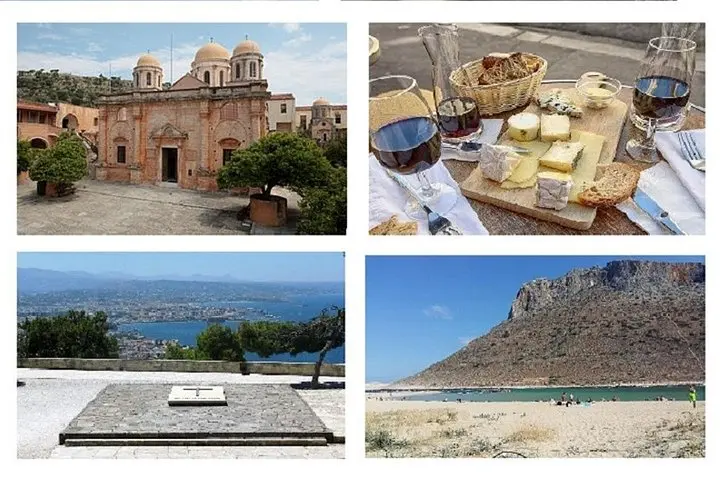
You step from an air-conditioned mini‑bus onto the low limestone plateau of Akrotiri and the sea immediately folds toward the horizon. The day moves at a gentle pace: a short climb to the Venizelos graves for a sweeping view over Chania, the white sand of Stavros beach where the Syrtaki was filmed, and the sober stone of Agia Triada Monastery with its cypress shadows.
You step from an air-conditioned mini‑bus onto the low limestone plateau of Akrotiri and the sea immediately folds toward the horizon. The day moves at a gentle pace: a short climb to the Venizelos graves for a sweeping view over Chania, the white sand of Stavros beach where the Syrtaki was filmed, and the sober stone of Agia Triada Monastery with its cypress shadows.
This route threads modern Cretan life with Ottoman and Venetian layers—the monastery dates to the 17th century and stores manuscripts and icons that map religious and local literacy. Geologically, Akrotiri is a raised coastal shelf of limestone and marl; paths are mostly paved or compact earth, with rocky shorelines at Stavros. Culturally, the area balances tourism with olive groves and small-scale viticulture—the monastery still presses olive oil and produces wine, a direct link to island agriculture.
Practical guidance: tours last roughly 4–6 hours with timed stops at three sites; most surfaces and the mini‑bus are wheelchair accessible but confirm space for two wheelchairs or one mobility scooter at booking. Bring sun protection, a light layer for coastal wind, and modest clothing for the monastery. Expect some short walks and steps at viewpoints; banks, cafes and small markets are available in Stavros for snacks. Photography is welcome but observe signage in sacred spaces and keep noise low during services. Hydrate between stops—the company provides bottled water and onboard Wi‑Fi for maps and translation. This tour is a practical, inclusive way to experience Chania’s coastline, history, and living olive‑oil traditions in a single accessible day out.