THE ADVENTURE COLLECTIVE® · Independent discovery and booking for outdoor travel

Experience Lanzarote’s underwater world from a water-adapted wheelchair with guided Sea Trek and assisted diving. This accessible 3‑hour session pairs experienced instructors with specialized gear to bring non-swimmers and wheelchair users face‑to‑face with marine life.
Experience Lanzarote’s underwater world from a water-adapted wheelchair with guided Sea Trek and assisted diving. This accessible 3‑hour session pairs experienced instructors with specialized gear to bring non-swimmers and wheelchair users face‑to‑face with marine life.
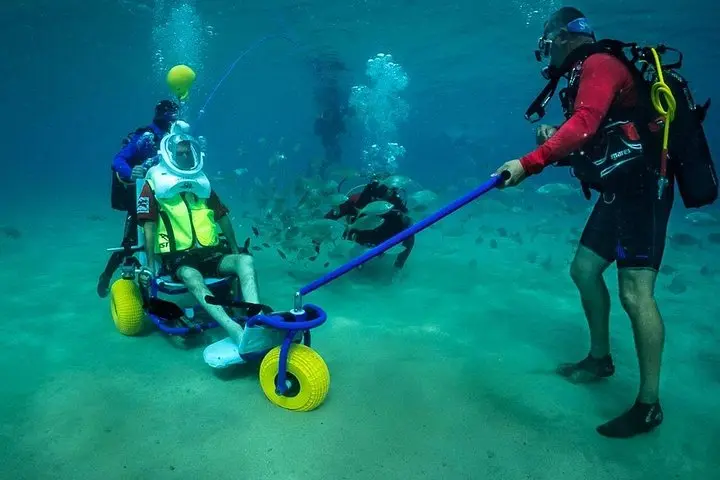
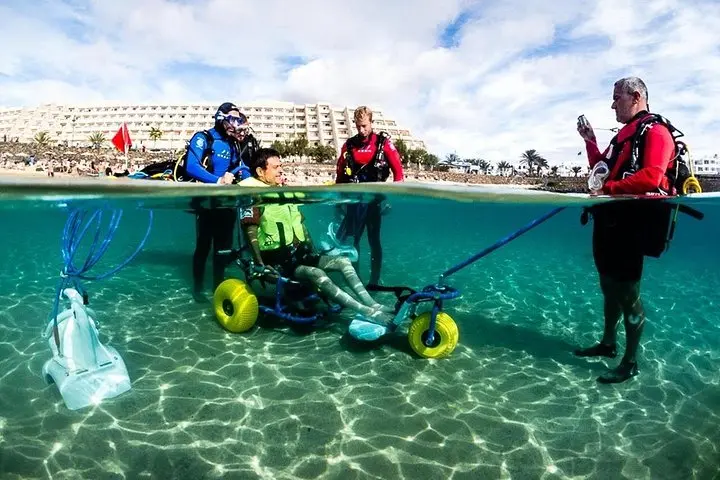
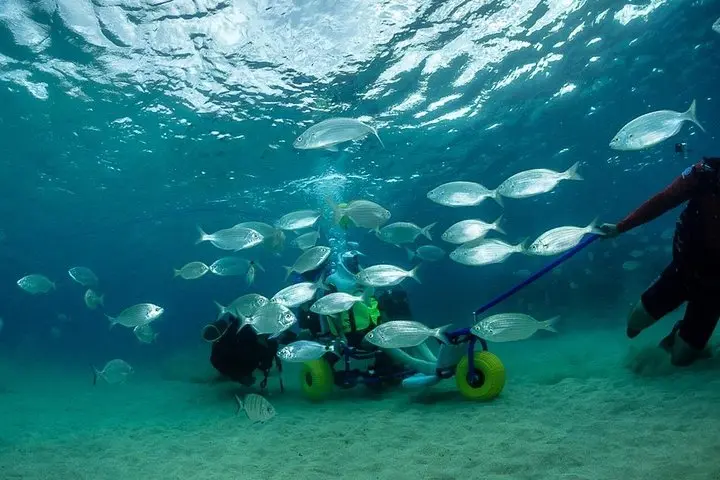
You step off the jetty and the Atlantic pulls at your attention—cool, blue and immediate—while a water-adapted wheelchair waits like a small craft of its own. Instructors secure a helmet or mask, check straps and signals, and guide you down a shallow entry where the sea takes over, light mottling the seafloor and fish darting in the current.
Verified experiences and guided adventures in the surrounding area.
Operated by Native Diving Lanzarote · Puerto del Carmen, Las Palmas
You step off the jetty and the Atlantic pulls at your attention—cool, blue and immediate—while a water-adapted wheelchair waits like a small craft of its own. Instructors secure a helmet or mask, check straps and signals, and guide you down a shallow entry where the sea takes over, light mottling the seafloor and fish darting in the current.
Lanzarote’s coastline carries a recent geological story: volcanic flows from the 18th century sculpted black rock coves and reefs that now shelter marine life. The island’s human story intersects with art and conservation—César Manrique shaped much of the modern aesthetic and local efforts protect the marine environment for future visitors.
Culturally, beaches here are practical meeting places: fishermen, families and divers share space, and the instructors work with local dive-school protocols that prioritize safety and accessibility. Expect to see scrubby volcanic shorelines give way to sheltered bays where seagrass and rocky outcrops concentrate fish.
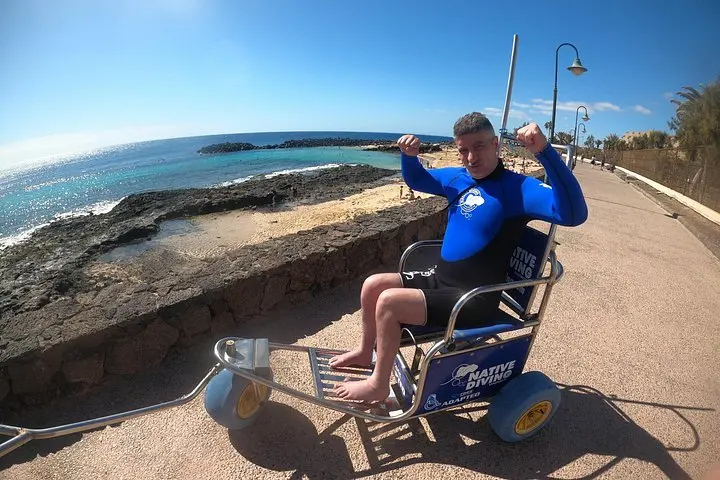
Practically, the 3‑hour session includes equipment fitting (helmet, wetsuit, underwater wheelchair), a short briefing, and guided sea-trek or assisted scuba segments led by three experienced instructors. It’s designed for wheelchair users and people with limited mobility; no advanced diving certification is required for sea-trek. Not recommended for pregnant travelers or those with serious cardiovascular issues.
Plan for calm-weather days, arrive with swimwear under clothes, and bring a support person if you prefer. Instructors adapt entry and exit points to conditions and individual needs, and they’ll coach underwater signals and basic breathing techniques. The experience delivers a rare chance to feel the current as an ally rather than an obstacle—sea and body moving in deliberate, supervised tandem.
No—Sea Trek uses a helmet or assisted methods and supervised introductory dives that do not require certification; instructors will brief you on signals and breathing techniques.
Yes—this product uses a water‑adapted wheelchair and accessible ramps; staff are trained to assist transfers and entries.
It’s not recommended for pregnant travelers or those with serious cardiovascular problems; disclose health information at booking so instructors can assess suitability.
Sessions are supervised by three experienced instructors, and bookings are private so staff-to-participant ratios are high for safety and personalized assistance.
Native Diving Lanzarote operates guided outdoor trips and adventures with an emphasis on safety, stewardship, and memorable experiences.
You step off the jetty and the Atlantic pulls at your attention—cool, blue and immediate—while a water-adapted wheelchair waits like a small craft of its own. Instructors secure a helmet or mask, check straps and signals, and guide you down a shallow entry where the sea takes over, light mottling the seafloor and fish darting in the current.
You step off the jetty and the Atlantic pulls at your attention—cool, blue and immediate—while a water-adapted wheelchair waits like a small craft of its own. Instructors secure a helmet or mask, check straps and signals, and guide you down a shallow entry where the sea takes over, light mottling the seafloor and fish darting in the current.
Lanzarote’s coastline carries a recent geological story: volcanic flows from the 18th century sculpted black rock coves and reefs that now shelter marine life. The island’s human story intersects with art and conservation—César Manrique shaped much of the modern aesthetic and local efforts protect the marine environment for future visitors.
Culturally, beaches here are practical meeting places: fishermen, families and divers share space, and the instructors work with local dive-school protocols that prioritize safety and accessibility. Expect to see scrubby volcanic shorelines give way to sheltered bays where seagrass and rocky outcrops concentrate fish.
Practically, the 3‑hour session includes equipment fitting (helmet, wetsuit, underwater wheelchair), a short briefing, and guided sea-trek or assisted scuba segments led by three experienced instructors. It’s designed for wheelchair users and people with limited mobility; no advanced diving certification is required for sea-trek. Not recommended for pregnant travelers or those with serious cardiovascular issues.
Plan for calm-weather days, arrive with swimwear under clothes, and bring a support person if you prefer. Instructors adapt entry and exit points to conditions and individual needs, and they’ll coach underwater signals and basic breathing techniques. The experience delivers a rare chance to feel the current as an ally rather than an obstacle—sea and body moving in deliberate, supervised tandem.