THE ADVENTURE COLLECTIVE® · Independent discovery and booking for outdoor travel

Cross a treetop walkway high in Kakum’s rainforest, then trace the powerful, sobering history at Cape Coast and Elmina Castles. This full-day trip blends active nature with deep cultural context—perfect for travelers who want both scenery and story.
Cross a treetop walkway high in Kakum’s rainforest, then trace the powerful, sobering history at Cape Coast and Elmina Castles. This full-day trip blends active nature with deep cultural context—perfect for travelers who want both scenery and story.
You arrive before dawn in a cool, humid Ghanaian morning, the road from Accra a ribbon of palm and market stalls that unspools toward the coast. By midmorning the forest changes: trunks tighten, leaf litter deepens, and the canopy above Kakum National Park gathers like a green roof. The canopy walkway hangs 30 meters over the forest floor, swaying gently as the treetops seem to watch you cross.
Verified experiences and guided adventures in the surrounding area.
Operated by Here is Ghana Tours · Cape Coast, Central Region
You arrive before dawn in a cool, humid Ghanaian morning, the road from Accra a ribbon of palm and market stalls that unspools toward the coast. By midmorning the forest changes: trunks tighten, leaf litter deepens, and the canopy above Kakum National Park gathers like a green roof. The canopy walkway hangs 30 meters over the forest floor, swaying gently as the treetops seem to watch you cross.
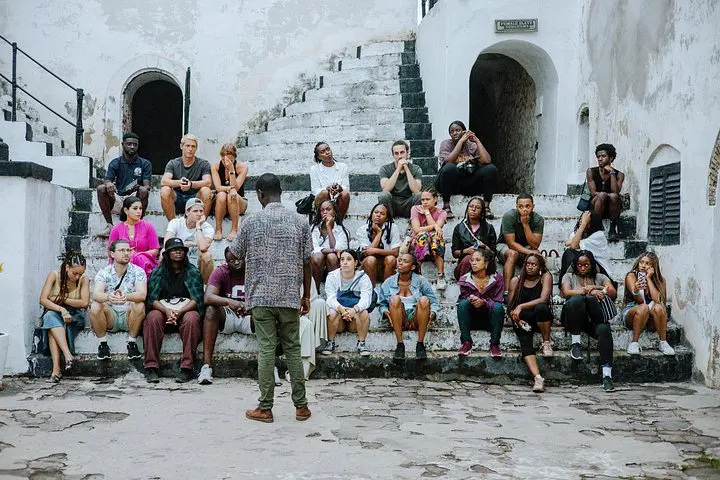
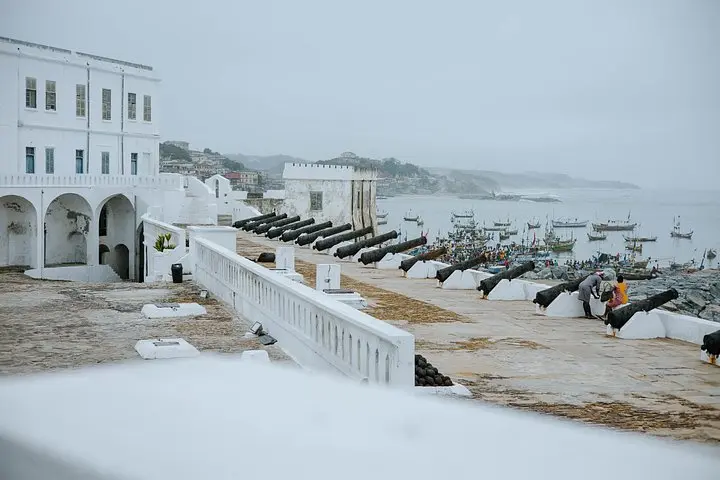
The route then drops to Cape Coast and Elmina, where stone fortresses face the Gulf of Guinea. Elmina Castle, built by the Portuguese in 1482, and Cape Coast Castle later expanded by northern European powers, are stark, organized reminders of the transatlantic slave trade; their dungeons and courtyards hold difficult, necessary history.
Geologically the coast is an interface of ancient Precambrian bedrock and more recent coastal sands, sculpting harbors and fishing beaches. Culturally this corridor is rooted in Fante coastal towns and cocoa-trade history; it’s common to see fishermen hauling in canoes and vendors selling salted fish and regional stews.
Practical guidance: expect an 11–12 hour day with early pick-up from Accra, long highway stretches and several stair-heavy museum rooms. Wear sturdy walking shoes, carry a rain shell and insect repellent, and pace your hydration—bottled water is typically provided. Time visits to the castles for lower light and smaller crowds, and save the canopy walk for mid-morning when visibility and bird activity peak.
This is a mixed day of reflective history and active nature; it asks for respect, curiosity, and a readiness to trade city rhythm for coastal wind and concentrated perspective.
This is a full-day experience, typically 11–12 hours including transport between Accra, Kakum, Cape Coast and Elmina.
Yes — the canopy walkway is maintained and supervised, but it’s elevated (~30 meters) and may sway; those with vertigo should consider staying on the forest floor.
Most organized tours include castle and Kakum entrance fees; confirm with your provider before booking if admissions are listed as included.
Families often attend, but infants will need to be held during transport and some castle areas involve stairs and narrow passages; check the operator’s age guidance.
Here is Ghana Tours operates guided outdoor trips and adventures with an emphasis on safety, stewardship, and memorable experiences.
You arrive before dawn in a cool, humid Ghanaian morning, the road from Accra a ribbon of palm and market stalls that unspools toward the coast. By midmorning the forest changes: trunks tighten, leaf litter deepens, and the canopy above Kakum National Park gathers like a green roof. The canopy walkway hangs 30 meters over the forest floor, swaying gently as the treetops seem to watch you cross.
You arrive before dawn in a cool, humid Ghanaian morning, the road from Accra a ribbon of palm and market stalls that unspools toward the coast. By midmorning the forest changes: trunks tighten, leaf litter deepens, and the canopy above Kakum National Park gathers like a green roof. The canopy walkway hangs 30 meters over the forest floor, swaying gently as the treetops seem to watch you cross.
The route then drops to Cape Coast and Elmina, where stone fortresses face the Gulf of Guinea. Elmina Castle, built by the Portuguese in 1482, and Cape Coast Castle later expanded by northern European powers, are stark, organized reminders of the transatlantic slave trade; their dungeons and courtyards hold difficult, necessary history.
Geologically the coast is an interface of ancient Precambrian bedrock and more recent coastal sands, sculpting harbors and fishing beaches. Culturally this corridor is rooted in Fante coastal towns and cocoa-trade history; it’s common to see fishermen hauling in canoes and vendors selling salted fish and regional stews.
Practical guidance: expect an 11–12 hour day with early pick-up from Accra, long highway stretches and several stair-heavy museum rooms. Wear sturdy walking shoes, carry a rain shell and insect repellent, and pace your hydration—bottled water is typically provided. Time visits to the castles for lower light and smaller crowds, and save the canopy walk for mid-morning when visibility and bird activity peak.
This is a mixed day of reflective history and active nature; it asks for respect, curiosity, and a readiness to trade city rhythm for coastal wind and concentrated perspective.